



A look at Lebanon’s transition after UNIFIL, exploring the future of the international presence in the south, the role of the Lebanese Army, the implementation of Resolution 1701 and the challenges surrounding security and sovereignty.
Can Lebanon take control of its own south?

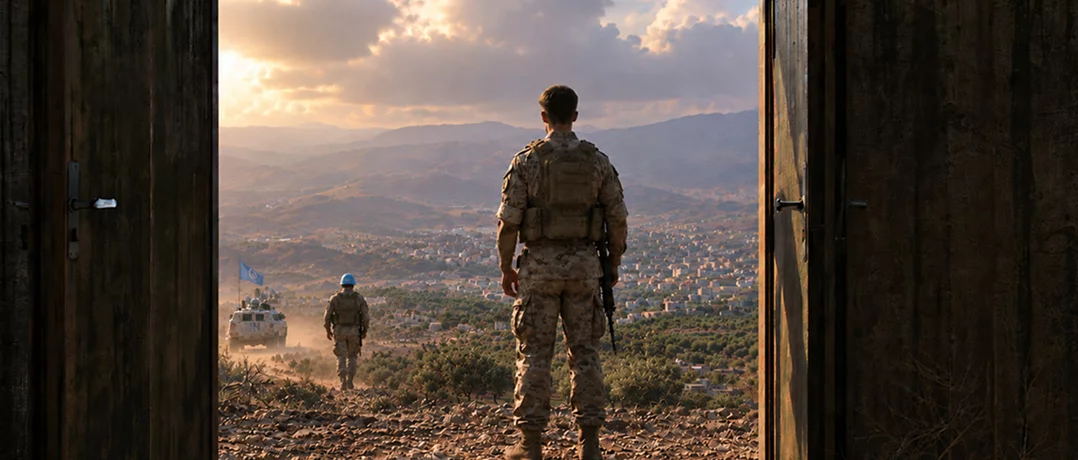
The issue of the future of the United Nations Interim Force in Lebanon (UNIFIL) is no longer simply related to the periodic renewal of the mandate of a peacekeeping force that has been operating in southern Lebanon since 1978. Since the adoption of Security Council Resolution 2790 on August 28, 2025, the matter has entered a new legal phase, after the Council decided that the extension of UNIFIL’s mandate until December 31, 2026 would be the final extension, and that, on that date, the process of “an orderly and safe reduction and withdrawal” would begin and continue for one year.
However, the same resolution reveals a very important legal and political paradox. On the one hand, it decides to end UNIFIL’s field operations on December 31, 2026. On the other hand, it explicitly reaffirms the necessity of the full implementation of Resolution 1701 (2006), as well as the continued responsibility of the Security Council for peace and stability along the Blue Line, and requests that the Secretary-General present options for the future implementation of Resolution 1701 after the withdrawal of UNIFIL.
Therefore, the real question is no longer whether the United Nations will renew UNIFIL’s mandate or not. Rather, it has become linked to how UNIFIL’s mission can end without ending the legal framework established by Resolution 1701, and to the nature of the mechanism that will replace it to ensure the implementation of this resolution.
This question gains additional importance in light of the developments that occurred in southern Lebanon during 2026, the continuation of violations and hostilities, the continued presence of Israeli forces in positions inside Lebanese territory as recorded by the Security Council in Resolution 2790, as well as the continued need to strengthen the deployment of the Lebanese Army and the fact that Hezbollah has not transferred its weapons to the Lebanese authorities to date.
More importantly, and in implementation of paragraph 10 of Resolution 2790, the United Nations Secretary-General presented on June 1, 2026 specific options for the phase following UNIFIL’s withdrawal. These options ranged between a limited international presence of approximately 1,980 personnel, a medium presence of approximately 3,370 personnel, and a larger presence of approximately 5,525 personnel, with fundamental differences in the nature of missions, monitoring, verification capabilities and deployment.
It should be clear from the beginning that ending UNIFIL’s mandate does not legally mean ending Resolution 1701 or removing the obligations it creates. Rather, it means ending a specific institutional mechanism for implementing part of these obligations, which requires identifying an alternative mechanism capable of ensuring their implementation.
From here, the writer briefly addresses the issue of UNIFIL and the phase following UNIFIL’s withdrawal through four points:
UNIFIL and the relevant Security Council resolutions.
The phase following UNIFIL and the available options.
The nature of the future international presence after UNIFIL.
UNIFIL between the framework agreement and Hezbollah’s position.
First: UNIFIL and the relevant Security Council Resolutions
In any case, and by returning to recent history, the United Nations Interim Force in Lebanon “UNIFIL” was established by the Security Council under Resolutions 425 and 426 dated March 19, 1978, following the Israeli invasion of Lebanon.
Resolution 425 defined three basic tasks for the force:
Confirming the withdrawal of Israeli forces from Lebanese territory.
Restoring international peace and security.
Assisting the Lebanese government in restoring its effective authority in the area.
Therefore, UNIFIL was not originally created as a replacement for the Lebanese state, but rather as a temporary instrument to assist official Lebanon in restoring its sovereignty and exercising its authority.
This point is highly important, because the issue of ending UNIFIL’s mission should not be understood as a retreat from the principle of Lebanese sovereignty, which was one of the original objectives behind its establishment.
As for Resolution 1559 (2004), the Security Council called for respect for Lebanon’s sovereignty, political independence and territorial integrity, the withdrawal of all foreign forces from Lebanon, the dissolution and disarmament of all Lebanese and non-Lebanese militias, and the extension of the authority of the Lebanese government over all Lebanese territory.
This resolution is fundamental because it shifted the issue from merely being a Lebanese-Israeli border dispute into an issue of Lebanese state sovereignty and its legitimate monopoly over the use of armed force.
Resolution 1701, which is well known, was adopted on August 11, 2006, following the Israeli-Lebanese war. It represents the main turning point in the nature of UNIFIL because it did not only extend its presence, but also decided to increase its size to a maximum of 15,000 personnel and expand its mandate and operational area.
Most importantly, the resolution linked several interconnected elements:
The cessation of hostilities.
The deployment of the Lebanese Army in the south.
The deployment of UNIFIL.
The parallel withdrawal of Israeli forces.
The absence of weapons or authority other than that of the Lebanese state in a specified area.
In this way, it created what can be called the security framework of Resolution 1701.
This framework does not depend solely on UNIFIL. Therefore, UNIFIL does not represent the entirety of Resolution 1701. Resolution 1701 created a legal and political framework that is much broader than the UNIFIL mission itself.
This is the central point of this reading, because the resolution includes obligations and demands directed toward Israel, Lebanon, Hezbollah, the international community and even the Security Council itself.
Therefore, the end of UNIFIL’s mission cannot automatically lead to the cancellation of Resolution 1701. Resolution 2790 itself clearly confirms this, as it decided to end UNIFIL’s mission while simultaneously reaffirming the necessity of fully implementing Resolution 1701.
Here, a fundamental legal principle emerges: the end of an institutional tool does not mean the end of the legal rule upon which that tool is based.
In other words, UNIFIL is a means for implementing certain elements of Resolution 1701, not the resolution itself.
The obvious question here is: Does Resolution 2790 cancel Resolution 1701?
The answer is no. It is necessary to distinguish between three concepts:
Cancellation: meaning ending the legal force of the previous resolution.
Amendment: meaning changing some of the provisions of the previous resolution.
Reorganizing the implementation mechanism: which appears to be what Resolution 2790 did regarding UNIFIL.
Resolution 2790 did not state that “Resolution 1701 has ended” or anything similar. On the contrary, it did the opposite by reaffirming the necessity of its full implementation.
Therefore, Resolution 2790 cannot be interpreted as a decision to abolish the legal framework of Resolution 1701. Rather, it is closer to a decision to reorganize the international mechanism for implementing Resolution 1701.
It is worth noting that Resolution 2790 contains a striking contradiction. It ends UNIFIL’s operations on December 31, 2026 and decides on its withdrawal over a period of one year, while requesting that the Lebanese government become the sole authority responsible for security in the south. At the same time, however, it asks the Secretary-General to prepare options to ensure the continued implementation of Resolution 1701 after the withdrawal.
This means that the Security Council itself recognized that the withdrawal of UNIFIL does not mean the withdrawal of the United Nations’ responsibility regarding the implementation of Resolution 1701.
The discussions that took place within the Security Council during 2026 confirmed this direction, as several countries stressed the necessity of maintaining a United Nations role in the post-UNIFIL phase, particularly in the fields of monitoring and verification.
Second: The phase following UNIFIL
Regarding the report of the Secretary-General dated June 1, 2026, and based on paragraph 10 of Resolution 2790, the Secretary-General presented options for the future implementation of Resolution 1701.
This document is extremely important because it confirms that the United Nations does not view the end of UNIFIL as the end of international presence.
As previously mentioned, the options revolved around three scenarios:
The first option consists of a limited presence of 1,980 personnel. Its mission would be relatively restricted, with reduced capabilities in terms of deployment, verification and support for the Lebanese Army.
The second option consists of a medium presence of 3,370 personnel. It would provide greater capacity for monitoring and supporting the deployment of the Lebanese Army.
The third option consists of a larger presence of 5,525 personnel. It would have the strongest capacity to monitor developments along the Blue Line and up to the Litani River, verify and investigate violations, support de-escalation and assist the deployment of the Lebanese Army.
These figures reveal a fundamental point: the issue is no longer the existence or absence of UNIFIL, but rather the form of international presence that will follow UNIFIL.
If the objective is to establish a new United Nations operation with military or police elements and an executive or monitoring mission, then the clearest legal basis would be the adoption of a new Security Council resolution.
This is because Resolution 2790 ended the UNIFIL mission itself, even though it preserved some functions during the withdrawal phase.
It is legally difficult to consider a new presence with a different composition and mandate as an automatic continuation of UNIFIL. Therefore, it would be more appropriate to issue a new resolution defining the mandate, number of personnel, area of operation, deployment rules, relationship with the Lebanese Army, rules of engagement, mechanisms for investigating violations, funding and other elements.
From a legal perspective, it is possible to imagine the creation of an international force outside the United Nations, but it would not institutionally replace UNIFIL except in a political sense.
A multinational coalition could be formed to support Lebanon, or a multinational force could be created at the request of the Lebanese government and with the approval of participating states.
A French-Italian initiative to form an international coalition supporting Lebanon after the end of UNIFIL appeared in 2026, although the institutional details had not yet been finalized.
However, such a force would be fundamentally different from UNIFIL.
The essential difference is that UNIFIL requires a Security Council mandate, while a multinational force is based on an international agreement with the consent of Lebanon and is governed by arrangements between participating states, depending on its model.
This raises the question of whether such a force would only assist the Lebanese Army or whether it would also monitor the implementation of Resolution 1701.
If it is to perform the second function, then it would be legally preferable for it to receive an explicit mandate from the Security Council.
In any case, the question remains: Does UNIFIL’s withdrawal strengthen Lebanese sovereignty?
The answer may appear simple and positive: the Lebanese state would become the sole authority responsible for security in the south.
However, the matter is more complex.
Sovereignty under international law is not merely the absence of foreign forces. It is the actual ability of a state to exercise exclusive authority over its territory.
Therefore, UNIFIL’s withdrawal could lead to two contradictory outcomes.
The first occurs if the Lebanese Army is capable of exercising full authority, in which case UNIFIL’s withdrawal would represent a strengthening of sovereignty.
The second occurs if the withdrawal creates a security vacuum, meaning that UNIFIL’s departure would effectively weaken the state’s ability to exercise sovereignty.
Therefore, the criterion of sovereignty is not practically linked to who leaves, but rather to who can effectively replace the departing force.
It is important to recall that Resolution 2790 gave the Lebanese Army a central role. It called on the Lebanese government to extend its authority over all Lebanese territory and reaffirmed the objective that there should be no weapons in the concerned area other than those belonging to the state, and no authority other than that of the Lebanese government.
The resolution also linked the withdrawal of Israel with the deployment of legitimate Lebanese forces.
Therefore, one can say that the system that began in 1978 with UNIFIL theoretically ends with the return of responsibility to the Lebanese state.
However, this return cannot be legally and completely achieved unless three conditions are fulfilled:
The deployment of the Lebanese Army.
The state’s monopoly over weapons.
The absence of any foreign force preventing the state from exercising its authority.
What happens if these conditions are not fulfilled on December 31, 2026?
According to the writer, this represents the most serious dilemma.
Can UNIFIL be ended because Resolution 2790 established a final date, despite the fact that security conditions have not been fully achieved?
Formally, yes, because the Security Council is the body that decided to end the mission.
But objectively, another problem emerges: ending the international mechanism could weaken the implementation of a resolution that the Security Council itself still considers necessary.
Here, the importance of Article 24 of the United Nations Charter appears. The Security Council bears the “primary responsibility” for maintaining international peace and security.
This responsibility cannot reasonably be interpreted as merely the authority to issue resolutions. It also includes following up on their implementation when the conditions that created the threat to international peace continue.
This does not mean that the Security Council is obligated to maintain UNIFIL forever. There is no provision in the Charter requiring the Council to preserve a specific peacekeeping operation indefinitely.
UNIFIL is also not the result of a treaty between Lebanon and the United Nations establishing a fixed duration that cannot be modified.
Nor can it be argued that Lebanon has an acquired right to the indefinite continuation of UNIFIL.
However, this does not mean that the Security Council can ignore the legal and political consequences of ending the mission.
It may end UNIFIL, but it remains responsible for addressing the consequences resulting from this decision within the framework of its responsibility for international peace and security.
This is precisely why Resolution 2790 requested that the Secretary-General prepare alternative options.
Third: The nature of the future international presence after UNIFIL
One of the key principles that can be drawn from Resolution 2790 is that the Security Council does not view the withdrawal as merely an exit process, but rather as a transitional process. The resolution called for an organized and safe reduction and withdrawal, and this wording is legally significant, as it indicates that the Council did not order an abrupt withdrawal, but instead established a transitional process lasting a full year. It also requested that the Secretary-General keep the Council informed of developments.
Therefore, the year extending from December 31, 2026, to December 31, 2027, is not merely an administrative period for dismantling equipment. It can be considered a legal and security transition phase between the UNIFIL system and the post-UNIFIL system.
There is no doubt that the future of UNIFIL cannot be studied without examining the Israeli withdrawal. Resolution 2790 explicitly called on Israel to withdraw north of the Blue Line, withdraw from the five positions it occupied inside Lebanese territory, and lift the buffer zones it established north of the Blue Line.
This point is extremely important because the security system that the Security Council seeks to transition toward logically and legally assumes that the Lebanese Army will be inside Lebanese territory and that Israel will be outside it, meaning outside Lebanese territory.
If Israeli forces remain inside Lebanon, ending the international presence would not solve the problem; rather, it could further complicate it.
Here, the author seeks to clarify a legal issue that is often misunderstood: the Blue Line is not an international border between Lebanon and Israel. It was established and adopted by the United Nations in 2000 as a withdrawal line to verify the Israeli withdrawal.
Therefore, it should not be interpreted as an international border. The Security Council report confirmed this distinction, noting that the Blue Line is not an agreed international border, even though it practically serves as a separating line between the two sides.
This means that any Israeli military presence north of the Blue Line cannot be justified simply by claiming that the line represents an “Israeli border.”
The most important question raised here concerns whether the end of UNIFIL could weaken the implementation of Resolution 1701.
The answer is yes, and this is a real possibility, because UNIFIL performs functions that the Lebanese Army or any local actor cannot carry out to the same extent. These include monitoring, communication between the parties, investigating certain incidents, preparing reports, and maintaining the presence of a neutral international actor on the ground, among others.
This is where the value of international monitoring becomes apparent. In armed conflicts, the role of an international force is not always to use force. Its most important function may be producing a documented international account of what happened.
This is particularly important for Lebanon. The presence of an international force capable of documenting violations transforms the conflict from a Lebanese claim against an Israeli claim into a documented fact before the United Nations.
According to the author, the verification function will be the most important role of any international presence after UNIFIL. The future presence does not necessarily require a military force of the current size, but it requires monitoring, verification, reporting, investigation and coordination.
For this reason, the third option proposed by the Secretary-General is highly significant, as it would give the international presence the ability to monitor the Blue Line, verify violations and investigate them.
From this perspective, the international presence could shift from peacekeeping to monitoring. This could become the essence of the new phase.
Legally and politically, this differs from a traditional peacekeeping force. It may also be a more acceptable model for Lebanon on one hand and Israel on the other, because it would not replace the Lebanese Army, occupy territory or impose an independent security system. Instead, it would monitor the implementation of the commitments of both sides.
This leads to a theoretical question often raised: Can the United Nations monitor Resolution 1701 without troops?
Yes, in principle. The United Nations can rely on specific mechanisms, such as observers, Secretary-General reports, political missions, experts, communication mechanisms, imagery and field information, investigation mechanisms and other tools.
However, the problem is not only the technical ability to monitor, but also the credibility of that monitoring. A presence on the ground gives UN reports greater value.
For this reason, the third option proposed by the Secretary-General carries greater legal importance than merely establishing a political mission in Beirut.
In all cases, the new international force must not become a substitute for the Lebanese Army. It should instead complement it.
The distinction is fundamental: security sovereignty must remain Lebanese, while the international role should focus on assistance, training, monitoring, verification, logistical support and dispute resolution.
This is consistent with the philosophy of Resolution 2790, which made the ultimate objective for the Lebanese government to become the sole authority responsible for security in southern Lebanon.
UNIFIL between the framework agreement and Hezbollah’s position
The issue becomes increasingly complex in light of the Tripartite Framework Agreement that entered the scene in 2026. The obvious legal question that arises is: Can bilateral or trilateral arrangements replace Resolution 1701?
According to the author, the answer is negative. Any agreement between Lebanon, Israel and the United States cannot cancel a Security Council resolution unless a subsequent Council resolution is issued modifying or ending the relevant obligations. Discussions at the Security Council in July 2026 noted that the tripartite framework does not, according to the published analysis, include an explicit role for UNIFIL or for an alternative UN presence, while Resolution 1701 remains the framework established by the Security Council for peace and stability between Lebanon and Israel (22).
This means that the two tracks, the bilateral or trilateral track and the UN track, must complement rather than contradict each other. In other words, the new agreement cannot replace Resolution 1701 unless a valid international agreement is reached between the concerned parties, or a new Security Council resolution is issued addressing the new framework, or a new legal system is created that is consistent with the obligations of the UN Charter and Security Council resolutions.
A mere political agreement between two or more states cannot, by itself, erase international obligations arising from a Security Council resolution. This is where the importance of Article 103 of the UN Charter emerges, as it gives priority, in cases of conflict, to obligations arising from the Charter.
From this perspective, the legal future can be summarized into three possible models:
The first would be the creation of a new UN force similar to UNIFIL, continuing UNIFIL’s previous experience under a different name.
The second model would be a UN monitoring mission: a smaller force focused on observation, investigation, verification and reporting. This is the model that appears close to the options presented by the Secretary-General (23). In the author’s view, this would be the best legal model for Lebanon if the objective is to strengthen sovereignty while maintaining a neutral international mechanism.
The third model would involve a multinational force outside the United Nations, including European, Arab or other countries, operating in coordination with the Lebanese Army. However, such a force would require a very clear legal basis, particularly if it had an armed presence or functions extending beyond training and assistance.
When analyzing the three models from a legal perspective, the optimal option for Lebanon is neither the return of UNIFIL in its previous form nor the complete withdrawal of the United Nations. Rather, the best solution would be a smaller UN presence with a clearly defined mandate, focused on monitoring, verification, investigation, communication and support for the Lebanese Army, alongside a clear transfer of security responsibility to the Lebanese state. This would combine Lebanese sovereignty with international guarantees.
Regarding Hezbollah’s position on UNIFIL, there is no doubt that it does not oppose an international presence as long as it does not become a tool to impose its disarmament. Historically, Hezbollah has not supported transforming UNIFIL into an enforcement force tasked with disarming it.
At the same time, Hezbollah benefits from UNIFIL’s presence in several ways: through an international presence in the south, a communication mechanism between Lebanon and Israel, monitoring of violations, reporting to the Security Council, and the existence of a political barrier preventing the south from becoming an open battlefield for Israel.
It is important to note that ending UNIFIL’s mission does not end the problem that its mandate was partly created to address. Instead, it shifts the center of gravity of this problem from the international level to the national level.
If UNIFIL’s presence made the implementation of Resolution 1701 a shared responsibility between the Lebanese state and the international force, the end of its mission will place a greater responsibility on the Lebanese state to prove its ability to exercise its exclusive authority in the south.
At this precise moment, the existence of weapons outside state institutions, regardless of the party holding them, becomes not merely a security issue, but an issue directly linked to the essence of Lebanese sovereignty and the state’s ability to fulfill its international obligations.
The continuation of UNIFIL indirectly allowed the separation between the role of international security preservation and the role of disarming armed groups. The end of its mission, however, will push the Lebanese state toward directly assuming responsibility for implementing the principle of the state’s monopoly over force.
Therefore, the end of UNIFIL does not terminate the legal framework of Resolution 1701. Instead, it transfers the center of gravity in implementing this framework from the international force to the Lebanese state. This makes the relationship between the Lebanese Army and Hezbollah the decisive factor in determining whether the international withdrawal will lead to the restoration of Lebanese sovereignty or to a new security vacuum.
So, did UNIFIL’s presence protect Hezbollah or restrict it?
The question appears political, but in reality it reveals the core of the legal dilemma.
UNIFIL can be viewed from two opposing perspectives:
From the first perspective, its presence restricts Hezbollah because Resolution 1701 places the area south of the Litani River under a security framework that prohibits the presence of weapons and forces not belonging to the state or UNIFIL.
From the second perspective, its presence indirectly provides Hezbollah with an international shield that prevents the south from becoming a direct and permanent confrontation zone between Hezbollah and Israel.
Hezbollah’s interests therefore depend on the type and function of the international presence. It can benefit from an international presence that prevents a full-scale escalation, but it rejects any transformation of that presence into an enforcement mechanism for disarming it.
The near future will show that Hezbollah remains the most influential domestic factor in determining the success, failure or obstruction of the transfer of responsibility from UNIFIL to the Lebanese Army.
-
-

-
Emile AounLawyer
-
