



Lebanon’s CDR faces a defining test: balancing reconstruction responsibilities with demands for transparency, reform, accountability, and renewed public trust.
Can the CDR rebuild trust before rebuilding Lebanon?
Can the CDR rebuild trust before rebuilding Lebanon?
By The Beiruter | October 04, 2026

Reading time: 6 min
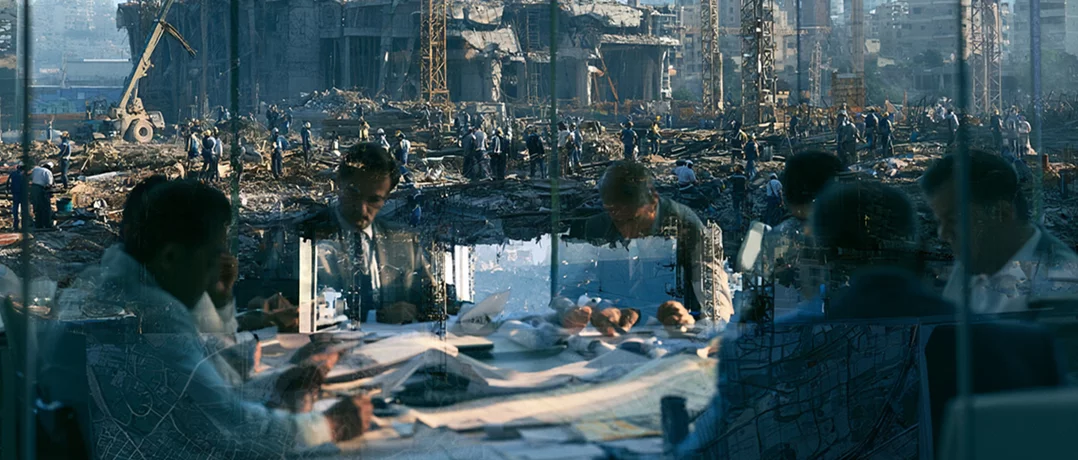
As Lebanon seeks post-war recovery, the Council for Development and Reconstruction (CDR) has once again become one of the country’s most important public institutions.
Following the appointment of its new leadership in May 2025, the Council is expected to play a central role in implementing reconstruction projects while working to restore confidence among citizens and international partners.
However, it faces a dual challenge: overseeing a complex rebuilding process while addressing long-standing criticism over governance, transparency, and accountability that has followed the institution since its inception.
A debate over the CDR’s role in reconstruction
For research analyst at Information International Mohammad Chamseddine, the main challenge is not simply appointing a new leadership team, but determining whether the CDR, in its current structure, is the appropriate institution to manage Lebanon’s reconstruction.
Speaking to The Beiruter, Chamseddine stated that the current proposal does not envisage assigning the reconstruction process to the Council for Development and Reconstruction or the Council of the South, but rather establishing a nationwide public institution responsible for rebuilding damaged areas across Lebanon, including the southern suburb of Beirut, the South, and the Bekaa, similar to the National Reconstruction Authority created after the 1956 earthquake. Consequently, the CDR is not expected to play a role in the reconstruction process under the current framework.
Chamseddine argued that the Council’s previous record raises serious questions about its ability to oversee another large-scale reconstruction process. According to him, the institution was granted extensive powers after the Lebanese War (1975-1990), absorbing responsibilities that traditionally belonged to ministries such as public works, energy, electricity, and infrastructure. However, he argued that this centralized model did not produce the expected results.
Since the reactivation of its role in the early 1990s, the CDR has managed projects estimated at around $11 billion across sectors including roads, bridges, electricity, water, schools, and other public infrastructure. Yet Chamseddine believed that the scale of spending was not matched by equivalent improvements in public services, with waste, weak implementation, and governance shortcomings becoming recurring concerns.
The problem is not only the institution itself, but the way it has operated.
A reconstruction institution born from the Lebanese War
The debate over the CDR’s future cannot be separated from the circumstances that led to its creation.
The institution was established by Decree-Law No. 5 on 31 January 1977, during the early years of the Lebanese War. At the time, widespread destruction had severely affected infrastructure and weakened state institutions, leaving ministries with limited capacity to manage reconstruction.
The government sought to establish a specialized body capable of coordinating the country’s recovery efforts while providing international donors with a central partner for financing and implementation. Following the abolition of the Ministry of Planning, the CDR became the main institution responsible for preparing reconstruction strategies and coordinating external assistance.
The Council was entrusted with three principal responsibilities: preparing national reconstruction and development plans with implementation timetables, securing financing from international donors and financial institutions, and supervising the execution of projects while helping rebuild the capacity of public institutions under the supervision of the Council of Ministers.
Over time, its mandate expanded significantly. Responsibilities previously exercised by several public bodies, including agencies responsible for major infrastructure projects and urban development, were gradually transferred to the CDR. This transformed it into Lebanon’s principal institution for negotiating donor financing, planning large-scale public investment, awarding contracts, and supervising implementation.
Following the end of the Lebanese War in 1990, the CDR became the government’s primary vehicle for post-war reconstruction, overseeing many of the country’s largest infrastructure programs.
From reconstruction agency to development powerhouse
After the end of the war in 1990, the CDR’s responsibilities expanded considerably. The Council has managed some of Lebanon’s most expensive public investment projects, covering highways, bridges, water networks, wastewater treatment facilities, schools, electricity infrastructure, and solid waste management. Estimates indicate that the institution administered approximately $9 billion of the nearly $16 billion allocated for reconstruction and development projects between 1990 and 2010.
Its centralized role enabled Lebanon to negotiate bilateral and multilateral financing with the World Bank, regional development funds, European institutions, and donor governments. However, its expanded role and the concentration of planning, financing, procurement, contract management, and implementation oversight within a single institution also became one of its most controversial characteristics.
Years of criticism over transparency and accountability
The CDR has faced repeated criticism from economists, governance specialists, and civil society organizations (CSOs) over the management of public projects and the effectiveness of its spending. Its structural weaknesses included limited oversight mechanisms, the absence of sufficient separation between project preparation and supervision, and concerns over procurement practices.
Questions about competition and transparency in contract awards were also raised due to the repeated involvement of a limited number of companies on major projects. According to critics, many contracts were awarded outside the supervision of Lebanon's Central Inspection procurement mechanisms, while fewer than ten companies executed a large share of the Council’s major projects over several years.
Several infrastructure programmers became symbols of these concerns, particularly wastewater treatment facilities that were built but later struggled to operate due to the absence of sufficient funding for maintenance and operation. In 2019, legal complaints were filed concerning allegations of financial waste linked to projects managed by the institution.
International donors seek stronger safeguards
The international community is closely monitoring the future role of the CDR as Lebanon seeks external support for reconstruction.
The completion of new appointments within the Council’s leadership was among the governance-related steps linked to a $250 million World Bank financing package dedicated to recovery and reconstruction efforts. International donors are expected to demand stronger monitoring mechanisms, transparent procurement procedures, and effective auditing before expanding financial assistance.
The World Bank estimates Lebanon’s reconstruction and recovery needs following the 2023-2024 armed conflict between Israel and Hezbollah at approximately $11 billion, including around $1 billion for damaged infrastructure; these numbers have surely increased after the outbreak of the March 2026 war in southern Lebanon which further exacerbated the destruction and damages to Lebanese households and critical infrastructure in the south. Managing these resources will require not only technical expertise but also institutional credibility.
Within the Council itself, the Government Commissioner is expected to assume an enhanced supervisory role to ensure compliance with financial and administrative procedures. Donor institutions are also expected to require regular reporting, procurement transparency, independent audits, and measurable implementation benchmarks before additional funding is released.
These safeguards reflect broader international efforts to ensure reconstruction funds produce tangible infrastructure improvements while minimizing opportunities for misuse.
Reforming the institution, not simply replacing its leadership
Changing the Council’s leadership alone will not resolve long-standing structural weaknesses.
Chamseddine argued that the institution requires comprehensive institutional restructuring rather than administrative appointments alone. He stressed that any future reconstruction role must be accompanied by a clear definition of responsibilities and stronger accountability mechanisms to prevent overlapping powers and improve accountability. In his view, the Council cannot continue operating with broad authorities without effective financial and administrative supervision.
He therefore called for a comprehensive restructuring of the CDR, including a clearer mandate, a defined budget framework, and oversight by Lebanon’s regulatory institutions. Without such reforms, he warned that repeating the same model could reproduce the failures of previous reconstruction efforts.
These proposals have gained additional significance as Lebanon seeks broader economic recovery, alongside ongoing negotiations with international financial institutions and efforts to restore confidence in state institutions. Lebanon’s reconstruction challenge is not only to rebuild roads, bridges, and public facilities, but also to restore confidence in the institutions managing public funds, which is as important as securing international financing.
-
-

-
The Beiruter
-
