



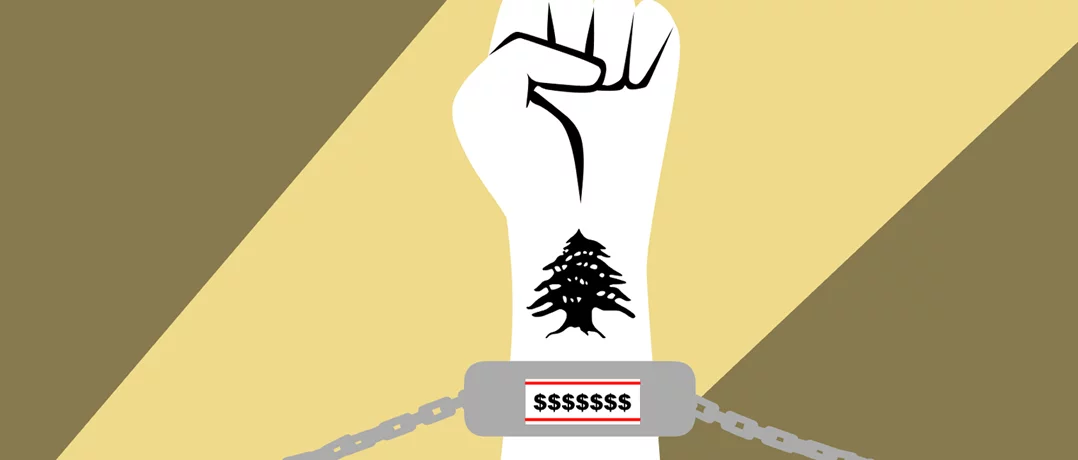
For many young Lebanese, having a place of their own remains difficult to achieve in today’s economic reality. Between rising living costs, expensive rent and family responsibilities, what does independence really look like for Lebanon’s younger generation?
Can young Lebanese truly afford independence?

Turning 20, 25 or even 30 does not necessarily mean getting a place of your
own in Lebanon. Living with your parents well into adulthood is socially
common, making moving out feel less like the natural next step of growing up
and more like a financial luxury.
The reasons are not difficult to understand. Lebanon is still dealing with
the consequences of one of the worst economic and financial crises in its
history. The Lebanese lira lost around 98 percent of its value since the
beginning of the crisis, while poverty has reached levels that have transformed
how families think about spending, saving and planning for the future.
A modest salary has to cover much more than rent. There is electricity,
internet, groceries, transportation, healthcare and the countless expenses that
come with maintaining a home. Housing itself has historically taken a
significant share of household spending: World Bank data found housing-related
expenses represented an average of 36 percent of annual spending for the median
household in Beirut and 29 percent in Mount Lebanon in 2019–2020.
Staying home, then, is not necessarily about refusing to grow up. Sometimes, it is simply the option that makes the most financial sense.
The comfort of staying home
Dani, 24, wants her own space and the freedom that comes with it. “I want to
decide what I eat, invite my friends over and just feel like I'm completely
responsible for myself. But wanting independence and being able to afford it
are two different things.”
Living with parents also provides something money cannot easily replace:
support. “At home, my mother cooks. I don't have to think about every household
expense, and if something happens, my parents are there. I know it's
comfortable, but sometimes I feel like I'm stuck between being an adult and
still living like a child.”
Moving out would mean replacing many of the things families provide informally cooking, cleaning, shared bills and daily support with expenses that have to be paid for individually. “I don't want to move out just to spend my entire salary surviving. I want to save money and actually enjoy my life too.”
Alone, but not fully independent
Riwa, 25, has already taken the step many others are postponing. She rents a
small apartment near Beirut because she works there and is originally from the
North. “I moved out because I had to more than because I was completely ready.
Going back and forth every day isn't realistic.”
Living alone has shown her just how expensive independence can be. “You
suddenly realize how many things your parents were doing without you noticing.
You pay rent, electricity, internet, groceries, transportation. You clean. You
fix things. Even buying basic things for the house adds up.”
Her parents still help her with part of the rent. “So technically, I live alone, but I wouldn't say I'm 100 percent financially independent. Living away from my parents has taught me independence in my daily life, but financially, I'm still partly relying on them.”
Independence vs. family
William, 26, would also like to move out, but his family situation makes the
decision more complicated. His father is sick and his siblings have left
Lebanon to study and work abroad, leaving him with much of the responsibility
at home.
“I've definitely thought about moving out, but I can't afford to pay for two
households. My parents took care of us when we were younger. Now that they're
getting older, I feel like it's my turn to take care of them.”
Celine, 27, points to another reality of staying at home. In Lebanon,
marriage often becomes the unofficial deadline for leaving the family home. “Sometimes
I wonder if we're using marriage as the deadline for becoming independent.” She
also sees living with parents as a two-way relationship rather than simple
dependence. “It's not completely one-sided. I can help around the house and be
there when they need me.”
In both cases, independence is not simply about having an apartment of your own. It is about being able to support yourself while still being there for your family.
Independence on Lebanese terms
Moving out is not necessarily impossible. But for many young people, the
question is what they would have to give up to make it possible.
Rent and bills can consume a large part of a salary, leaving little room for
savings, travel, social life or unexpected expenses. Independence can become
less about building a life and more about simply maintaining one. Staying with
parents may mean giving up some privacy and freedom, but it can also provide
the financial breathing room to save, travel, study or plan for the future.
The choice, then, is not always between independence and dependence.
Sometimes, it is between living alone now and having more financial freedom
later.
In Lebanon, independence cannot be measured simply by whether someone has
their own apartment. It can mean paying your own bills, contributing to the
family household or caring for aging parents. For William, it means being there
for his father. For Riwa, it means managing a home alone while still receiving
some financial help.
The family home can be both a safety net and a reminder of how difficult it
is to stand entirely on your own. Wanting to leave does not necessarily mean
wanting to leave your family behind, just as staying does not necessarily mean
refusing to grow up.
For a generation facing high living costs, uncertain incomes and a fragile
economy, independence may simply mean finding a way to take care of yourself
without losing the ability to take care of the people who took care of you.
-
-
-
Yara SalibaJunior Writer/Translator
-
