



Captagon has evolved into a multi-billion-dollar shadow industry linking Syria, Lebanon, and the Gulf through war, smuggling networks, and organized crime, turning the drug trade into one of the Middle East’s most powerful parallel economies.
Captagon: The drug empire fueling the Middle East
Captagon: The drug empire fueling the Middle East
By Christiane Tager | May 23, 2026

Reading time: 5 min
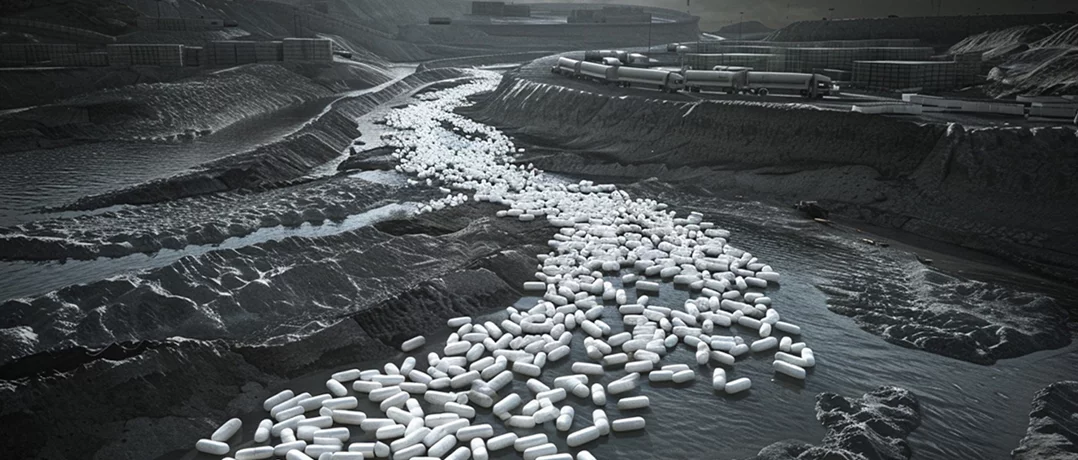
Small, cheap and easy to conceal, Captagon pills have become one of the Middle East’s most profitable illicit exports. What began as a synthetic stimulant has evolved into a sprawling underground industry linking Syria, Lebanon and the Gulf through an increasingly sophisticated network of laboratories, smugglers and trafficking routes worth billions of dollars.
Hidden inside fruit shipments, industrial equipment and even food containers, millions of Captagon pills continue to move quietly across borders every year.
The tiny beige tablet, once a pharmaceutical drug developed in Germany in the 1960s, has become one of the defining symbols of the Middle East’s expanding shadow economy.
Over the past decade, Captagon has evolved from a relatively obscure amphetamine into what many regional and western officials now describe as a narco-industry intertwined with war, sanctions, corruption and regional power networks.
At the center of that industry stands Syria. Before the Syrian civil war, Captagon trafficking existed on a relatively limited scale across parts of the Middle East. But more than thirteen years of conflict, economic collapse and international isolation transformed Syria into what analysts now regard as the world’s primary production hub for the drug. Several international estimates suggest that roughly 80 per cent of the world’s Captagon supply originated in Syria in recent years.
Western investigations and intelligence reports have repeatedly alleged that the trade generated billions of dollars for networks tied to former Syrian president Bashar al-Assad and his allies. Some estimates valued the industry at between $5.7bn and $57bn annually figures that, at their peak, may have exceeded Syria’s legal exports combined.
Maher al-Assad, the former president’s brother and commander of the feared Fourth Division, has frequently been cited in international investigations into the trade, although Syrian authorities long denied official involvement.
For many observers, Captagon gradually became more than a criminal enterprise. It became a survival economy.
As sanctions tightened and Syria’s formal economy collapsed, the drug trade increasingly emerged as one of the country’s most lucrative parallel revenue streams.
Some analysts went as far as describing Syria during the Assad years as a “narco-state”.
From pharmaceutical drug to regional stimulant
Originally marketed in Europe as a treatment for narcolepsy and attention disorders, Captagon contained fenethylline, a synthetic stimulant later banned because of its addictive properties.
The pills circulating today, however, bear little resemblance to the original formula.
Modern Captagon tablets are typically produced using amphetamines mixed with low-cost chemical substances in clandestine laboratories.
Their effects are powerful: heightened alertness, reduced fatigue, euphoria,
appetite suppression, and increased physical endurance.
The economics behind the trade are staggering. A single pill can reportedly cost less than one dollar to manufacture, while retail prices in Gulf countries may reach $20 per tablet depending on purity and demand.
That profit margin helped transform Captagon into one of the region’s most attractive illicit commodities.
Industrial-scale production
Captagon manufacturing now operates on a near-industrial scale. Following the collapse of the Assad regime in late 2024, Syrian authorities and international investigators uncovered several massive laboratories around Damascus, Latakia and areas near the Lebanese border.
Some facilities were allegedly hidden behind soap factories, inside agricultural warehouses, within industrial compounds, and even in former military installations.
Syrian authorities later announced the seizure of 121tonnes of chemical precursors, 320mn Captagon pills and dozens of industrial-grade production machines.
The scale of the infrastructure highlighted how sophisticated the industry had become.
According to anti-narcotics experts, the quantities intercepted likely represent only a fraction of the real market. Some estimates suggest seizures account for as little as 5 to 10 per cent of total trafficking flows.
In other words, billions of pills may have circulated across the region over the past several years.
Lebanon: corridor, transit hub and pressure point
While Syria became the industry’s production center, Lebanon emerged as one of its key logistical corridors.
Part of the drug is believed to be manufactured in Lebanon itself, particularly in parts of the Bekaa Valley and border regions. But Lebanon’s strategic importance lies primarily in transit. The country’s porous border with Syria, longstanding smuggling routes and severe economic crisis created ideal conditions for trafficking networks to expand. Security analysts say millions of pills regularly pass through Lebanese territory before being shipped to Gulf markets.
The scale is difficult to quantify precisely, but seizures offer a glimpse into the magnitude of the trade.
According to a United Nations report, nearly 78mn Captagon pills were seized in Lebanon between December 2024 and November 2025.
In September 2025, the Lebanese army announced one of the country’s largest anti-drug operations after discovering 64mn pills inside a clandestine facility in Bouday, near Baalbeck.
Yet officials acknowledge such seizures likely capture only a small share of the overall trade.
How the pills move across the region
Once manufactured, the pills must travel through a complex web of land and maritime routes toward Gulf consumers. Smugglers have become increasingly inventive. First, land routes. Shipments often move through Lebanon, Jordan and Iraq before reaching Gulf states. The Syrian-Jordanian border has become one of the region’s most volatile trafficking zones, with Jordanian authorities regularly reporting clashes with heavily armed smugglers.
Then, maritime routes. The Syrian port of Latakia has long been viewed as a strategic export point. From Syria and Lebanon, pills are concealed inside: fruit shipments, industrial machinery, furniture, construction materials, automotive parts, and food products.
In some of the region’s most notorious seizures, Captagon tablets were hidden inside fake pomegranates, oranges, metal pipes and tomato paste containers.
In 2020, Italian authorities intercepted nearly 84mn pills concealed inside industrial paper cylinders in what was considered one of the world’s largest amphetamine seizures.
Several discoveries of Captagon hidden inside Lebanese agricultural exports also triggered diplomatic tensions between Lebanon and Gulf states, particularly Saudi Arabia.
A regional security and economic threat
For Lebanon, Captagon has become far more than a narcotics issue.
The trade increasingly threatens: domestic security, diplomatic ties with Gulf countries, economic stability and Lebanon’s international reputation.
Despite repeated military and security operations, trafficking networks continue to adapt, shifting routes and production sites as pressure intensifies.
Because behind every pill lies an enormous underground economy fueled by conflict, poverty, corruption and weak borders.
Captagon is no longer merely a drug. It has become one of the clearest manifestations of the Middle East’s widening grey economy where war, organized crime and geopolitics increasingly overlap.
