

Clashes between Syrian forces and the SDF in Aleppo trigger mass displacement, prompting a fragile ceasefire amid stalled integration talks.
Ceasefire pauses deadly Aleppo fighting

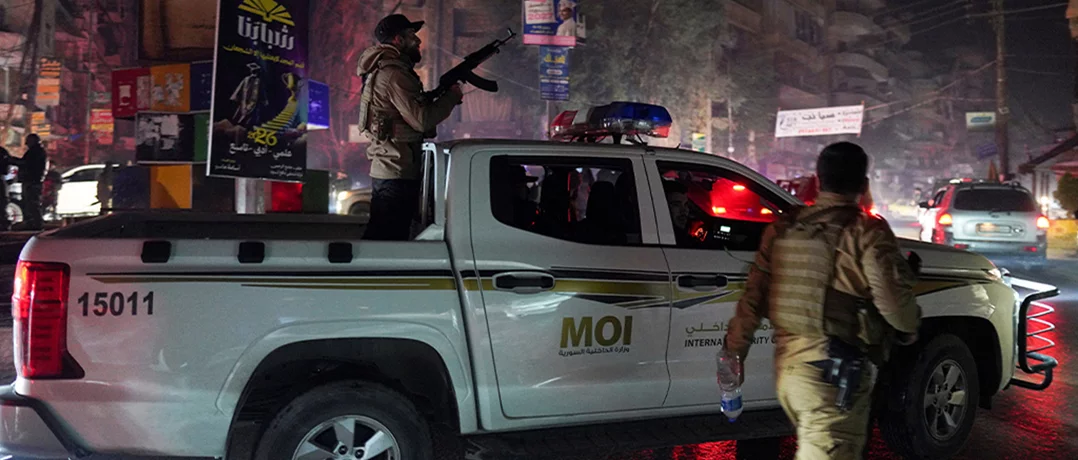
The Syrian government has announced a ceasefire in several neighborhoods of Aleppo following days of intense fighting between government forces and the Kurdish-led Syrian Democratic Forces (SDF).
The clashes, among the most violent since the new authorities assumed power over a year ago, have caused significant civilian displacement and raised concerns about broader instability in northern Syria. The episode underscores the fragility of ongoing efforts to integrate Kurdish-controlled areas into the state and highlights the regional and international stakes surrounding Syria’s post-Assad transition.
Deadly fighting and civilian displacement
Violence erupted earlier this week in the Kurdish-majority neighborhoods of Sheikh Maqsud, Ashrafiyeh and Bani Zeid, resulting in at least 21 deaths and forcing tens of thousands of civilians to flee.
Syrian state media reported that up to 142,000 residents were displaced, many seeking shelter in temporary accommodation centers inside Aleppo or in surrounding areas such as Afrin and Azaz. Heavy exchanges of fire, sniper activity and widespread fear among civilians attempting to escape through designated humanitarian corridors were also recorded during the armed conflict.
Ceasefire terms and government measures
In a statement issued by Syria’s Ministry of Defense, a ceasefire was announced between the contending parties to the conflict, granting armed groups a 6-hour window to withdraw from the affected neighborhoods.
According to the ministry, withdrawing fighters were permitted to carry only light personal weapons, with government forces guaranteeing safe passage toward northeastern Syria. Authorities said the aim of the ceasefire was to end the military presence in residential areas, restore state authority and allow displaced civilians to return under conditions of security and stability. Syrian security forces subsequently deployed in parts of Ashrafiyeh, reporting the seizure of weapons, ammunition and a car bomb allegedly left behind by SDF elements.
Political deadlock and Kurdish-government tensions
The clashes come amid stalled implementation of an agreement reached in March 2025 to integrate the Kurdish administration and military structures into the Syrian state.
While the SDF played a central role in defeating ISIS in 2019 and continues to control large parts of Syria’s oil-rich northeast, disagreements over internal self-determination (namely decentralization) and governance have delayed progress. SDF commander Mazloum Abdi warned that attacks on Kurdish areas undermine dialogue efforts, only days after talks in Damascus aimed at reviving the integration process.
Meanwhile, analysts warn that Aleppo represents one of the SDF’s most vulnerable positions, making it a flashpoint with wider regional implications. Türkiye, which has repeatedly launched operations against Kurdish forces near its border (ever since its intervention in the Syrian Civil War in 2016 through “Operation Euphrates Shield”), remains closely involved, while Israel has also sought to expand its influence in post-Assad Syria. Experts caution that a broader confrontation between Damascus and the SDF (potentially drawing in regional actors) could severely destabilize northern Syria and derail fragile reconstruction and reconciliation efforts.
In conclusion, the Aleppo ceasefire offers a temporary pause in fighting but does not resolve the deeper political and military tensions at play. With large-scale displacement, unresolved integration talks and competing regional interests, the situation remains volatile. Whether the ceasefire leads to a lasting de-escalation or merely postpones further confrontation will depend on the ability of Damascus and the SDF to bridge political differences and prevent Aleppo from becoming the starting point of a wider conflict in northern Syria. This is also related to Syria’s interim authorities’ ability to achieve sincere transitional justice between the country’s communities.
-
-

-
The Beiruter
-
