

In the first installment of a two-part investigation, The Beiruter traces how a $63.5 million conservatory under construction in Dbayeh represents only the most visible dimension of China’s expanding influence across Lebanon’s cultural and educational institutions.
China’s cultural advance in Lebanon
China’s cultural advance in Lebanon
By Katharine Sorensen - Soraya Johnson | August 08, 2026

Reading time: 10 min
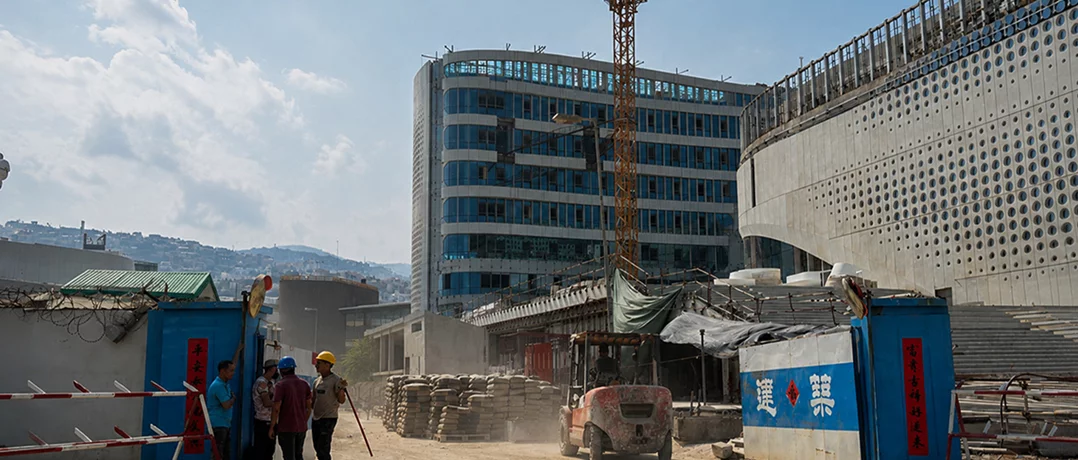
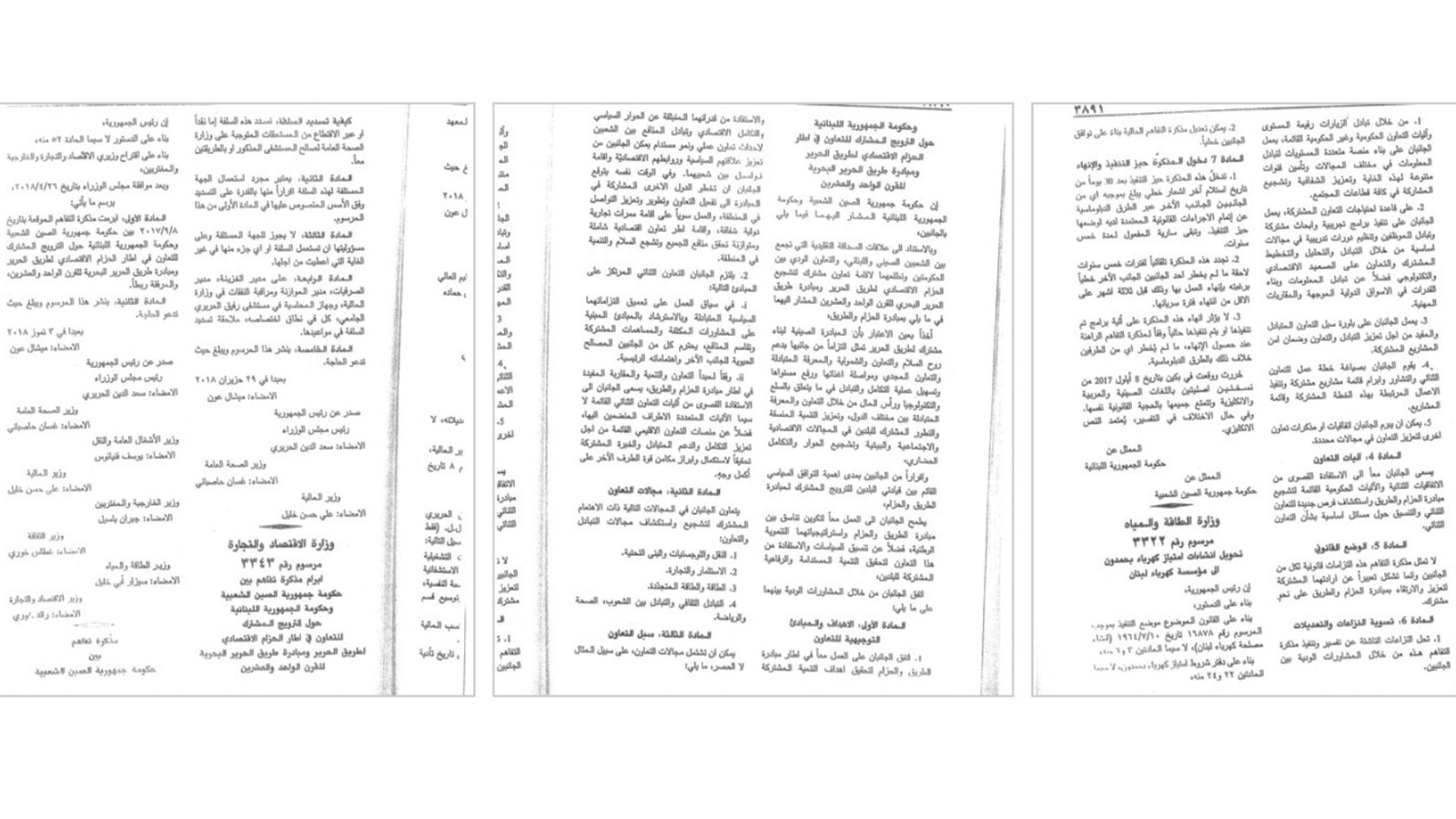
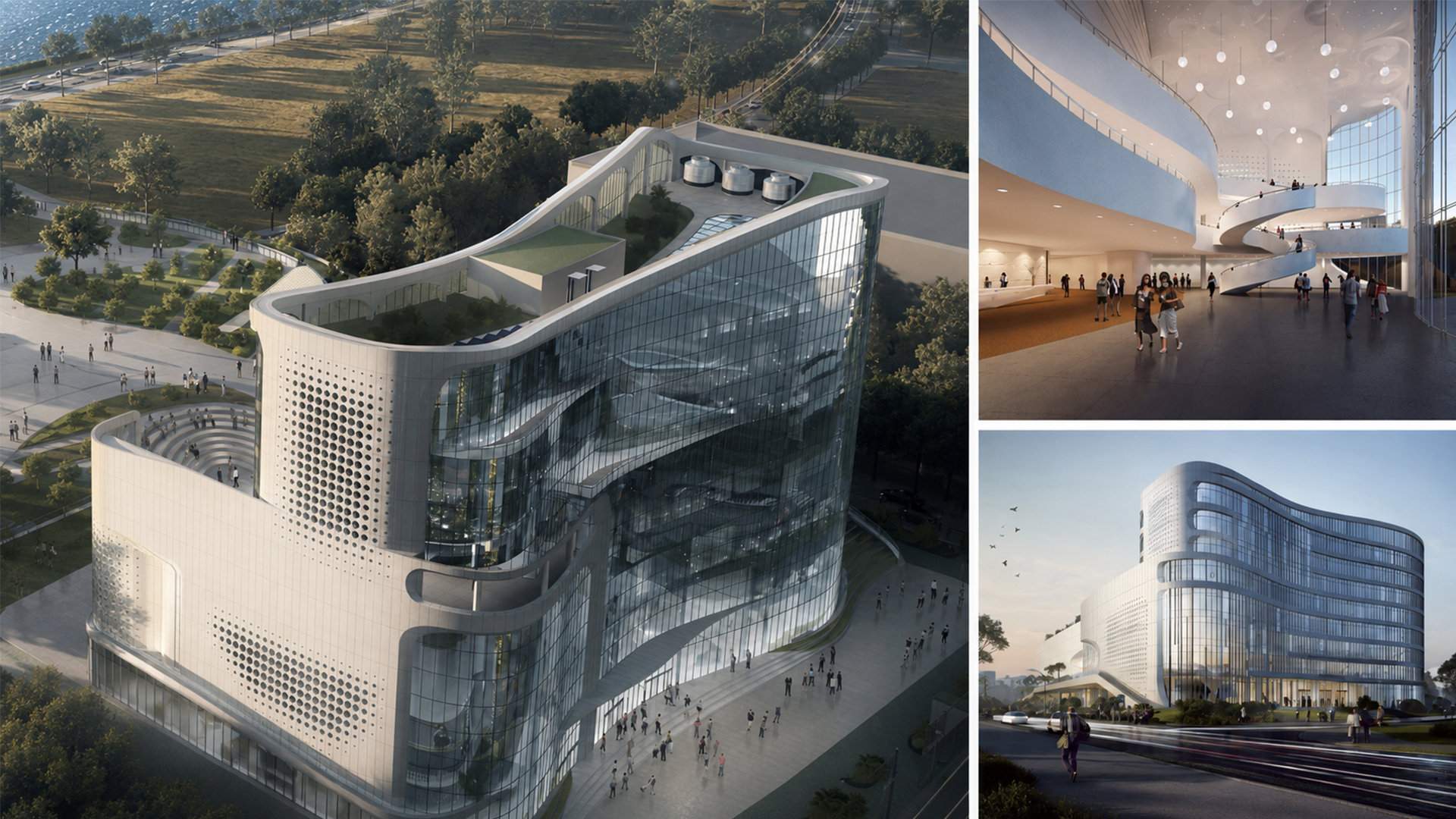
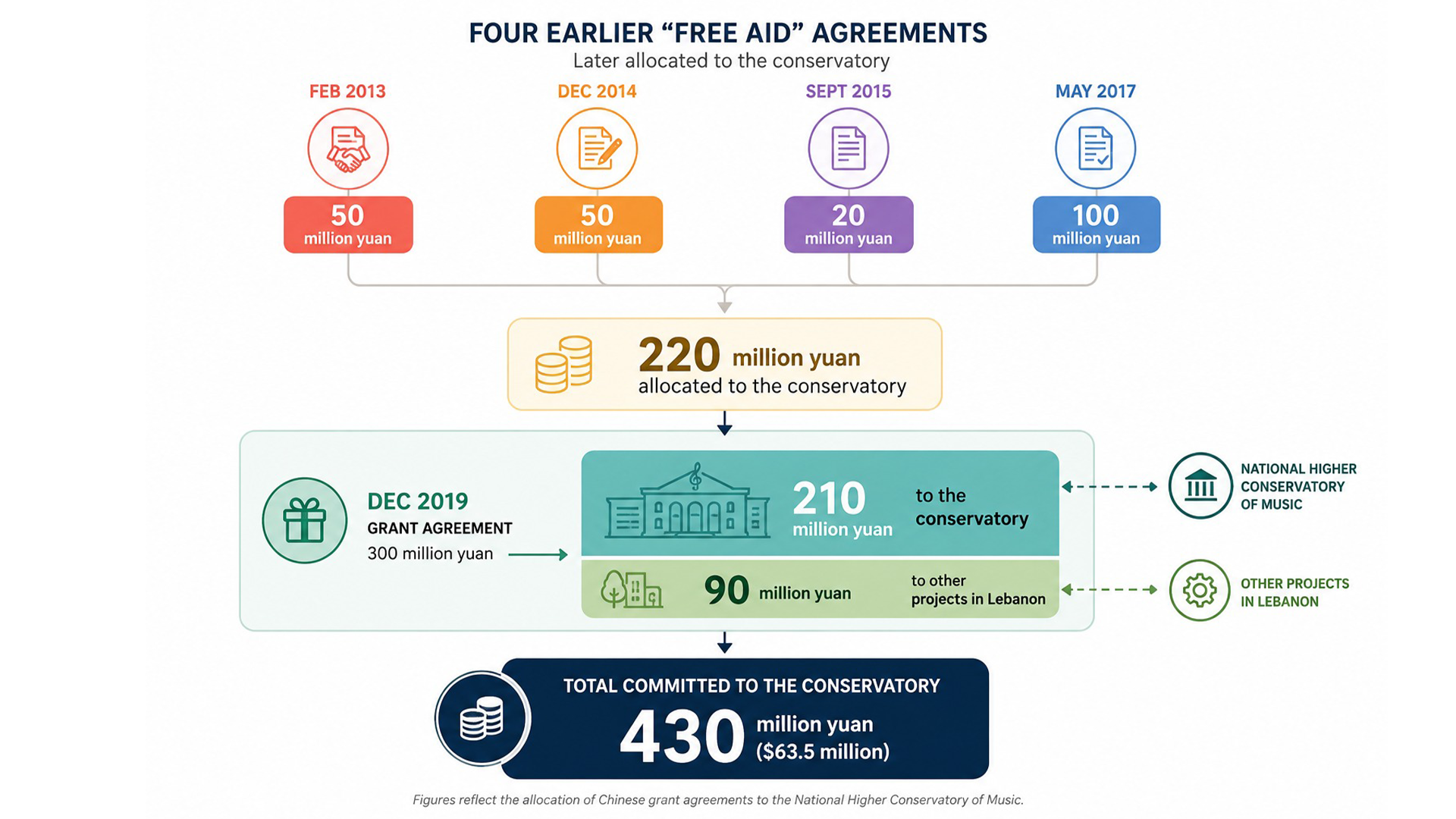
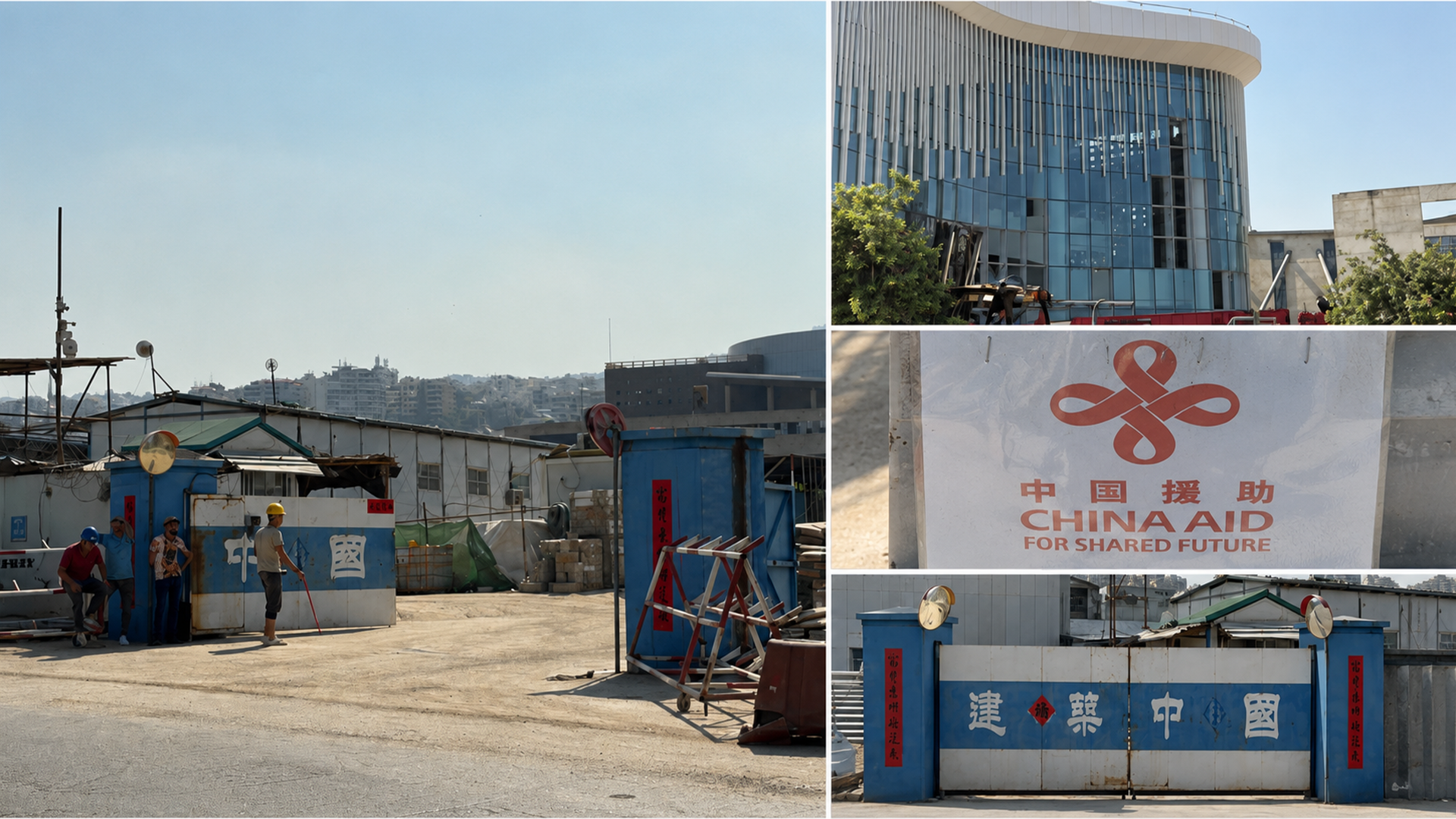
On the waterfront in Dbayeh, approximately 10 kilometers north of Beirut, a $63.5 million music conservatory emerges from a bustling construction site. It is large enough to be seen from the coastal highway, featuring a soaring glass facade and white architectural accents that evoke the keys of a piano. Once completed, the complex will become the new center for the Lebanese National Higher Conservatory of Music, with a 1,200-seat concert hall and classrooms for 1,500 students. The project is not financed through Lebanon's public budget, nor is it commissioned by a private developer. It is funded and built by the Chinese government. “The project is a visionary donation that targeted the highest and utmost cultural diplomacy,” conservatory director Hiba Al Kawas told The Beiruter. The nearly completed conservatory is only the most visible expression of a much wider Chinese presence stretching across Lebanon's ministries, universities, and public institutions. Rather than isolated displays of generosity, these projects reveal a coherent model of Beijing's engagement in Lebanon: financed through grants rather than loans, implemented largely by Chinese entities, and concentrated in sectors where they can cultivate goodwill, while limiting China's financial exposure to risk. Tracing nearly two decades of Chinese-backed projects in Lebanon, The Beiruter reviewed government decrees, grant agreements, planning documents, and bilateral agreements, including Lebanon's 2017 Belt and Road Initiative (BRI) memorandum of understanding with China. Officials were interviewed across multiple Lebanese ministries and public institutions. Lebanon's 2017 Belt and Road memorandum of understanding with China, as published in the Official Gazette. As the first installment of a two-part series, this investigation examines how China has grown prominent in Lebanon’s cultural and educational landscape. It follows the paper trail behind what will soon become an iconic addition to the Lebanese skyline, before situating it within a wider network of classrooms and cultural institutions where China's presence continues to expand. In 2016, former National Higher Conservatory of Music Director Walid Moussallem approached Lebanon's Council for Development and Reconstruction (CDR), the government agency responsible for planning and implementing many of the country's largest public investment projects. “I have a dream,” Moussallem told Sami Feghali, Director of the Department of Land Use Planning at the CDR. Lebanon lacked a dedicated venue for the conservatory’s performances, forcing musicians to play out of churches and other temporary locations. Moussallem’s dream of a national concert hall promised to change that. The CDR endorsed the proposal, selecting a site overlooking the Mediterranean in the Dbayeh Marina and commissioning Lebanese architects Habib Debs and Jad Tabet to prepare the initial design. Architectural renderings of Lebanon's future National Higher Conservatory of Music in Dbayeh. Source: Planète Acoustique. Then the project took an unexpected turn. “During a visit by a Chinese delegation, Beijing officials approached the CDR asking if there was a project to fund,” Feghali said. The conservatory, it turns out, was the perfect fit. But donations do not come without conditions. “We were informed that China would take responsibility for the design and construction,” Feghali explained. The Sino-Lebanese agreements reviewed by The Beiruter show how closely the project remained under Beijing’s authority. Chinese officials organized a national architectural competition to select the design, to be carried out by Chinese contractors. Feghali described the working relationship with the Chinese as productive but exacting. "They were very meticulous and specific," he said. "And communication could be difficult, with translations needed.” China's control over the project was enabled by its financing arrangement. Rather than issuing loans or transferring direct funds to Lebanon, Beijing financed the conservatory through a series of in-kind grants. Documents reviewed by The Beiruter, including a 2018 CDR progress report, show that four earlier “free aid” agreements signed between February 2013 and May 2017 were later allocated to the conservatory, committing a combined 220 million yuan in Chinese assistance. A fifth agreement, signed in December 2019, provided an additional 210 million yuan for the conservatory and 90 million yuan for other investments. In total, the agreements committed 430 million yuan ($63.5 million) to the project. Five Chinese grant agreements signed between 2013 and 2019 ultimately committed 430 million yuan ($63.5 million) to the National Higher Conservatory of Music. The conservatory’s funding model is typical of Chinese grant assistance in Lebanon. According to Assem Fidawi, Director of the CDR presidential office and the official responsible for Chinese agreements, the process typically is as follows: Beijing first extends grant financing through a bilateral framework agreement, Lebanon submits projects for consideration, and China determines which will be implemented. The two governments then negotiate the terms of the project’s execution, with the assistance itself delivered largely through Chinese contractors, equipment, and technical expertise. "Working on Chinese aid projects is like shopping from the Chinese market," Fidawi said. When The Beiruter visited the construction site in Dbayeh last month, entrenched Chinese involvement was readily apparent. China Aid logos appeared on construction fencing, workers' helmets, and shipping labels attached to imported building materials. On-site employees described how even the workers’ meals of Chinese noodles were imported rather than locally sourced. The laborers lived within the gated construction site, adorned with Chinese calligraphy and barbed wire, with their movement outside the compound reportedly restricted. Construction of the National Higher Conservatory of Music in Dbayeh. The bottom right image has been AI-enhanced for clarity; all other photographs were taken by The Beiruter. Construction began in 2019. Seven years later, the conservatory remains unfinished. The implementation agreement envisioned completion within twenty-nine months. Instead, construction collided with a succession of crises. Lebanon's financial collapse disrupted the construction sector. The COVID-19 pandemic slowed work. The Beirut port explosion created further delays. The wars between Israel and Hezbollah in 2024 and 2026 repeatedly interrupted the project. Turbulence also emerged within the conservatory itself. Moussallem, whose dream first set the project in motion, resigned as director in 2022, as staff departures and financial struggles became so severe that even maintaining electricity proved difficult. Despite upheaval surrounding both the construction and the organization it was intended to house, the project today is entering its final stage, which brings a new challenge: whether Lebanon can sustain the ambitious institution China built. Under the implementation agreement, China will remain responsible for the facility during a two-year warranty period, after which it will be transferred entirely to the Lebanese government. The transfer will leave Lebanon responsible for staffing, operating, and maintaining an institution considerably larger than is in place today. The conservatory currently employs approximately 365 teachers across its 20 branches, according to Al Kawas, its new director. She seeks to hire nearly twice that number as the new facility opens: 700 additional teachers, musicians, technicians, and administrators. Although Al Kawas said the government would fund the institution, the scale of that support remains undetermined. “The government will certainly fund us but the question is how much,” she told The Beiruter. CDR officials remain optimistic. Workers at the site said lower-paid Syrian laborers had been brought in as the prospective November deadline approached and now constituted roughly half the workforce. An official handover ceremony of a completed conservatory is tentatively scheduled for the end of this year. Al Kawas aims to transform the new headquarters into a center for a budding music industry not only in Lebanon, but across the region. “Whoever sees music as a bridge knows how to play with many invisible threads,” she said. A decade before Moussallem's original conservatory dream, another Chinese-backed institution opened its doors in Beirut. In 2006, the first Confucius Institute in the Middle East was established at Saint Joseph University in Lebanon. Unlike the conservatory, it did not result from an agreement between the Lebanese and Chinese governments. Instead, it was created as an academic partnership between Saint Joseph University and Shenyang Normal University in close collaboration with the Chinese Embassy. Speaking with The Beiruter, Director Nisrine Lattouf described its mission as “teaching Chinese language and promoting Chinese culture throughout Lebanon,” a goal shared by the more than 500 Confucius Institutes operating globally today. Nearly two decades later, the institute remains Lebanon's sole authorized testing center for the HSK and HSKK, the standardized Chinese language proficiency examinations. Students travel from as far as Syria to sit for the exams, often hoping the certification will open educational or professional opportunities in China. Those who achieve the required HSK level become eligible to continue their studies through Chinese government scholarship programs. Unlike university language departments, enrollment is not limited to degree-seeking students. Classes include participants of all ages. "Students come for different reasons,” Lattouf explained. According to Lattouf, between 120 and 150 students study Mandarin through the institute each semester, while between 60 and 70 candidates typically sit for the HSK examination, with numbers fluctuating based on Lebanese political stability. All Mandarin teachers are Chinese nationals assigned to Beirut for two-year rotations by Shenyang Normal University and China's Center for Language Education. The institute also works closely with the Chinese Embassy on cultural programming, such as celebrating Lunar New Year and the upcoming 55th anniversary of Sino-Lebanese relations this November. It also helps coordinate competitions like the annual Chinese Bridge Competition, where Lebanese students compete in Chinese-language speeches, cultural knowledge, and artistic performances, with winners advancing to international finals in China. The Confucius Institute is only the first of a growing number of Chinese educational partnerships in Lebanon. Since 2007, the American University of Beirut has offered Chinese language as an elective for undergraduates, using professors provided through the Chinese Embassy. At least one Lebanese elementary school has approached the Confucius Institute seeking to introduce Mandarin into its regular curriculum, although Lattouf said the institute currently lacks enough teachers to meet that demand. The projects extend beyond language instruction. In 2018, Lebanese University launched the first Chinese studies masters program of the Arab world, which director Ahmad Malli told Xinhua News, “will turn Lebanon into a regional hub for Chinese studies.” In 2020, the Lebanese University partnered with Huawei to establish an Information and Networks Academy, while the Arab Open University signed a similar agreement the following year to introduce Huawei's ICT Academy curriculum. In 2022, the American University of Beirut announced a research collaboration with China's Institute of Plasma and Physics. The National Higher Conservatory of Music remains, for now, only a construction site. Cranes continue their frantic activity nearly a decade after the project was proposed. Yet even before its first concert is performed, the thirteen-story music hall’s message looms large over the Dbayeh coastline: Chinese engagement in Lebanon has only begun. Chinese funding of the conservatory was finalized against the backdrop of deepening Sino-Lebanese relations. In 2017, Lebanon joined China’s Belt and Road Initiative, establishing a non-binding framework for cooperation extending beyond infrastructure to include areas such as “exchange between people, health, and sport.” China committed to the conservatory in 2018, three years before President Xi Jinping formally called for a new emphasis on “small and beautiful” (xiao er mei) projects within the Belt and Road Initiative in 2021. The shift marked a departure from the vast, loan-backed infrastructure projects that had defined the BRI's earlier years and drew criticism for leaving developing countries with burdensome debts. China now prioritizes smaller, lower-risk, grant-funded initiatives designed to improve perceptions of China abroad through visibility and cultural impact. Although conceived before the doctrine was announced, the Dbayeh project embodied many of its defining characteristics: a landmark cultural institution financed entirely through grants rather than loans, designed to maximize public exposure while requiring relatively limited financial commitment. The conservatory was therefore not simply an early beneficiary of China's Belt and Road strategy. It foreshadowed its evolving approach. As Beijing expanded the strategy globally, Premier Li Qiang announced in 2025 that China would launch 2,000 new “small and beautiful” projects across the developing world over the following five years. Lebanon has embraced China’s approach. “I hope that we can continue to collaborate with the Chinese government,” Al Kawas told The Beiruter. She hopes the Chinese stay involved with the conservatory long after construction is complete, envisioning future cultural and educational cooperation involving Chinese teachers, musicians, and academic exchanges. On a 2025 visit to Beijing, Lebanese Ambassador Milia Jabbour praised China's emphasis on “small and beautiful” projects, specifically citing the conservatory while drawing connections to the historic Silk Road relationship between the two countries. “We really appreciate those ‘small and beautiful’ projects,” Jabbour said to China Daily. Concert halls, language classrooms, and university partnerships, however, only reveal the surface of deepening Chinese engagement in Lebanon. The Belt and Road Initiative continues to expand into Lebanon’s transportation, telecommunications, and agriculture sectors. Those projects, and what they suggest about Beijing's longer-term ambitions in Lebanon, are the subject of the second installment of this investigation. The Chinese are very much aware that they are funding Lebanon’s highest recognized landmark.
A Lebanese dream becomes a Chinese project
They would also build the project using their own construction teams.
Those invisible threads are where the relationship between China and Lebanon begins.
From concert halls to classrooms
Many believe mastering Chinese will create educational or professional opportunities.
Warming relations to come
They highlight how Chinese soft power can build bridges between Lebanese and Chinese people.
-
-

-
Katharine SorensenReporter
-
-
-

-
Soraya JohnsonWriterJournalist specializing in political analysis, economic trends, and on-the-ground investigative reporting.
-
