

China's record-breaking superconducting magnet marks another milestone in global fusion development as countries expand investment in the technologies needed for future reactors.
China's giant magnet and the future of fusion

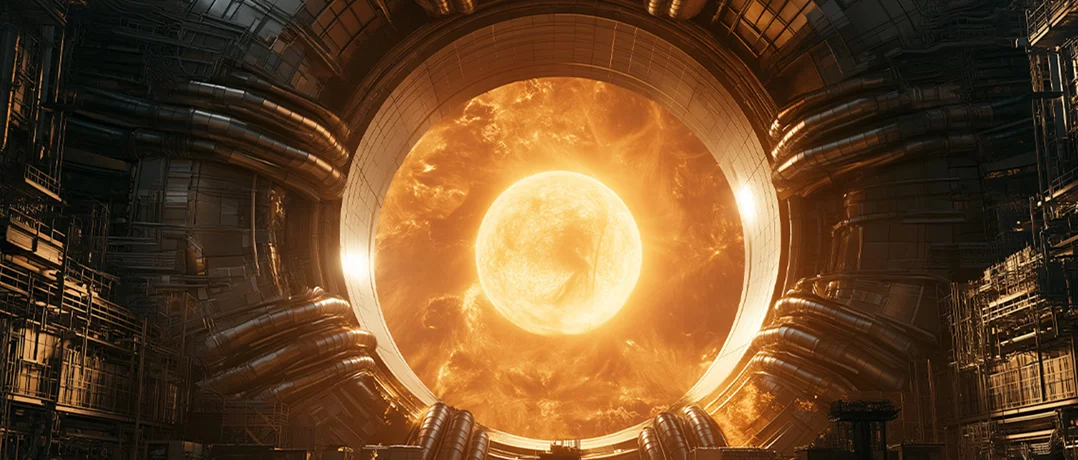
China has completed and tested the world's largest superconducting magnet for a nuclear fusion reactor, marking another milestone in its effort to commercialize what many scientists consider the ultimate source of carbon-free energy. Designed for the country's Comprehensive Research Facility for Fusion Technology, or CRAFT, the 582-ton magnet was developed over six years. It is about 1.3 times the volume of comparable magnets being built for ITER, the world's largest international fusion experiment, and can store three times as much energy.
The achievement comes at a time when fusion is attracting unprecedented investment. According to the July 2026 Global Fusion Industry Report, private fusion companies raised a record $4.5 billion over the previous year, bringing cumulative private investment in the sector to $14.2 billion. More than 16,000 people now work across the global fusion industry as companies advance toward pilot plants and demonstration facilities.
The breakthrough underscores that the race to commercialize fusion is now being driven as much by industrial capacity as by scientific discovery.
The next challenge extends beyond the reactor
At the heart of every magnetic fusion reactor are superconducting magnets, which generate the powerful magnetic fields needed to confine plasma heated to temperatures hotter than the sun. Without those magnetic fields, the fusion reaction cannot be sustained.
In announcing the milestone, Chinese researchers emphasized not only the magnet's size but also how it was built. According to the Institute of Plasma Physics at the Chinese Academy of Sciences, every core technology required to design, manufacture and test the system was developed domestically, highlighting China's growing ability to produce some of the most advanced components needed for future fusion reactors.
That capability is becoming more important as fusion development moves beyond scientific discovery. Alongside advances in reactor performance, countries are investing in the manufacturing expertise and industrial capacity needed to build more complex fusion systems.
China is far from alone in pursuing that goal. The International Atomic Energy Agency's World Fusion Outlook 2025 identified more than 160 fusion facilities that are operating, under construction or planned across nearly 40 countries. Governments, national laboratories and private companies are all investing in the technologies needed to move beyond experimental devices toward electricity-producing reactors. The result is that fusion is no longer confined to a handful of scientific institutions. It is becoming a global industrial sector.
A race to build an industry
The industrial transition is already changing how fusion companies spend their money.
According to the Fusion Industry Association's 2025 Supply Chain Report, surveyed fusion developers spent more than $434 million strengthening their supply chains in 2024 by securing reactor components, expanding manufacturing partnerships and investing in production capacity, up from roughly $250 million the previous year.
The spending reflects a shift in priorities. As companies prepare to build pilot plants, investment is increasingly flowing toward manufacturers capable of producing reactor-scale components, from superconducting magnets to specialized materials and precision-engineered systems.
The report also points to an emerging concern. Only 31% of surveyed companies said they were worried about whether current suppliers could meet their immediate manufacturing needs. Looking further ahead, however, that figure rose to 63% when companies considered future commercial deployment. In other words, many developers believe today's supply chains can support experimental reactors but may struggle if multiple commercial fusion projects begin construction simultaneously.
Competition and cooperation advance together
Unlike many strategic technologies, fusion has developed through an unusual combination of international cooperation and national competition. While governments are racing to commercialize the technology first, many continue to collaborate on the scientific and engineering foundations needed to make fusion possible.
The clearest example is ITER, the world's largest fusion experiment under construction in southern France. The project brings together China, the European Union, India, Japan, South Korea, Russia and the United States to build the most ambitious fusion reactor ever attempted. Once operational, ITER is designed to produce 500 megawatts of fusion power from 50 megawatts of external heating, demonstrating a tenfold energy gain. Although it will not generate electricity, the reactor is intended to validate the technologies that future commercial fusion power plants will rely upon.
The project's sheer scale helps explain why international cooperation has remained central to fusion development. ITER is being assembled from roughly one million components manufactured by its seven partners before final assembly in France.
China's latest magnet illustrates how that relationship is evolving. Rather than relying solely on international collaboration, Beijing is simultaneously expanding its own fusion infrastructure while continuing to contribute to ITER. Europe is advancing its DEMO reactor through EUROfusion, the United Kingdom is developing the STEP program, and private companies across North America, Europe and Asia are pursuing competing reactor designs. The result is not a single race with one winner, but a growing ecosystem of national programs competing to solve many of the same technological and industrial challenges.
From scientific milestones to industrial capability
China's new magnet will not produce electricity, nor does it eliminate the engineering challenges that remain before fusion becomes a practical energy source. Engineers must still develop materials capable of withstanding extreme conditions, demonstrate continuous reactor operation and build systems that can operate reliably over long periods.
Yet the latest milestone suggests the fusion race is entering a new phase. For decades, progress was measured largely by scientific achievements, from hotter plasmas to longer-lasting reactions. Those breakthroughs remain essential, but they are no longer the only measure of success.
China's achievement underscores that future progress will also depend on industrial capability. Countries that combine scientific expertise with the capacity to manufacture more complex reactor systems may be best positioned to lead the next phase of fusion development.
-
-

-
The Beiruter
-
