

China’s $8 million solar project has powered 380 Ogero sites, easing Lebanon’s telecom outages and reducing costly fuel dependence.
China’s $8M boost to Lebanon’s telecom

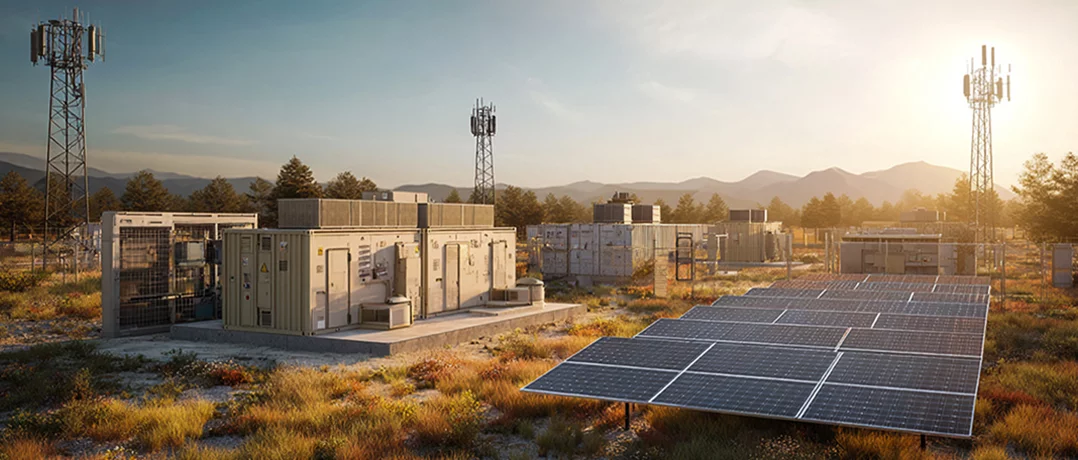
In September 2023, Lebanon’s Ministry of Telecommunications (MOT) and the state-run telecommunication company Ogero received an $8 million donation from China to supply more than 380 of Ogero’s sites with solar power.
Today, after 2 years, the project has been completed, aiding Ogero in acquiring the necessary electricity for its services, as well as enhancing the latter.
What is the project about?
The matter dates back to September 2022, when Caretaker Prime Minister, Najib Mikati, discussed with the Chinese Ambassador to Lebanon, Qian Minjian, in the presence of Caretaker Telecoms Minister, Johnny Corm, and President of the Development and Reconstruction Council, Nabil Al-Jisr, the Chinese solar energy donation for Ogero.
Indeed, Lebanon managed to secure a multimillion-dollar donation from China 1 year later, aiming at stabilizing the country’s struggling telecommunications sector by introducing solar energy across key infrastructure sites. The Ministry of Telecommunications confirmed that the state-owned provider, Ogero, would receive more than $8 million to install solar panels at hundreds of its facilities nationwide. As the project had finally been completed, solar systems had been installed at approximately 380 Ogero locations.
What is the project’s aim and impact?
The project was designed to address chronic power shortages that have severely disrupted internet and landline services since Lebanon’s economic crisis began in 2019.
With Électricité du Liban (EDL) providing only a few hours of electricity per day, Ogero had relied heavily on diesel-powered generators to maintain operations, a solution that has proven increasingly costly and unreliable as fuel supplies and budgets dwindled. The prolonged deterioration of the power grid has affected not only private users but also essential public institutions, including government departments, hospitals, universities, and military facilities.
From here, the project would help Ogero save up to $100,000 per month, expenses it usually diverted to provide essential fuel to operate its centers. These savings can thus be used to improve and enhance Ogero’s services, which would in turn extremely benefit the consumers.
While the move toward solar energy is viewed as a positive step in modernizing Lebanon’s failing infrastructure, the Chinese grant may raise concerns among some political actors and international partners, particularly in light of growing global scrutiny over China’s involvement in telecommunications sectors abroad (most notably regarding the United States). Nonetheless, the initiative represents one of Lebanon’s first significant public investments in renewable energy to combat its widening electricity crisis.
-
-

-
The Beiruter
-
