

As the Iran war disrupts oil markets, China’s dual strategy of securing discounted crude while scaling electrification is insulating its economy and widening the gap with fossil fuel dependent states.
China’s edge in the Iran war energy shock

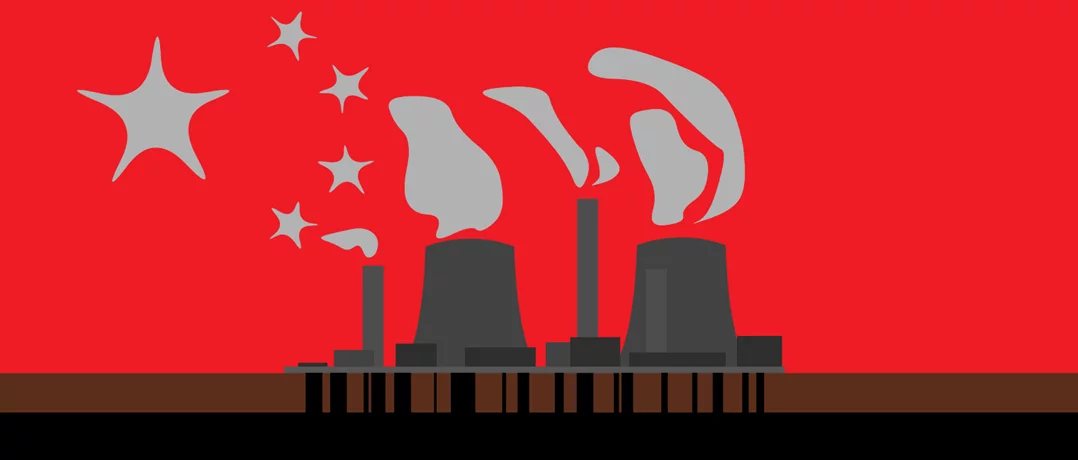
China is emerging from the Iran war not just as the world’s largest energy consumer, but as one of the best insulated from the shock. Analysis from the Carnegie Endowment for International Peace suggests the Iran war is not affecting all economies equally. Instead, it is accelerating a divide between countries still exposed to fossil fuel volatility and those that have begun shifting toward electrified, renewable systems.
China sits at the center of that divide. Electric vehicles now account for roughly 35% of new car sales in China, compared with about 8–10% in the United States and the European Union, according to the International Energy Agency (IEA), a shift that is already reducing how directly oil price spikes feed into its economy.
As the world’s largest energy consumer, China remains deeply tied to global oil markets. But as data from the current crisis makes clear, it is also increasingly able to operate beyond them.
Securing supply in a fragmented oil market
China’s short-term advantage begins with how it buys oil. As Iranian exports continue despite sanctions, China remains the primary destination, often purchasing crude at a discount. Data from tanker-tracking firms Kpler and Vortexa shows Iran exporting roughly 1.3–1.5 million barrels per day, with China absorbing the majority of those flows. These discounted volumes provide a buffer against global price spikes.
In parallel, China has diversified its import base, increasing purchases from Russia, West Africa, and Latin America. According to the IEA, China’s crude import mix has become more geographically varied over the past three years, with Russia emerging as a leading source while Middle Eastern producers account for a smaller share than a decade ago.
This flexibility matters. While other importers compete for constrained supply at higher prices, China can draw on multiple channels.
Electrification and energy shifts
China’s deeper advantage lies in reducing its sensitivity to oil altogether, a shift already visible in transport. Data from BloombergNEF, Bloomberg’s energy and technology research unit, shows China accounted for more than half of global electric vehicle sales, while the IEA projects EV adoption will displace hundreds of thousands of barrels per day of gasoline demand annually.
The same pattern is visible in power generation. China leads global renewable deployment, accounting for nearly half of solar additions in recent years, according to the International Renewable Energy Agency, as electricity generation shifts away from fossil fuels.
As the Carnegie analysis notes, economies that rely more heavily on electrified and renewable energy systems experience less severe transmission of energy shocks. With rising oil prices, a growing share of China’s economy is therefore no longer directly exposed.
The cost of dependence
For countries that remain dependent on imported fossil fuels, the impact is markedly different. Research from the International Monetary Fund shows that energy price shocks feed directly into inflation, trade deficits, and currency pressure. As fuel costs rise, households lose purchasing power while governments absorb higher subsidy burdens. These pressures are already visible across parts of Asia and Europe, where countries without large-scale electrification face rising import bills and intensified competition for alternative supply.
At the same time, the crisis is accelerating a shift already underway. As supply becomes less predictable, the economic case for alternatives strengthens. In China, that shift is already visible, with BloombergNEF estimating that electric vehicles have reached cost parity with internal combustion models, meaning higher oil prices now directly push demand toward electrification.
This shift extends beyond transport. According to the International Renewable Energy Agency, the cost of solar power has fallen by more than 80% over the past decade, making it one of the cheapest sources of new electricity in many markets. As these technologies scale, a larger share of energy demand is met without oil, reducing how directly price shocks feed into the economy.
The Iran war is accelerating that shift, turning what was a gradual transition into a more immediate economic divide.
Operating in both energy systems
China’s advantage lies in its ability to move across both systems at once. In the short term, it continues to secure discounted crude and diversify imports, maintaining supply even as global markets tighten. At the same time, it is steadily reducing the role of oil through electrification, renewable expansion, and battery storage.
This dual positioning allows China to absorb volatility more effectively than economies still dependent on imported fuel. As the Iran war reshapes energy markets, that advantage is no longer incremental but decisive.
-
-

-
The Beiruter
-
