In Lebanon, Christmas transcends religion, becoming a shared cultural celebration of coexistence, family, and national unity.




In Lebanon, Christmas transcends religion, becoming a shared cultural celebration of coexistence, family, and national unity.

In Lebanon, Christmas is more than a religious holiday confined to one community. It is a national and cultural occasion that reflects the country’s pluralistic identity and long tradition of coexistence.
While Christmas is fundamentally a Christian celebration marking the birth of Jesus Christ, it is observed in different ways by Lebanon’s main religious groups (Christians and Muslims alike), each for distinct theological, cultural, and social reasons. Together, these practices highlight how religion, history, and social life intersect in Lebanese society.
For Lebanon’s Christian communities, Christmas is first and foremost a sacred religious feast. It commemorates the birth of Jesus Christ, who is regarded as the Son of God and the central figure of Christian faith.
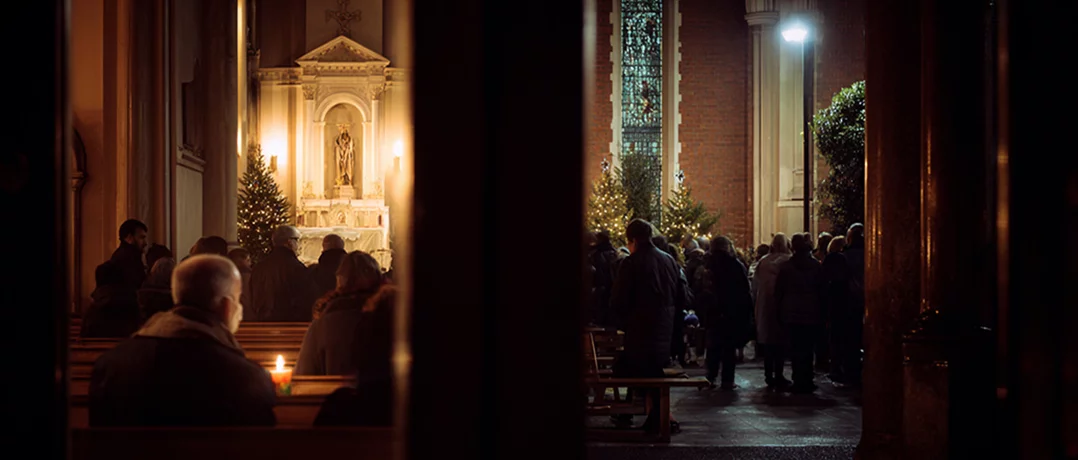
Preparations typically begin weeks in advance with fasting periods, prayers, and church activities. On Christmas Eve, believers attend midnight Mass; a central ritual symbolizing the spiritual renewal brought by Christ’s birth. Churches are decorated with nativity scenes, candles, and Christmas trees, blending local traditions with broader Christian symbolism.
Beyond worship, Christmas holds deep family significance. Relatives gather for festive meals, exchange gifts, and maintain customs passed down through generations. In this sense, Christmas for Christians in Lebanon is both a religious milestone and a reaffirmation of communal and familial bonds.
Although Muslims do not celebrate Christmas as a religious event, many Lebanese Muslims (Sunnis, Shiites and Druze) actively participate in its cultural and social aspects, regarding it as a national and joyful occasion.
Islam recognizes Jesus as one of the greatest prophets, born miraculously to the Virgin Mary, who holds a revered place in Islamic theology. This shared reverence creates a foundation for respect toward the holiday.
In practice, Muslim families often join Christian friends and neighbors in exchanging greetings, visiting decorated neighborhoods, and participating in social gatherings. In mixed areas, Christmas decorations, markets, and public festivities are enjoyed collectively, regardless of religious affiliation.
If one visits Beirut Souks or various Christian-majority areas where Christmas trees, decorations and events are held (such as in Batroun, Jbeil, Jounieh…), one might sometimes notice the number of Muslims trumping that of Christians. This goes to show the excitement and enthusiasm that the aforementioned community shares with its counterpart.
For many Muslims in Lebanon, engaging with Christmas reflects social harmony rather than religious observance. It is seen as a gesture of solidarity, coexistence, and mutual recognition as well as a space to meet and enjoy festive holidays in a country where daily life is deeply intertwined across sectarian lines.
Beyond religious boundaries, Christmas in Lebanon has become a nationwide cultural event. Streets, shops, and public squares are adorned with lights and trees, while schools, businesses, and institutions close for the holiday. In times of political and economic hardship, Christmas often serves as a moment of emotional relief and communal warmth.
The shared celebration underscores a uniquely Lebanese reality: religious diversity does not necessarily lead to separation but can foster shared traditions rooted in mutual respect.
From here, Christmas in Lebanon is celebrated in different ways by Christians and Muslims, each according to their beliefs and cultural values. For Christians, it is a sacred religious feast and an occasion for family gatherings, for Muslims, a moment of respect and social participation as well as an expression of national unity and coexistence. Together, these approaches transform Christmas into more than a religious holiday; it becomes a living example of Lebanon’s pluralism, where diversity is not merely tolerated but actively shared.

