

Oman’s quiet diplomacy can help avert a potential Israeli-Lebanese war, as President Aoun seeks Muscat’s mediation amid rising regional tensions.
Could Oman prevent a coming war?

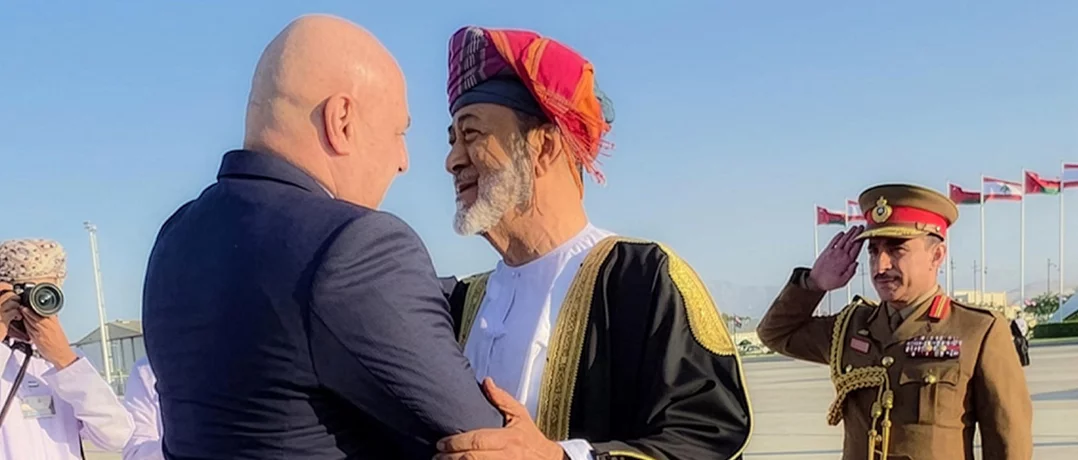
On 9 December 2025, Lebanese President General Joseph Aoun arrived at the Sultan Qaboos Airport at the head of an official delegation, commencing of a 2-day official visit to the Sultanate of Oman.
This comes at a time when rumors of a looming Israeli war on Lebanon have significantly increased, despite the recent de-escalatory tone, following Lebanon’s appointment of Ambassador Simon Karam as the first civilian to lead the Lebanese delegation to the ceasefire monitoring mechanism.
Oman’s historical role as mediator
Oman has long maintained a distinctive approach to regional diplomacy, relying on quiet engagement and trust-building to ease tensions across the Middle East. Recent developments once again highlight Muscat’s role as a discreet but effective facilitator, particularly in the wake of Saudi-Iranian rapprochement in 2023. Around that time, Sultan Haitham bin Tariq traveled to Bahrain to discuss Manama’s relationship with Tehran, an effort that helped pave the way for subsequent talks between Bahraini and Iranian officials at Iran’s embassy in Muscat.
This mediation is rooted in decades of Omani efforts to steady relations among Gulf neighbors. In the 1980s, when Bahrain and Qatar nearly clashed militarily over a territorial dispute, it was Oman’s initiatives that helped launch dialogue between the two capitals. More recently, in 2021, Muscat worked alongside Kuwait to bridge divides within the Gulf Cooperation Council, contributing to the end of the 4-year blockade of Qatar.
Oman’s outreach has extended beyond the Gulf. Following the Saudi-Iranian détente, Sultan Haitham shuttled between Egypt and Iran, relaying messages and exploring possibilities for improved Cairo-Tehran ties. This was consistent with Muscat’s longstanding position: one of only 3 Arab states that maintained relations with Egypt after the Camp David Accords, and a quiet intermediary during periods of heightened Egypt-Iran tension.
Muscat’s diplomatic posture reflects a strategic calculation. Omani leaders have long viewed regional instability as a direct threat to national security, given conflicts in Yemen, Iraq, and Syria. In contrast, a calm regional environment supports economic priorities at home and throughout the Gulf. Rather than acting as a formal mediator, Oman typically provides neutral ground and channels of communication where others cannot. This remains a defining element of Oman’s foreign policy; one that continues to yield meaningful results in a complex region.
What about its role in Lebanon’s current conflict?
In remarks delivered upon his arrival, President Aoun expressed his appreciation for Oman's longstanding friendship with Lebanon, highlighting the historic ties and mutual respect that have shaped relations between the two countries.
Aoun commended Oman’s diplomatic role on the international stage, noting its balanced approach, commitment to dialogue, and reputation as a constructive mediator. He stressed Lebanon’s gratitude for Muscat’s consistent support in regional and international forums, particularly during times of crisis. His private meeting with Sultan Haitham included an in-depth discussion of Lebanon’s internal situation, with a particular focus on the south and ongoing Israeli violations. Given Oman’s relations with key regional actors, talks addressed the possibility of Muscat facilitating dialogue to advance Lebanese-Israeli negotiations. These negotiations are vital, however, due to the externalization of the conflict (as it encompasses foreign regional as well as international actors), Oman can also serve as a mediator between the latter powers, which will in turn have positive reverberations regarding Lebanon’s security and internal dynamics.
Indeed, as Lebanon’s conflict today is between Iran (along with its ally Hezbollah) and both the United States and Israel, Muscat can play a role in bringing the contending parties together, since any agreement between those powers would yield significant impact on the Lebanese scene. Furthermore, as prospects for enhanced negotiations and talks between Lebanon and Israel advance, Oman can also play an intermediary role, helping both sides engage in constructive dialogue to resolve contentious issues.
Despite such positivity, Oman’s mission might face certain hurdles due to the complex situation in Lebanon. Notable analysts believe that the renewal of war will occur in January, after the LAF submits its final report to the government. This “inevitability” stems form Tel Aviv’s insistence on disarming Hezbollah, while the latter refuses till this day to hand over its arsenal North of the Litani. Hence, escaping the drums of war might prove to be a difficult task for Muscat, without excluding its potential role in post-war talks.
-
-

-
The Beiruter
-
