



CRISPR gene editing could transform disease treatment, but questions about consent, safety and unequal access raise concerns about its wider use in human healthcare.
CRISPR can cure disease. It can also divide us.
CRISPR can cure disease. It can also divide us.
By Akash Shah | October 15, 2026

Reading time: 5 min
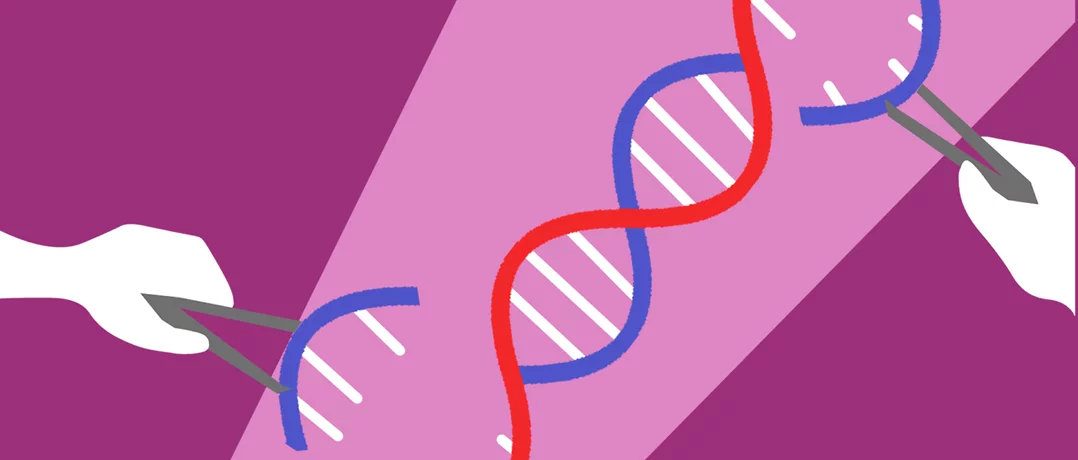
The concept of editing the human genome has been floating around in the world of science for many decades. However, it was only during the late twentieth century that the most powerful gene-editing technology that we have today—the CRISPR/Cas9 system—was discovered. Serendipitously encountered in bacterial defense against viral infections, scientists quickly realized that the CRISPR system could be effectively translated into human healthcare to greatly advance disease treatment. However, the ethics of using CRISPR in human populations is a topic of ongoing conversation. This analysis will utilize Common Morality Theory (CMT)—autonomy, beneficence, justice, and nonmaleficence—to discuss why CRISPR technology should not be ubiquitously implemented in human healthcare due to its potential for severe social harm.
Autonomy
Autonomy, or the ability for an individual to make their own decisions, is a key pillar of CMT. CMT, or principlism, advocates that an individual’s ability to make their own decisions in an informed manner should be respected, and that one should not be constrained or controlled by external factors when making such decisions. The use of CRISPR violates this principle directly: in editing the genome of a baby to alter certain segments of the DNA, scientists would be altering core factors of the baby’s life without obtaining its consent. Although edits in adult somatic cells are confined only to that individual, edits on gametes affect all future generations without any form of consent.
Some might argue that the parents’ consent is sufficient to proceed with the gene modification operation on a baby. However, it is absolutely unacceptable for a parent to dictate a child’s hair color, skin color, or even whether or not a child should be treated for a particular trait, such as impaired hearing, because this would be a blatant violation of autonomy, especially since these traits do not directly save a child from death and would likely affect the child for the rest of their life.
Beneficence/Justice
Beneficence and justice refer to doing good for all people and promoting equal opportunity of all goods and services for all people, respectively. Using CRISPR to edit malignant genes can have many positive outcomes on an individual’s quality of life. From the potential of curing many forms of cancer to the endless possibilities of curing other debilitating genetic conditions, the positive effects of CRISPR are great. Naturally, though, downsides exist. This technology is extremely expensive, with currently emerging gene editing therapies costing around $2 million. The socioeconomic status quo would allow only the affluent to access this curative treatment, which would severely increase health disparities across the globe. One might claim that this is acceptable because the rich can do more good in society if they are healthier.
3,072 × 2,304However, beneficence requires good to be done to all people without fail, as opposed to only a select few. CRISPR in and of itself might not necessarily be problematic from this viewpoint; instead, the implications of the implementation of this technology with the current legislative and socioeconomic frameworks that the world operates by would render it completely unjust, worsening inequality in healthcare.
Nonmaleficence
Nonmaleficence, in the context of the principlist framework, refers to the “obligation to do no harm”. Although the concept of harm is vague, it is understood that medicine should always refrain from decreasing someone’s quality of life in any way. CRISPR usage in the present state of global healthcare would definitely lead to significant harm for a variety of reasons. First and foremost, this gene editing technology has not yet been fully developed or even fully known. If a gene-editing procedure goes wrong, this could have serious consequences on the patient, patient’s family, and even future generations. For example, during the process of the non-homologous end joining repair mechanism, insertion and deletion of nucleotides is “random”, which can lead to unpredictable frameshift mutations with unpredictable consequences.
Allowing CRISPR to be used even with such unknown and potentially deleterious effects is a serious threat to society, and such carelessness should be prohibited at all costs. Additionally, there are many complex traits that are affected by multiple genes, as well as by environmental factors. Using CRISPR to modify genes that might affect complex traits can yield unexpected results that would be difficult or even impossible to correct. This could have severely detrimental effects on the patient population for generations to come, and can even be counterproductive to the original intent of the procedure, which directly contradicts the fundamental idea of nonmaleficence.
It is possible that one might think that the chances of a procedure going wrong are slim, because the developed procedure would have to be proven to be effective and beneficial before it is approved by the federal government. However, with the current state of CRISPR technology, it is impossible for scientists to definitively predict the full extent of the downstream implications of a particular mutation. Ignoring this fact can lead to the development of new illnesses and other side effects that can result in a cascade of harm, not just to a particular patient, but to society as a whole.
The ethical discussion surrounding the implementation of CRISPR into healthcare is one fraught with immense amounts of nuance, and there are many implications to this that scientists and ethicists alike are still not fully aware of. Upon careful consideration, CRISPR technology introduces harms that greatly outweigh the benefits in the current state of technological development; however, it is very plausible that strong and well-developed legislation can be a key factor that makes gene-editing a ubiquitous treatment.
