

Artificial intelligence has begun entering gene-editing laboratories, accelerating the race to develop CRISPR therapies for diseases once considered untreatable.
CRISPR-GPT and AI-assisted gene editing

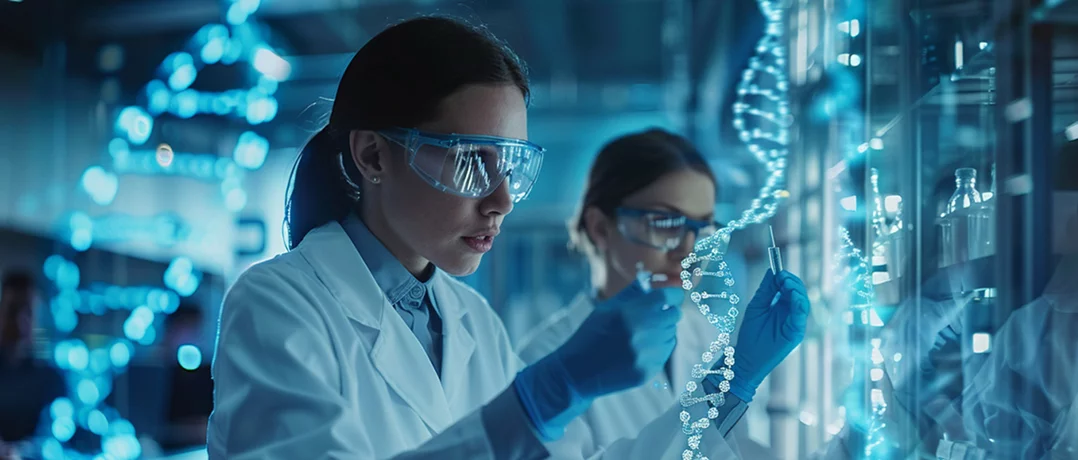
Artificial intelligence is rapidly moving beyond search engines and chatbots into one of the world’s most technically demanding scientific frontiers: human gene editing. By the end of 2025, more than 2,000 gene therapy clinical trials were active worldwide, according to the American Society of Gene & Cell Therapy’s quarterly report, underscoring the rapid expansion of CRISPR-based medicine, which uses gene-editing technologies to modify or repair DNA linked to disease.
That shift gained major international attention following Stanford University’s July 2025 release of “CRISPR-GPT,” an artificial intelligence system designed to function as a conversational copilot for gene-editing research. Researchers can explain a genetic disease or research objective in plain language,and the system generates proposed CRISPR workflows, guide RNA recommendations, and optimization strategies that previously required months or years of highly specialized laboratory expertise.
The implications extend far beyond Stanford itself. Over the past year, companies across North America, Europe, and Asia have accelerated investment into AI-assisted biotechnology platforms capable of analyzing biological datasets, predicting genetic outcomes, and designing therapies at far greater speed than traditional research methods allowed. Supporters argue the technology could dramatically expand access to advanced gene-editing research by lowering technical and financial barriers that historically concentrated the field inside elite institutions and multinational pharmaceutical companies. Critics, however, warn that faster experimentation may intensify longstanding ethical and regulatory concerns surrounding biological safety and the global distribution of increasingly powerful biotechnology capabilities.
Teaching AI to edit genes
For decades, gene editing remained dependent on highly specialized scientific expertise. Designing a CRISPR experiment required researchers to identify precise genetic targets and avoid unintended genetic changes elsewhere in the DNA that could create harmful side effects,
Stanford researchers developed CRISPR-GPT to reduce those barriers by training the system on 11 years of expert discussions, protocols, and peer-reviewed studies related to CRISPR experimentation. According to Stanford Medicine, the platform allows researchers to interact with the system conversationally rather than relying entirely on highly specialized computational and genetic research expertise.
One of the most striking findings from Stanford’s early testing involved accessibility itself. Researchers reported that first-time users with no prior CRISPR experience achieved approximately 90 percent efficiency in their initial gene-editing attempts using the AI-assisted platform. Scientists involved in the project argued that the goal was not to replace geneticists, but to compress timelines and expand participation in highly technical biotechnology research.
The broader biotechnology industry is moving in a similar direction. McKinsey estimated by 2025 that AI-assisted drug discovery platforms could generate between $60 billion and $110 billion annually in pharmaceutical value creation over the coming decade. The technology is now moving rapidly from research laboratories into the center of the global biotechnology industry.
The commercial push into rare diseases
Much of the commercial race surrounding AI-assisted gene editing is centered on rare genetic diseases, where conventional drug development has historically been technically difficult and expensive.
Artificial intelligence may begin changing those economics by shortening research timelines and reducing development costs during the earliest stages of experimentation. Several firms are already moving toward commercialization. Intellia Therapeutics began a “rolling” submission process to the U.S. Food and Drug Administration in April 2026 seeking approval for a CRISPR-based therapy targeting hereditary angioedema, a rare genetic disorder that can trigger severe and potentially life-threatening swelling attacks. In Phase 3 trials, patients receiving the therapy experienced 87 percent fewer attacks than those in the placebo group, while 62 percent of treated patients became completely attack-free.
Those results marked one of the strongest demonstrations yet that in vivo CRISPR therapies, those delivered directly inside the body, can produce durable clinical outcomes inside the human body.
The accelerating pace of development is also creating new opportunities for smaller biotechnology firms. Genespire, an Italian biotech company, is preparing to launch clinical trials by the end 2026 for GENE202, a gene therapy targeting methylmalonic acidaemia, an ultra-rare metabolic disorder affecting fewer than one in 100,000 births globally and currently lacking any approved treatment. Industry analysts argue that AI-assisted development systems may prove especially important for firms operating in highly specialized rare disease markets, where traditional pharmaceutical economics often discouraged investment due to limited patient populations.
A global biotechnology competition
The race surrounding AI-assisted biology is increasingly geopolitical as well as scientific. Governments across the United States, China, Europe, and parts of the Gulf are investing heavily in artificial intelligence infrastructure tied to healthcare, pharmaceuticals, and biotechnology, while companies compete to accelerate drug discovery and precision medicine through AI-guided research systems.
Historically, advanced gene-editing research remained concentrated inside a relatively small number of elite universities, pharmaceutical companies, and specialized laboratories. AI-assisted platforms may begin redistributing parts of that capability across a much wider network of startups, universities, and regional biotechnology hubs.
For some scientists and biological researchers, however, the major technical and ethical limitations remain unresolved. A 2021 review published in Frontiers in Genome Editing noted that CRISPR technologies still face substantial risks involving unintended edits, immune responses, long-term safety concerns, and delivery challenges inside the body. Those concerns become more significant as artificial intelligence compresses research timelines and reduces barriers to experimentation itself. Researchers have also warned that AI-assisted biotechnology may complicate governance and oversight systems originally designed for far slower scientific development cycles.
The central question facing biotechnology in 2026 is therefore no longer whether artificial intelligence will become integrated into gene editing. The question is how quickly AI-assisted biology will move from a specialized research tool into a globally distributed technological platform capable of transforming modern medicine itself.
-
-

-
The Beiruter
-
