

The Lebanese designer dressed the First Lady of New York in a career solidifying move, and is laying her tracks in Lebanon.
Cynthia Merhej: a fashionable journey of constant rebirth
Cynthia Merhej: a fashionable journey of constant rebirth
By Grace Massoud | February 07, 2026

Reading time: 5 min
Rama Duwaji, the youngest First Lady in New York City
history, symbolizes something new, fresh and hopeful. “I could be Rama,
she resembles us Lebanese”, states Cynthia Merhej the woman behind the fashion
brand Renaissance Renaissance. Dressing this prominent figure in
politics was meaningful seeing as they have shared values.
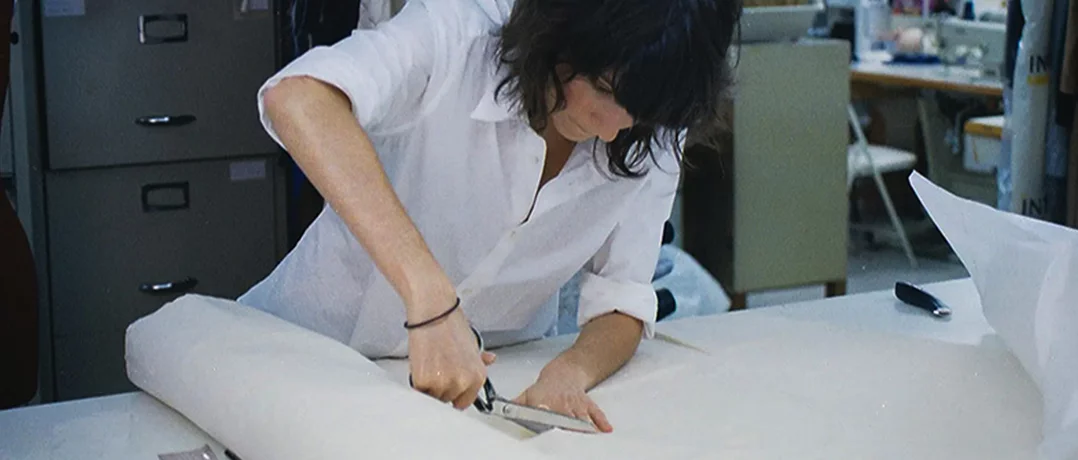
“The fact that she chose to wear a Lebanese designer and me in particular is a huge honor”. Putting her creativity on a huge stage, and the press that ensued from it, marked a milestone in her career. Having a strong sense of style, Rama made the process easy. They were inspired by a coat from the Spring-Summer 2023 line.
All roads lead to fashion
Renaissance Renaissance officially started in 2016. Despite
having grown up with fashion her whole life, her mom being a designer, she had
no technical experience in it. “The first five years were a school for me, as
if I was doing my bachelor’s degree then the Master’s”, affirms Cynthia. She
trained herself, took pattern making lessons, already knowing how to draw. Working
side jobs, the money she made was invested in her clothing brand. In 2020, she
set up her business in Dubai then went back to Paris to live in stability,
which was lacking in Lebanon.
The fashion designer earned a degree in visual
communications, graphic design and illustration in London. “I love to tell
stories, be it through photos or writing or drawing or clothes”. However, she
stayed up to date with the latest trends because of a deep-seated love for fashion.
This passionate woman worked as a DJ, in graphic design, illustration, and as a
teacher in fashion schools.
When she started manufacturing in Italy, she felt
stability for the first time in her life, that she could focus on her craft. During
this time, she went back and forth to Lebanon. At the end of 2023, she moved
production to Lebanon and this year she set up her business here.
There were many rebirths for Cynthia on a personal and professional level. Due to the tumultuous situation in Lebanon, they stopped and resumed work around four times. “We keep changing and evolving as individuals as well”.
Beauty in the unexpected
As for her taste, it often juxtaposes romantic
femininity with toughness. When she’s designing an item, softness and harshness
often meet. She gets inspired from military references, then right after, from photographs
of flowers. There’s more allure in the unexpected than the obvious.
When you have a traditional education, it locks you in a
rigid way of thinking. Her lack in it made her open to trying new things,
especially when she gained confidence and started letting go of restrictions.
At that moment, she began doing what she thought was interesting and what other
people weren’t doing. “I have my own unique journey. There’s no way anyone
could come up with what I came up with”.
Her uniqueness became a strength. She takes a lot of
risks, then they become a trend, and get copied by everyone. Even in sketching,
she thought she should draw the fashion figurines the classic way. Now she’s
sought after because she draws differently.
Being the first Arab woman to be shortlisted for the LVMH Prize in 2021, then again in 2025, she felt it was a magnanimous moment, though she wishes it had more of an impact. This year in the LVMH there were 3 Arabs including Cynthia, a Palestinian designer from Qatar and a Saudi designer. A step in the right direction yet not enough. In the global fashion industry, the current is still very Eurocentric. Not seeing a lot of representation in these spaces is what compelled her to come back to Lebanon and establish her own glamorous fashion brand.
Ethical and eternal pieces
Cynthia puts a lot of thought into everything she makes,
whether it’s the fabric, the cut, the presentation, or the photographs. “In
pop-ups and events, it makes me so happy when I see a sixty-year-old and a
twenty-year-old woman wearing the same pants, and the fit is to-die-for. It is
the thing I’m most proud of”, confesses Cynthia.
In that light, she advocates sustainability, putting in time
and effort, and making choices of creating not for the sake of profit. “I care
about the consequences”. She intends to keep making pieces that last, are
comfortable, and special, so that people would want to hold onto them for a
long time. Matching different things in the closet is one of the criteria she
considers. In her book, clothes are something that should be preserved and
treasured through many stages of life.
Cynthia hopes people will be more aware of the cost of
doing such ethical work in this day and age. Making cheap clothes requires
paying workers 50 cents per day, the fabric is made of toxic material, and the
finishing is not designed to last. “Fast fashion has warped our brain to think
that an item of clothing costing twenty dollars is normal”.
After her momentous accomplishment in New York City, she’s
excited to come back and have her own space in Lebanon. Stability is of the
utmost importance to the artist. Witnessing amazing art exhibitions, artists
moving back, plays, music, and a pulsing art scene are all the more alluring. The
cultural beat has returned to the country, a beautiful Renaissance is underway,
and Cynthia intends to have her say in it.
-
-
-
Grace MassoudWriter and Head of PRFocusing on general entertainment.
-
