



From nitrates to drones: The EU in Lebanon’s escalating confrontation.
Cyprus in the line of fire

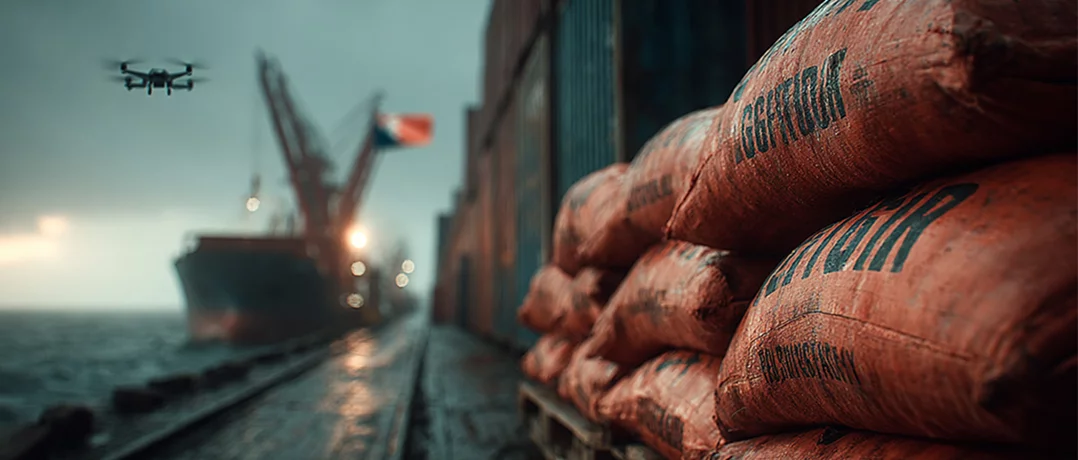
A profound geopolitical shift is unfolding in the eastern Mediterranean. What was once a contained regional conflict has now spilled beyond its familiar borders, directly touching the sovereignty and security of a member state of the European Union: the Republic of Cyprus.
Drone attacks targeting British military facilities at RAF Akrotiri, located on Cypriot soil, have been attributed by intelligence and government sources to the Lebanese group Hezbollah. These were not isolated security incidents. They signalled something far more serious: Europe’s own strategic space has been drawn into the confrontation linked to the Iranian crisis via Lebanon. Brussels now faces an unprecedented test of its ability to protect its members and to activate its mutual defence commitments.
On the night of 1 March and into the early hours of 2 March, RAF Akrotiri in Cyprus was struck by what officials described as an Iranian-made “Shahed” suicide drone. Although material damage was limited to part of the runway and no casualties were reported, the message was unmistakable: Lebanese territory has become a launchpad for targeting Europe’s strategic depth.
The Details of the attack
According to official Cypriot sources, the drone flew at an extremely low altitude to evade radar detection, which explains why it was only identified moments before impact. Government sources in Nicosia stated that all indicators point to Hezbollah directing the operation from within Lebanon.
The strike came amid a wider regional escalation following joint US and Israeli operations against targets inside Iran, operations that reportedly resulted in the death of Iran’s Supreme Leader, Ali Khamenei, and triggered a response from various groups aligned with what Tehran calls the “Axis of Resistance”.
The British Sovereign Base Areas at Akrotiri and Dhekelia are a legacy of Cyprus’s 1960 independence agreements. The United Kingdom retains control of roughly 3% of the island’s territory as overseas British land. Technically, these bases are not part of the European Union. Yet an attack on them affects Cyprus’s overall security due to their geographic and demographic integration with the island.
In response, Prime Minister Sir Keir Starmer declared that Britain has the right to defend its personnel and facilities.
For the European Union, the attack raises clear legal questions under the Lisbon Treaty. The treaty states that if a member state becomes the victim of armed aggression on its territory, other member states are obliged to provide assistance and support by all means in their power.
Act of terror or armed aggression?
On 2 March 2026, the European Commission announced that emergency discussions would focus on whether to activate relevant clauses of the Lisbon Treaty regarding Cyprus.
The key challenge lies in classification. Some argue that the strike should be treated as a terrorist act, which would trigger the EU’s solidarity clause. Others contend that launching drones from the territory of one state (Lebanon) towards another (Cyprus) constitutes armed aggression requiring a collective military response.
Greece has taken the firmest stance. Defence Minister Nikos Dendias pledged to contribute “by every possible means” to Cyprus’s defence. This bilateral commitment reflects growing concern that the eastern Mediterranean could become an open theatre for drones and cruise missiles, threatening not only Cypriot sovereignty but also the European Union’s strategic energy projects.
The “nitrate legacy” in Cyprus
Cyprus’s accusations against Hezbollah are not made lightly. They rest on a documented history of intelligence and logistical activity linked to the group on Cypriot soil. Nicosia has long believed that Hezbollah used the island as a logistical export point for operations elsewhere in Europe.
In June 2015, a Cypriot court sentenced Lebanese-Canadian national Hussein Bassam Abdallah to six years in prison after authorities discovered 8.2 tonnes of ammonium nitrate stored in the basement of a residential property in Larnaca. Abdallah admitted membership in Hezbollah’s military wing and said the materials were intended for attacks against Israeli interests and tourists in Cyprus. Investigators linked the cache to a broader global strategy involving similar stockpiles in London, Thailand, New York, and several German cities.
This history prompted Cypriot authorities, with EU backing, to adopt stricter counter-terrorism measures. However, statements made in June 2024 by Hezbollah’s late leader Hassan Nasrallah marked a shift from covert activity to overt military threats. He warned that Cyprus would become “part of the war” if it allowed Israel to use its airports. Many now see those remarks as a precursor to the March 2026 attacks.
Migration as leverage
Beyond drones, Hezbollah is believed to hold another potential pressure point over the European Union through Cyprus: migration.
Cyprus has the highest number of asylum seekers per capita among EU member states. In May 2024, Hezbollah publicly urged the Lebanese government to “open the sea” for Syrians to leave towards Cyprus and Europe as a means of pressuring Brussels.
Cypriot officials fear that further instability in Lebanon could trigger waves of migration that the island cannot absorb. Such pressures could generate social and political strain, potentially destabilising the Cypriot government from within.
The international response
The repercussions of the Akrotiri strike have extended well beyond the European Union, reaching Washington, London, and NATO.
Following the attack, Britain shifted its position. Having previously resisted the use of its Cypriot bases for offensive operations, Prime Minister Keir Starmer reportedly approved an American request to use British facilities for “defensive strikes” against Iranian missile sites. Foreign Secretary Yvette Cooper stated that Britain could not ignore attacks on its territory and accused Iran and its allies of attempting to widen the conflict and draw Europeans into it.
Meanwhile, the European Union has begun examining options to strengthen Lebanese internal security forces so they can assume urban security duties. This would allow the Lebanese army to focus on what many in Europe now see as its primary mission: disarming Hezbollah and securing the country’s borders.
What comes next?
The targeting of Cyprus appears to have ended the European Union’s phase of passive neutrality regarding Lebanon.
As air strikes and military operations continue across the region, several possible scenarios may unfold in the coming weeks and months:
First, full activation of the Lisbon Treaty’s defence clauses. This could mean deploying European air-defence batteries, advanced radar systems, and joint naval patrols to protect offshore gas platforms, and potentially even conducting strikes against drone launch sites. Such steps would transform the eastern Mediterranean into a direct zone of European military influence aimed at countering unconventional threats.
Second, the Lebanese state might succeed in implementing a ban on Hezbollah’s military activities. This could lead to armed confrontations between the Lebanese army and the group. In that case, the European Union would likely become a logistical, financial, and possibly military supporter of the Lebanese armed forces to reinforce state sovereignty.
Third, and perhaps most significant, weakened Iranian leadership following Khamenei’s death could reduce Hezbollah’s capacity to sustain cross-border escalation. This might push the group towards a new political arrangement inside Lebanon, relinquishing its military role while preserving its political presence.
A shared security reality
The attacks have underscored a simple but powerful reality: in the eastern Mediterranean, distances are short, and security is interconnected. The security of Lebanon and Cyprus is no longer a separate matter.
For the European Union, involvement in this confrontation is no longer a political choice. It has become a legal and security necessity, imposed by drones and missiles striking what is, in effect, a British base on European soil.
Lebanon now stands at a crossroads. It faces what may be its last opportunity to restore full sovereignty with unprecedented international support, or it risks being viewed in European capitals as a rogue state, with all the severe consequences that label would bring for its stability and for the future of its people.
