



Lebanon’s iconic Dabke dance is enjoying a revival on national TV and at community festivals, celebrating regional styles, cultural heritage, and a collective sense of identity across generations.
Dabke: The pulse that Lebanon refuses to lose
Dabke: The pulse that Lebanon refuses to lose
By The Beiruter | December 08, 2025

Reading time: 4 min
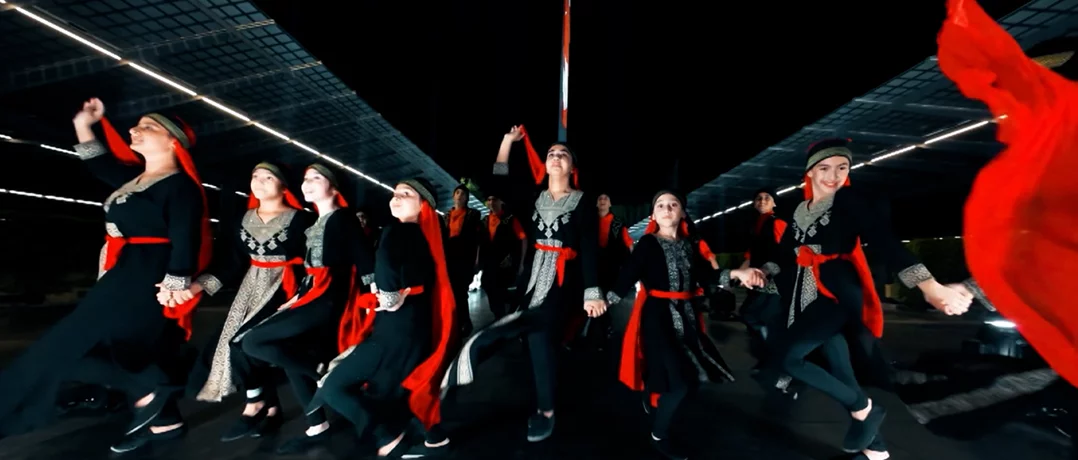
Dabke, Lebanon’s traditional dance, finally finds its home on national television. For the first time on Lebanese screens, a dedicated MTV program showcases the country’s diverse regional styles, the skill of its performers, and the cultural significance of this enduring traditional dance.
The dabke harnesses the heart of the Lebanese culture. It outlives regimes, borders, wars, and the exhaustion of generations. It becomes the powerful stubbornness of a people who refuse disappearance as Lebanon’s oldest communal dance, and one of the few rituals that still feels unmistakably Lebanese. Today, Dabke is no longer mere nostalgia. It is being consciously rebuilt, researched, and reclaimed, placed again at the center of Lebanon’s cultural heartbeat.
A New Original Dabke Format
Building on that foundation, Lebanon’s leading media group MTV has launched a one of its kind original program entirely dedicated to Lebanese Dabke, an unprecedented media investment in folklore. “Let’s Dabke” explores the stories, landscapes, and communities behind each regional style. It places Lebanon’s best Dabke groups on a national stage, turning their craft into a televised celebration of identity, rhythm, and heritage.
Expert judges, folkloric guests, high-energy performances, and creative challenges transform the show into a cultural archive in real time. For the first time, Lebanese folklore is not being preserved quietly. It is being projected, amplified, and reimagined for a generation raised on screens.
A Dance with Deep Roots
Dabke began long before Lebanon became a republic, as early as the Ottoman period (16th–19th centuries), on the rooftops of Levantine villages. Back when homes were made of packed earth, families and neighbors would stomp together in rhythm to seal the soil. What began as necessity slowly morphed into celebration, into ritual, into a coded language of belonging.
Despite efforts to formalize and folklorize dabke in the 1950s, its core types have largely remained consistent. After the launch of the Baalbek International Festival in 1956, Soviet dance expert Igor Moiseyev was invited to assess Lebanese folk traditions, with a focus on dance. Moiseyev observed the gradual degradation of these traditional forms and proposed a standardized choreography that could represent the full diversity of Lebanese performances. He also recommended sending professional Lebanese dancers to the USSR to learn the principles of folk dance and methods for teaching them.
The Baalbek Festival Folklore Committee adopted these recommendations, sending Wadih and Randa Jarrar, who had previously trained the troupe performing with the Rahbani brothers and Fairouz in Baalbek. Their apprenticeship at Moiseyev’s school led to the formation of numerous folk dance troupes and the reopening of previously inactive wells, reinforcing both the practice and visibility of dabke (Munassa 1994:13).
However, this process of folklorization removed a popular expression from its original communities and placed it in the hands of a social elite, who refined it of local and confessional variations to create a modern, nationalized performance: the “dabke lebnanieh”.
The civil war (1975–1990) and the suspension of the Baalbek Festival further disrupted these national folk troupes, pushing some toward modern, hybrid performances that incorporated a variety of choreographic influences. As a result, dabke reemerged in local communities with renewed vitality.
Why Dabke Still Matters
What united all forms of Dabke is the concept of the line: bodies linked together, moving in coordination, the individual absorbed into a collective rhythm. In this shared motion, individual expression is interlaced into collective harmony. Each participant becomes simultaneously leader and follower, shaping the group while being shaped by it. In this way, Dabke embodies a deep, physical understanding of togetherness, where connection is not spoken but felt through synchronized movement, and the dance itself becomes a temporary, yet profound, social contract.
It is a vessel of continuity in a society where continuity is rare. Wherever Lebanese communities exist, from Beirut to Sydney, Detroit to Paris, Dabke follows, a tangible link to home and heritage. It surfaces wherever people feel the need to assert that they belong to something larger than themselves.
Its revival today is more than performance. Dabke tells local stories, preserves regional identities, and engages all generations: young and old, from every social and cultural background. It is one of the few traditions where Lebanese across the country and the diaspora literally hold hands, moving together in rhythm, carrying with them centuries of history and memory.
Beyond entertainment, Dabke carries a political and cultural message: unity. In its lines and steps, the dance conveys a shared identity, reminding participants and audiences alike that despite differences, there are forms of connection that endure. It is a story, a history, and a practice that continues to define what it means to be Lebanese.
Heritage endures because someone refuses to let it fade, because a community studies it, teaches it, and insists that it still matters. The Dabke has become the choreography of resilience. The muscle memory of a nation that has been broken and rebuilt too many times to count. And today, in events, festivals, and television studios, Lebanon is working to keep that pulse alive.
-
-

-
The Beiruter
-
