

The reemergence of Israel’s Dahiyeh Doctrine highlights growing calls for harsher deterrence against Hezbollah amid persistent border tensions.
Dahiyeh Doctrine resurfaces
Dahiyeh Doctrine resurfaces
By The Beiruter | June 15, 2026

Reading time: 5 min
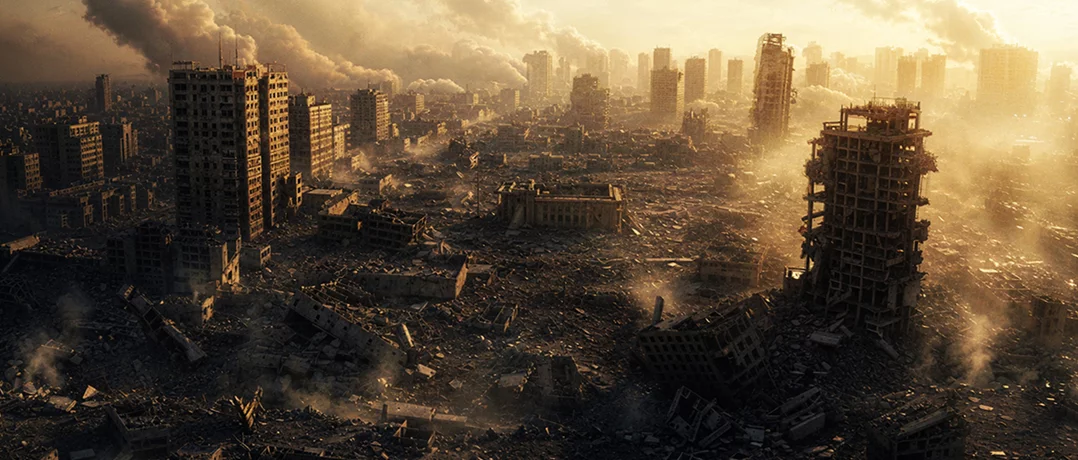
As tensions along the Israeli-Lebanese border continue to escalate, recent statements by Israeli Finance Minister Bezalel Smotrich and National Security Minister Itamar Ben-Gvir have revived debate over one of Israel’s most controversial military concepts: the “Dahiyeh Doctrine.” Following the interception and impact of drones launched by Hezbollah toward northern Israel, both ministers called for a harsher military response, specifically invoking the doctrine and urging strikes against Beirut’s southern suburbs, commonly known as Dahiyeh, a stronghold of Hezbollah.
The latest calls illustrate the continued influence of the doctrine within segments of Israel’s political and security establishment, reflecting growing pressure from Israel’s right-wing political camp for a more forceful response to Hezbollah-related threats.
The remarks come amid renewed tensions along the Lebanese-Israeli border despite ongoing diplomatic efforts aimed at preventing a wider regional conflict. As references to the Dahiyeh Doctrine re-enter political discourse, understanding its origins, principles, and legal controversies has become increasingly important for assessing the potential trajectory of Israeli-Lebanese relations.
Origins of the Dahiyeh doctrine
The Dahiyeh Doctrine emerged in the aftermath of the 2006 Israel-Hezbollah war. Its name derives from Beirut’s southern suburb of Dahiyeh, an area that experienced extensive Israeli bombardment during the conflict. The doctrine became publicly associated with statements made in 2008 during the Gaza war by Israeli General Gadi Eisenkot, then head of Israel’s Northern Command, stating that Israel
will treat any area that supports its enemies as a legitimate battlefield, and will use maximum force to destroy infrastructure and achieve deterrence.
Although there is no officially published Israeli military document labeled the “Dahiyeh Doctrine,” military analysts widely use the term to describe a strategy highlighting disproportionate force and large-scale destruction to deter future attacks.
Core principles of the doctrine
At its core, the Dahiyeh Doctrine rests on the belief that overwhelming military power can create deterrence by raising the cost of aggression for both armed groups and their surrounding environment.
The doctrine is commonly associated with several key principles. It highlights the use of overwhelming and disproportionate military force against hostile actors in order to achieve deterrence. It also involves the extensive targeting of infrastructure believed to support enemy military operations, including dual-use facilities. Another central feature is the reliance on rapid and intensive aerial bombardment designed to secure strategic objectives within a short timeframe. In addition, the doctrine seeks to impose significant material and operational costs on adversaries as a means of discouraging future attacks. Finally, it frames areas from which attacks are launched as legitimate military zones rather than purely civilian spaces, thereby expanding the scope of permissible targets.
Israeli officials who support this approach argue that non-state armed groups such as Hezbollah embed military assets within civilian environments, making infrastructure associated with those areas part of the broader battlefield. From this perspective, the doctrine serves as a deterrent mechanism intended to prevent prolonged wars and repeated attacks.
International legal debate
Perhaps the most contentious aspect of the Dahiyeh Doctrine concerns its compatibility with International Humanitarian Law (IHL).
International legal frameworks, including the 1949 Geneva Conventions, their Additional Protocols, and the 1998 Rome Statute of the International Criminal Court (ICC), require combatants to distinguish between military targets and civilians. They also impose the principle of proportionality, which prohibits attacks expected to cause excessive civilian harm relative to the anticipated military advantage.
Israeli officials reject accusations that the doctrine deliberately targets civilians. They argue that military operations are directed against armed groups operating within civilian areas and that responsibility for civilian harm is compounded by the use of populated environments for military purposes. In short, they accuse the aforementioned non-state armed groups of using civilians as “human shields” for their own protection; an act also prohibited in IHL. Indeed, Article 28 of the Fourth Geneva Convention states that
the presence of a protected person may not be used to render certain points or areas immune from military operations.
As a result, the Dahiyeh Doctrine remains one of the most debated concepts in modern warfare. Its legacy and potential future use are likely to remain central issues in discussions about regional stability, military conduct, and the laws of armed conflict..
-
-

-
The Beiruter
-
