



"De-risking", the movement toward "economic resilience", is at the forefront of policy agendas around the globe as global crises reveal the fragility of our deeply intertwined economic system. Is this a productive shift toward stability, or will it divide our world into rival trade blocs, mitigating the benefits of globalization and free trade that our world has progressed toward?
De-risking's double edge

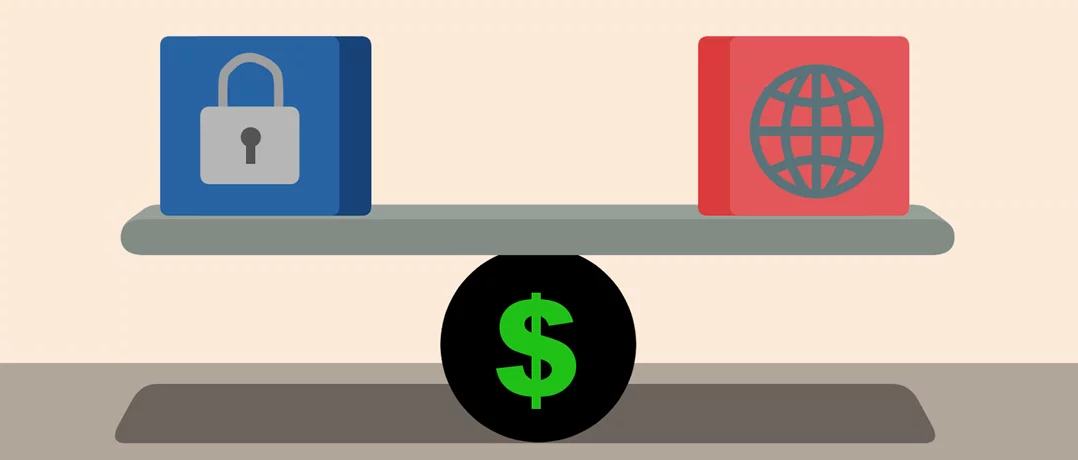
The phrase was first introduced by European Commission President Ursula von der Leyen, then popularized by U.S. officials; now, it echoes across the globe. In her 2023 speech in Brussels, von der Leyen advocated for “economic de-risking,” calling on allies to “strengthen our supply chain resilience and diversify our trade” by pivoting away from trade relationships that made countries vulnerable to the coercive policies of adversarial states. De-risking means reducing a country's economic vulnerabilities to rival nations through the diversification of suppliers, the reshoring of critical industries to domestic or allied countries, and greater consideration of national security when determining trade decisions.
The idea initially gained amid escalating tensions between the tensions between the West and China, as states realized that the economic world order they had constructed, and welcomed China into, solidified by its accession to the World Trade Organization in 2001, was now being abused by the rising global power, with coercive trade policies like price-dumping undermining global industries and market competition.
Today, it carries renewed global significance amid upheavals that likewise demonstrate the fragility of the liberalized, interconnected economy that the world has benefited from for decades. Since the US-Israeli war against Iran erupted in February, the Strait of Hormuz, the channel through which more than a quarter of the world's seaborne oil and a fifth of its liquefied natural gas normally pass, has remained effectively closed to routine commercial shipping. This harms global trade in more sectors than just energy: UN predictions in April 2026 had global trade growth slowing from about 4.7% in 2025 to between 1.5% and 2.5% in 2026.
In a world where adversaries increasingly use economic tools to undermine other economies' growth, and where conflict-driven chokepoints repeatedly disrupt the global economy, it makes sense that states everywhere, from Asia to Europe to Latin America, are seeking to de-risk, pursuing trade relationships based less on trade liberalization and more on national security and alliances. But what does this mean for the world economic order, and will everyone lose in the long run?
The case for de-risking
The system of liberalized free trade, long championed by the West since the fall of the Berlin Wall, is credited with allowing countries to capitalize on their competitive advantages and specialize their industries. As a result, products got cheaper across the world, and workers everywhere could work where they were most economically efficient.
According to the World Bank, the "new globalizing" developing countries that opened themselves to trade integration in the 1990s saw extreme poverty decline. Between 1993 and 1998 alone, 120 million people rose above the poverty line, or 14 percent of those countries' impoverished populations.
This system is now being overturned, and leading the calls to "de-risk" economies, rather than simply build ever more efficient supply chains and global industries, are the Western nations that were architects of the system itself.
There is a real case behind the shift. As von der Leyen explained, Europe relies “on a single supplier – China – for 98% of our rare earth supply, 93% of our magnesium and 97% of our lithium.” These are the fundamental materials powering everything from electric vehicles to fighter jets; Chinese dominance in rare earth supply chains gives Beijing immense power to choke off rival economies almost instantaneously. In fact, this occurred in miniature when China restricted rare earth exports in 2025, forcing many Western automakers to temporarily shut down facilities, according to the International Energy Agency. Intellectual property theft, long flagged by the U.S. Trade Representative, as endemic to doing business with China, has also harmed Western firms as they lost their competitive edge in industries they innovated.
Diversifying suppliers, reshoring critical industries, and screening trade through a national security lens seems necessary to prevent dependency on adversaries, even at the immediate cost of economic efficiency. At first, de-risking appears like the obvious fix for a world that has over-optimized itself into fragility.
The case against de-risking
One of the most pronounced concerns materializing today is that de-risking splits the world into rival economic coalitions rather than one interconnected system. International Monetary Fund Managing Director Kristalina Georgieva discussed her concerns in 2023 about balancing the enhancing of the “security of supply without pushing the world into a new cold war,” as emerging rival trade blocs could cause coalitions of countries to be in increased tension with each other.
A bigger risk is that the legitimate cause of national security is invoked simply to justify garden-variety protectionism. De-risking, as articulated by von der Leyen, only works if it can discern rivals from allies. However, U.S. President Donald Trump has invoked Section 232, the same “national security” authority underpinning de-risking policy, to impose steel and aluminum tariffs not just on China, but on allies like Canada and the EU. When asked about his tariffs ahead of a Supreme Court case on his authority to impose them, Trump said plainly, “tariffs have brought us tremendous national security.” Once the guise of furthering security no longer distinguishes between allies and adversaries, de-risking stops being a strategy and becomes an excuse for protectionism.
As national security and economic policy inevitably become more intertwined, it is crucial to treat even genuine de-risking policy with caution, and not abandon the trade liberalization that helped foster global growth for decades. Resilience pursued too aggressively can recreate the very fragility it was meant to fix, and therefore must be pursued with a balanced approach.
-
-

-
Soraya JohnsonJunior research/writer
Focusing on political analysis, economic trends, and investigative reporting.
-
