

Israel shifts from confronting Hezbollah to targeting Tehran itself under the “Octopus Doctrine,” reshaping risks for Lebanon and the region.
Did unrest in Iran shield Lebanon from war?

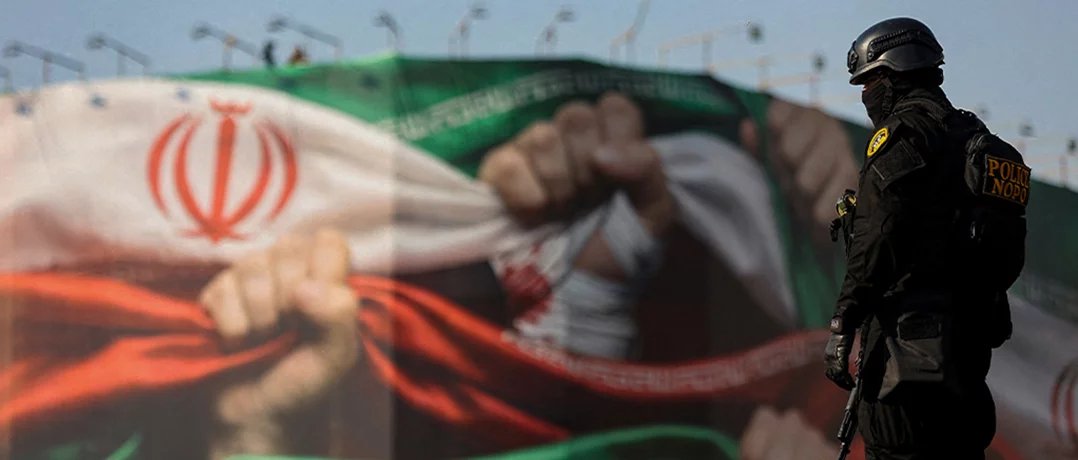
As fears of a renewed war between Israel and Hezbollah have mounted in recent weeks, attention has shifted from Iran’s network of regional proxies to Tehran itself.
The eruption of large-scale protests inside Iran, combined with escalating Israeli and American rhetoric (even possibly military intervention), have reinforced a strategic recalibration long discussed in Israeli security circles: confronting the source of regional instability rather than its extensions.
This approach, widely known as the “Octopus Doctrine,” suggests that weakening Iran’s proxies is insufficient without simultaneously pressuring the center of power that sustains them.
The logic of the “Octopus Doctrine”
First articulated by former Israeli Prime Minister Naftali Bennett during his tenure as minister of defense (2019-2020), the “Octopus Doctrine” frames Iran as the “head” directing multiple proxy forces (the “tentacles”) across the region.
The doctrine argues that Israel’s long-standing focus on confronting Hezbollah, Hamas and other allied groups has allowed Iran itself to remain largely insulated from direct consequences. The aforementioned proxies would bear the brunt of all the destruction and losses, whereby Tehran would be immune from similar consequences (a conflict which became known as the “shadow war”). By shifting pressure inward, Israel aims to disrupt command, control and strategic confidence in Tehran, thereby weakening the entire “Axis of Resistance.”
This strategy rests on 2 pillars:
- The first targets Iran’s logistical and operational infrastructure that links Tehran to its proxies, undermining coordination and reach.
- The second focuses on high-impact actions inside Iran designed to heighten internal insecurity, foster mistrust and force the regime to divert attention from regional ambitions to domestic survival.
However, both pillars are taking place without Israeli initiative. The first has been considerably achieved as the Assad regime (a longtime ally of Tehran and considered the backbone of the “Axis of Resistance”) collapsed on 8 December 2024 and Hay’at Tahrir al-Sham (HTS) rose to power. The latter significantly eroded Iran’s influence and foothold in the country (along with that of Hezbollah). As for the second pillar, today’s protests inside Tehran have shaken the very foundations that the regime has laid upon, representing a genuine and serious risk for the first time since the 1979 Iranian Revolution. The demonstrations as well as previous internal fractures and intelligence failures (such as during the 12-day war with Israel last year) have intensified the regime’s internal anxieties. Rather than projecting strength abroad, Iranian authorities were increasingly forced to prioritize domestic control.
Is Lebanon spared from an armed conflict with Israel?
The recent Council of Ministers review of the Lebanese Armed Forces (LAF) report, regarding the completion of the first phase of achieving weapons exclusivity in the hands of the Lebanese state, was met by cautious optimism (both regionally and internationally). Although insufficient, it marked a promising step. However, the “ghost of war,” was not sparred entirely.
Instead, as protests erupted in Iran and the Lebanese cabinet announced the beginning of the LAF’s efforts to achieve arms exclusivity north of the Litani River, the US administration seems to be giving Beirut a chance by refraining from granting its consent to Israel to conduct a full-blown war against the country. Both Washington and Tel Aviv are also watching closely and calculating their options with regard to the Iranian protests, possibly preferring to aid in the overthrow of the Islamic regime in Tehran, thus ultimately eliminating the latter’s proxies and their posed risk across the region.
In conclusion, Israel’s shift from confronting Iran’s proxies to pressuring the center reflects a calculated gamble that internal strain will curb Tehran’s regional reach. Lebanon may have benefited from such policy, however the latter could not be considered as a permanent guarantee. Whether this strategy deters Iran or accelerates an unintended conflict remains uncertain. What is clear is that the region has entered a more volatile phase, where the focus on the “head of the octopus” carries consequences far beyond the shadows in which this conflict once unfolded.
-
-

-
The Beiruter
-
