Iran’s large-scale drone barrages using Shahed-136 systems highlight the growing shift toward saturation warfare, where waves of low-cost drones overwhelm air defenses and reshape the economics and strategy of modern conflict.


Iran’s large-scale drone barrages using Shahed-136 systems highlight the growing shift toward saturation warfare, where waves of low-cost drones overwhelm air defenses and reshape the economics and strategy of modern conflict.

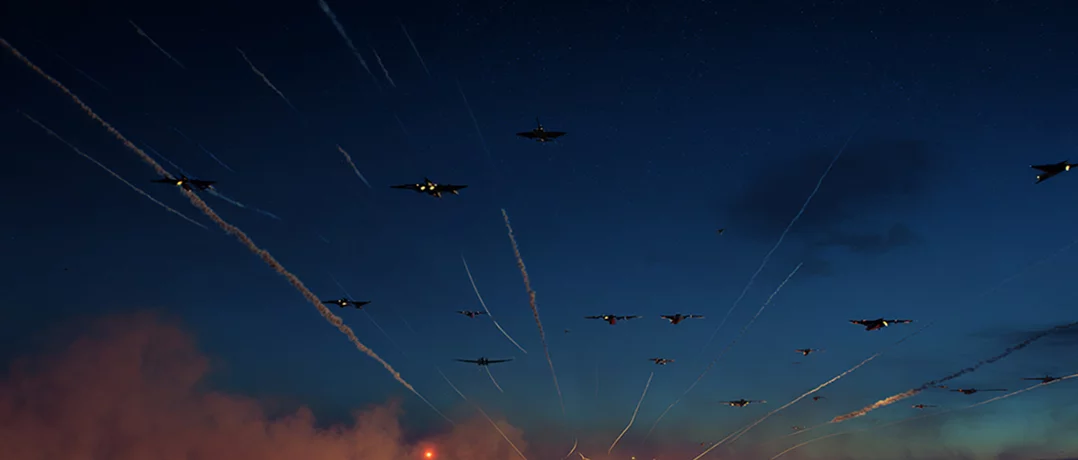
Across the Middle East this week, air-defense systems tracked and intercepted hundreds of incoming drones as Iran unleashed one of the largest unmanned barrages yet recorded. The United Arab Emirates’ defense ministry reported detecting 541 drones in the first two days alone.
The significance of these attacks lies less in the damage inflicted than in the strategy itself: saturation. That strategy was first tested on a large scale in Ukraine. Since 2022, Russia has launched thousands of Iranian-designed Shahed drones against Ukrainian cities and infrastructure, demonstrating how large numbers of inexpensive unmanned systems can strain even sophisticated air defenses. What is unfolding across the Middle East now is the same playbook, scaled across an entire region.
The system at the center of this strategy is the Shahed-136, a one-way attack drone developed by Iran’s Shahed Aviation Industries. Unlike reconnaissance drones designed to return to base, the Shahed-136 is a one-way attack drone, essentially a small, unmanned aircraft carrying an explosive warhead that detonates when it crashes into its target. Once launched, the drone navigates using satellite guidance and onboard systems until it reaches the designated strike location.
Technically, the platform is relatively simple. The drone carries a warhead of roughly 40–50 kilograms, flies at speeds around 180 km/h, and can reach targets up to roughly 2,000 kilometers away depending on launch configuration.
Most importantly, it is cheap. Steve Feldstein, a senior fellow at the Carnegie Endowment for International Peace, notes that Shahed drones cost about $35,000 apiece. This represents a fraction of the price of many Western strike weapons, such as the latest versions of U.S. Tomahawk cruise missiles which cost roughly $2.5 million each.
But the drone’s real innovation lies in how it is used. Shahed drones are typically launched in coordinated waves, often from truck-mounted racks capable of firing multiple drones within minutes. The result is not a single strike aircraft but a swarm of dozens moving toward targets simultaneously.
As Dara Massicot of the Carnegie Endowment for International Peace notes, the Shahed campaign shows how inexpensive drones used at scale can strain sophisticated air defenses by forcing defenders to expend far more costly interceptors. Michael Kofman, another Carnegie senior fellow who studies Russian military strategy, argues that such attacks are often designed less to ensure individual strikes succeed than to “exhaust the defender’s magazine depth,” the supply of interceptor missiles available.
For decades, American military doctrine highlighted precision strike. The United States invested heavily in advanced platforms, stealth aircraft, cruise missiles, and high-end drones, designed to destroy specific targets with extraordinary accuracy.
The Shahed strategy represents a fundamentally different philosophy. Given its reliance on large numbers of inexpensive drones launched in coordinated waves, a cost-exchange problem. The U.S,’ most advanced air-defense system, the Patriot, was designed to intercept high-speed ballistic missiles and advanced aircraft. The interceptor missiles themselves can cost between $3 million and $4 million each, according to U.S. army procurement data. When those interceptors are used against drones costing tens of thousands of dollars, the economy quickly becomes unfavorable.
General Glen VanHerck, then commander of U.S. Northern Command, warned during congressional testimony in 2023 that inexpensive drones and cruise missiles allow adversaries to impose disproportionate costs on U.S. defenses.
The dynamic has been visible for years in Ukraine. Russia’s repeated Shahed attacks often forced Ukrainian defenders to expend large numbers of interceptor missiles protecting electrical grids and urban centers.
The logic is now visible in the Middle East as well. General Michael Kurilla, former commander of U.S. Central Command, told Congress in 2023 that Iran maintains “the largest and most capable UAV force in the region,” an arsenal that includes long-range attack drones capable of striking targets across the Middle East.
The recent attacks appear designed around that same logic of saturation
Perhaps the most striking development is that the United States has begun adapting elements of the same strategy. In early 2026, the U.S. military confirmed the first combat use of its own long-range one-way attack drones during strikes on Iranian targets, including the Low-cost Uncrewed Combat Attack System (LUCAS), a munition designed to mirror the same logic behind Iran’s Shahed drones: inexpensive, expendable systems that can be deployed in large numbers.
The shift reflects a broader change in defense planning. In 2023, the Pentagon launched the Replicator Initiative, an effort to field thousands of attritable autonomous systems to counter the growing drone arsenals of adversaries. Announcing the program, then Deputy Secretary of Defense Kathleen Hicks said the United States must be able to deploy “multiple thousands of autonomous systems” to counter adversaries’ growing drone arsenals.
The implications extend far beyond the current conflict. From Ukraine to the Gulf, the lesson is becoming clear: modern warfare may depend less on a handful of exquisite systems and more on the ability to field large numbers of affordable ones at scale.

