

Echoes of Beirut is a photography exhibition in Beirut exploring memory, trauma, and resilience, organized by the United Nations Development Programme with UN Women and held at Beit Beirut.
Echoes of Beirut: The memory of a city

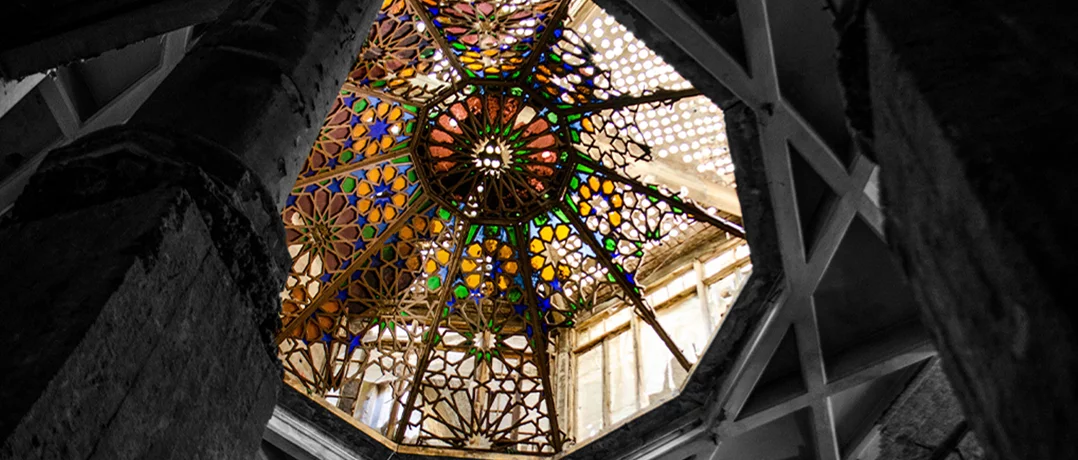
Echoes of Beirut is a photography exhibition that examines how memory, trauma, and resilience are woven into Beirut, inviting viewers to reflect on the past while considering what comes next.
Spanning decades of trauma and resilience, from the Lebanese civil war to the August 4 Beirut Port explosion, the exhibition documents how violence, survival, and rebirth have shaped both the city and its people. Through a carefully curated collection of photographs, Echoes of Beirut invites visitors to engage with images of destruction and human stories embedded within Beirut’s urban landscape.
A city told through its spaces
The exhibition’s visual language centers on spaces rather than spectacle: abandoned buildings scarred by bullets, domestic interiors frozen in time, stairwells, windows, and rooftops that have silently absorbed decades of upheaval. These photographs trace memory, how it lingers in architecture and how places become carriers of emotion, loss, and endurance.
One striking image, captured by Fadi Badran, features a colorful stained-glass dome skylight framed by dark stone arches, an image that contrasts fragility with permanence, light with shadow. It is emblematic of the exhibition’s broader message: Beirut’s beauty persists, even when fractured.

Between past and possibility
Organized by the United Nations Development Programme (UNDP) in partnership with UN Women, and funded by the Government of Canada, the exhibition positions photography as a tool for reflection and dialogue. Rather than presenting Beirut as a city trapped in tragedy, Echoes of Beirut creates space to process the past while imagining a more humane future.
In a country where historical narratives are often fragmented or politicized, Echoes of Beirut offers a rare, non-verbal archive, one that transcends sectarian or ideological lines. It preserves memory not through grand narratives, but through quiet, intimate details, allowing viewers to see their own experiences reflected in the city’s surfaces.
Held at Beit Beirut, a former war-scarred building turned museum and cultural space, the exhibition gains added symbolic weight. The venue reinforces the idea that memory, when preserved rather than erased, can become a foundation for understanding and renewal. Echoes of Beirut offers visitors a limited but powerful opportunity to encounter Beirut not only as it was wounded, but as it remembers, survives, and continues to speak.
-
-

-
The Beiruter
-
