

EU leaders agreed on a €90 billion interest-free loan to keep Ukraine financially and militarily afloat through 2027.
EU approves €90 billion loan to Ukraine

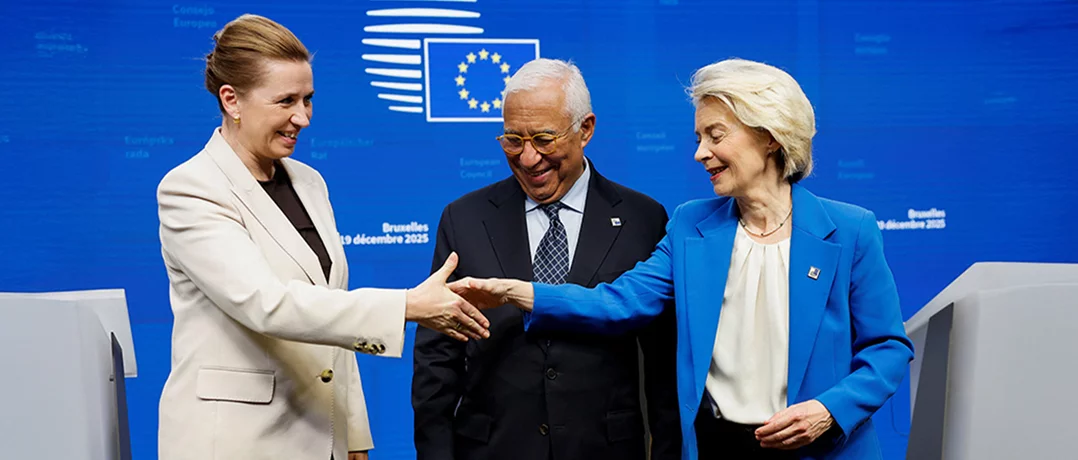
European Union (EU) leaders have agreed on a €90 billion interest-free loan package to support Ukraine’s military and economic needs through 2026 and 2027, delivering a critical financial lifeline as the war with Russia drags into its fourth year.
The decision, reached after marathon talks in Brussels, came after deep divisions prevented the bloc from using frozen Russian state assets to fund Kyiv; a setback for proponents of a more punitive approach toward Moscow, but a compromise aimed at preserving legal certainty and EU unity.
A financial lifeline amid mounting pressures
The urgency of the deal was underscored by stark assessments from the International Monetary Fund (IMF), which estimates Ukraine will require €137 billion over the next 2 years to remain solvent. With Kyiv facing the risk of bankruptcy as early as spring, EU leaders opted to jointly borrow funds on capital markets, guaranteeing the loan through the common EU budget. EU Council President Antonio Costa confirmed the agreement, emphasizing that the bloc had “committed and delivered” despite political and legal obstacles.
France and Germany welcomed the outcome as a pragmatic solution. President Emmanuel Macron described joint borrowing as the most realistic means to sustain Ukraine’s war effort, while German Chancellor Friedrich Merz highlighted that the zero-interest structure would cover both military and budgetary needs. Ukrainian President Volodymyr Zelenskyy, who traveled to Brussels to press for swift action, secured the assurance he had sought to keep state finances afloat into the new year.
Why the Russian assets plan collapsed
The summit exposed sharp disagreements over a proposal to use up to €210 billion in frozen Russian assets (most held by the Belgium-based financial clearing house Euroclear) to finance Ukraine.
Belgian Prime Minister Bart De Wever rejected the plan as legally risky, warning it could undermine global legal certainty and expose Belgium to retaliation from Moscow. His concerns intensified after Russia’s central bank filed a lawsuit against Euroclear to block any such use of the assets.
Despite efforts to offer Belgium financial guarantees, the plan unraveled. De Wever argued that the proposal contained too many unresolved legal questions and set a dangerous precedent. While several leaders favored seizing Russian funds as de facto reparations, the resistance proved insurmountable, forcing a pivot to joint EU debt as a backup plan.
Political frictions and conditional unity
Not all member states endorsed the loan. Hungary, Slovakia, and the Czech Republic opposed further support for Ukraine but ultimately refrained from blocking the package after securing assurances against potential financial fallout. Hungarian Prime Minister Viktor Orbán criticized the deal, arguing that funding Ukraine prolonged war rather than peace. He claimed that a settlement was reached, whereby the 3 opposing states relinquished their right to veto (since the loan requires unanimous decision) while retaining, in exchange, opt-out (meaning the capability of choosing not to participate in the decision being taken).
Still, EU leaders sought to project cohesion. Danish Prime Minister Mette Frederiksen stressed that the agreement guaranteed continued support for Ukraine, even if it fell short of earlier ambitions. In a concession to Germany and the European Commission, the final text left open the possibility that frozen Russian assets could be used in the future to repay the loan, should legal conditions allow.
Hence, the €90 billion loan marks a decisive, if imperfect, response to Ukraine’s immediate financing crisis. While the failure to unlock Russian assets highlights enduring divisions within the EU, the agreement demonstrates the bloc’s determination to prevent Kyiv’s collapse at a critical juncture in the war. As legal debates continue and geopolitical pressures mount, Europe has chosen pragmatism over precedent; buying time for Ukraine, while postponing a reckoning over how far the EU is willing to go in making Russia pay for the conflict.
-
-

-
The Beiruter
-
