

Provisional EU agreement aims to eliminate Russian gas reliance by 2027, boosting energy resilience.
EU to ban Russian gas imports by 2027

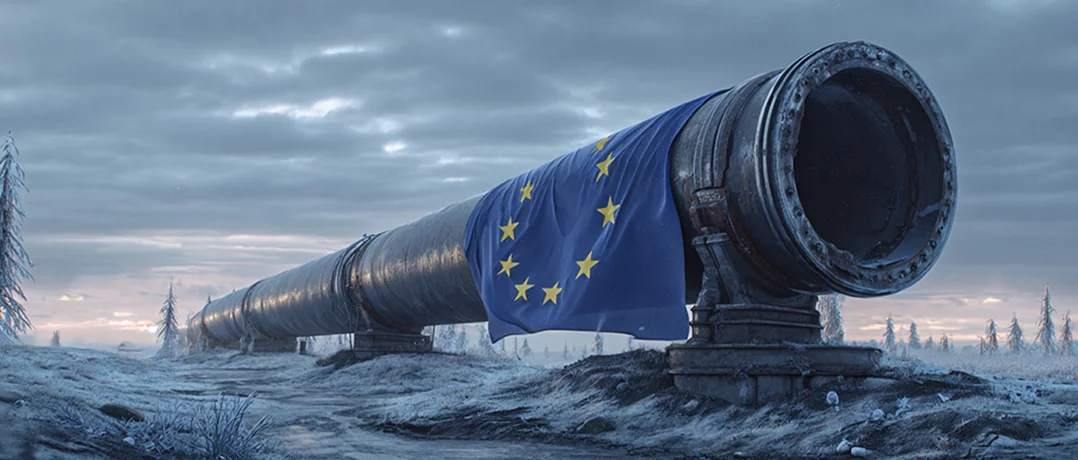
In a landmark step toward energy independence and long-term security, the European Council and the European Parliament have reached a provisional agreement to phase out all imports of Russian natural gas by 2027.
This decision forms a core part of the EU’s Repower EU roadmap, launched in response to Russia’s use of energy as a political weapon following its invasion of Ukraine. By setting legally binding deadlines and creating a structured transition plan, the agreement signals Europe’s determination to eliminate its reliance on an unstable and hostile supplier while strengthening the resilience of its energy market.
A stepwise ban on Russian gas
The new regulation introduces a gradual but firm prohibition on both liquefied natural gas (LNG) and pipeline gas from Russia. Under the agreed timeline, LNG imports will be fully banned by the end of 2026, while pipeline gas will be phased out by autumn 2027 at the latest. In exceptional circumstances, Member States facing storage challenges may extend the deadline slightly, but the final objective remains unchanged: a permanent end to Russian gas imports across the European Union (EU).
Lars Aagaard, Denmark’s Minister for Climate, Energy and Utilities, described the deal as “a big win for us and for all of Europe. We have to put an end to EU’s dependence on Russian gas and banning it in the EU permanently is a major step in the right direction. I am very pleased and proud that we have been able to reach an agreement with the European Parliament so quickly. It shows that we are committed to strengthening our security and safeguarding our energy supply.”
Transition rules for existing contracts
To avoid sudden disruptions, the regulation includes a carefully managed transition period.
For short-term contracts signed before 17 June 2025, the ban will come into effect in April 2026 for LNG and June 2026 for pipeline gas. Long-term LNG contracts will end by January 2027, and long-term pipeline contracts will be terminated by September 2027, or November in special cases. Any amendments to existing agreements will be permitted only for strictly limited operational reasons and cannot increase the volume of imports.
This phased approach aims to balance strong political action with economic and logistical reality, giving Member States time to secure alternative sources.
Stronger controls and national energy plans
The agreement also strengthens customs procedures and monitoring systems. All Russian gas imports during the transition period will require prior authorization and detailed documentation to prevent loopholes and illegal rerouting. Certain countries may be exempted from the authorization process if they meet specific criteria, but the European Commission retains the right to revise the list in cases of suspected circumvention.
In addition, Member States are required to submit national diversification plans outlining how they will replace Russian gas and oil supplies. These plans will help accelerate investment in renewable energy, alternative suppliers, and new infrastructure, ensuring that Europe’s transition is both efficient and secure.
The EU’s decision to permanently halt Russian gas imports marks a turning point in European energy policy. It is not only a reaction to geopolitical tension, but a strategic move toward a more independent, sustainable, and resilient future. By committing to diversification, transparency, and coordination, the EU is reshaping its energy landscape, one that is no longer vulnerable to political pressure, but grounded in unity, security, and forward-looking solutions.
-
-

-
The Beiruter
-
