



From mezze to international markets, Lebanese food exemplifies resilience, innovation, and soft power worldwide.
Europe falls for Lebanese flavors

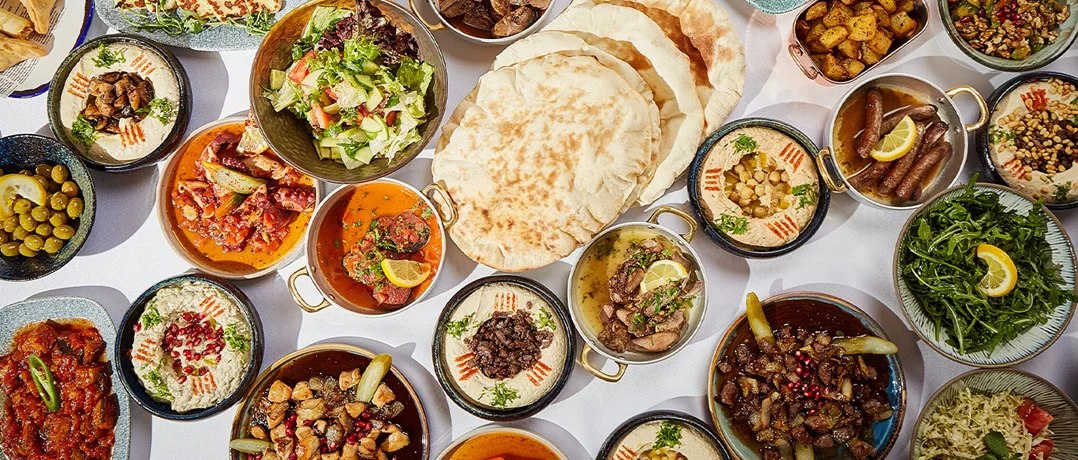
That growth is driven by a global appetite for authenticity and health-conscious diversity, a demand Lebanese cuisine naturally meets through its balance of flavor, freshness, and tradition. The worldwide spread of Lebanese diasporas, their entrepreneurial instinct, and the social media spotlight on Mediterranean food culture have all helped amplify this success, transforming Lebanese dishes from local staples into international favourites.
From mezze to modern diplomacy
Europe has emerged as one of the most lucrative markets. Lebanese eateries now outnumber most other Arab-owned restaurants in Europe, a quiet yet powerful success story of cultural integration and entrepreneurship. Germany now counts more than 316 Lebanese restaurants, while Belgium hosts around 186, with the European sector valued at $1.2 billion in 2024. Notably, 65% of Lebanese restaurants worldwide remain independent and family-run, a reminder that behind this global expansion lies something deeply personal: community, craftsmanship, and the taste of home (DataIntelo).
But beyond the food lies something deeper: the Lebanese table has become a symbol of resilience, innovation, and soft power. What began as a taste of home for expatriates has evolved into a global culinary movement, one that exports not just flavors but a philosophy, hospitality, generosity, and community.
A Culinary Legacy Turned Global Enterprise
Lebanon’s culinary excellence didn’t happen by chance. For decades, hospitality and gastronomy have been part of the country’s professional DNA. Lebanon’s hotel and culinary schools were among the first in the Arab world to formalize training in cooking, pastry-making, and hospitality management, shaping a generation of chefs who went on to work and teach abroad.
The rise of Lebanese cuisine abroad is about adaptability and the entrepreneurial instinct. Historically, Lebanese migrants have excelled in trade and self-employment, industries that reward creativity, persistence, and interpersonal skill.
That blend of resilience and refinement defines Lebanese hospitality: quick to adapt, deeply human, and visually appealing, from decor to presentation. Lebanese restaurateurs combine aesthetic sensibility with culinary precision, creating spaces that feel like home for expatriates and discovery for foreigners.
Food as soft power
Lebanese cuisine has become one of the country’s most effective forms of soft power a cultural export that transcends politics and crises. Each restaurant abroad serves as an unofficial embassy, telling a story of coexistence, craftsmanship, and flavor. In essence, Lebanese cuisine is a message. A message that culture endures, that creativity thrives, and that even far from home, Lebanon finds a way to stay on the world’s table.
Lebanese cuisine has ranked 26th worldwide and second among Arab countries, just behind Algeria, in the TasteAtlas Awards 2025. The global Lebanese restaurant market, meanwhile, has grown into a billion-dollar industry. It is estimated at $6.2 billion in 2024 and is projected to expand by 7.4% annually, nearly doubling to $11.7 billion by 2033 (DataIntelo, Lebanese Restaurant Market Outlook).
-
-

-
The Beiruter
-
