



La Nuit des Musées 2026 transformed 30 museums and cultural institutions across Lebanon into one shared cultural journey, celebrating the country's rich history, art, science, and collective identity.
Exploring Lebanon's heritage, one museum at a time
Exploring Lebanon's heritage, one museum at a time
By Lynn El Khalil | July 17, 2026

Reading time: 5 min
A city connected by culture
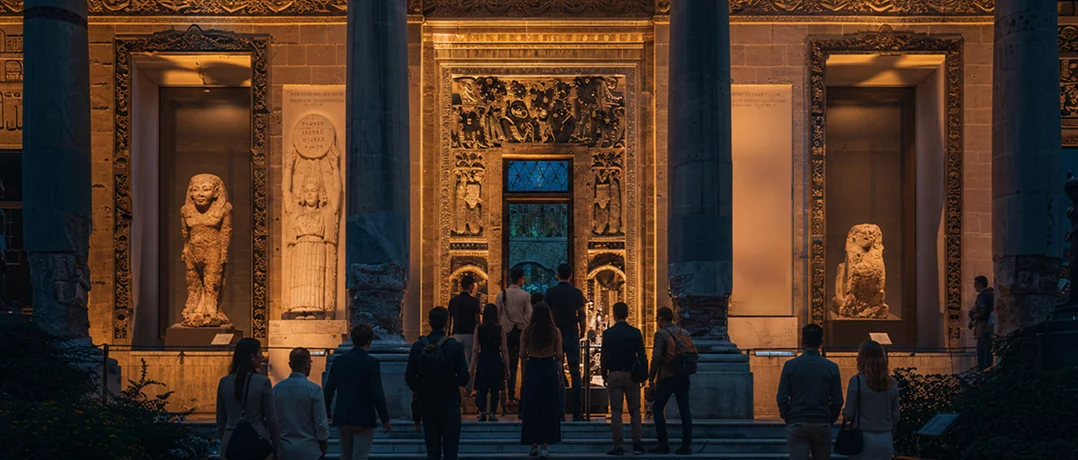
On an ordinary day, Lebanon's museums exist in separate worlds. Some are visited by school groups learning about prehistory. Others attract architecture enthusiasts, historians or contemporary art lovers. A few are places that many Beirutis pass every day without ever stepping inside. Yet for one evening each year, those boundaries disappear. This year, 30 museums and cultural institutions across Lebanon opened their doors free of charge for La Nuit des Musées 2026, transforming the country into one large cultural route. Visitors could travel between centuries, disciplines and communities in a single evening, discovering everything from archaeology and natural history to contemporary art, architecture and war memory. Moving from Beit Beirut to the National Museum, then to the Musée de Préhistoire Libanaise at USJ, the Bibliothèque Orientale, Villa Audi, Sursock Museum, the AUB Archaeological Museum and the AUB Geology Museum felt less like visiting eight separate institutions than travelling through eight different ways of telling Lebanon's story.
Eight museums, eight ways of telling Lebanon's story
Beit Beirut confronts visitors with the memory of conflict. The former Barakat Building still bears the physical scars of the Lebanese Civil War, turning the structure itself into an exhibit. The National Museum presents thousands of years of archaeological history, offering a timeline that stretches from prehistoric settlements to the Roman and Byzantine periods. At USJ's Museum of Lebanese Prehistory, history begins even earlier, introducing visitors to Lebanon before written records existed.The Bibliothèque Orientale shifts attention from objects to knowledge, preserving manuscripts and archives that document the intellectual history of the region. Villa Audi offers a more intimate experience through decorative arts and private collecting, while Sursock Museum connects Lebanon's artistic past with its contemporary creative scene through modern and contemporary exhibitions.
The evening also led me to two of the American University of Beirut's museums, each exploring a different aspect of the country's heritage. The AUB Archaeological Museum, one of the oldest museums in the Near East, traces the civilizations that inhabited the region through artifacts spanning from the Stone Age to the Islamic period. Just a short walk away, the AUB Geology Museum shifts the focus beneath the surface, displaying Lebanon's rocks, minerals and fossils and revealing a history measured not in centuries but in millions of years. Together, they reminded visitors that understanding Lebanon means looking not only at the people who shaped the country, but also at the landscape that shaped them. None of these museums tells the same story, yet together they form a remarkably complete portrait of the country. One focuses on memory, another on archaeology, another on science, another on art and another on preservation. Together, they demonstrate that Lebanon's heritage cannot be reduced to a single narrative.
The people became part of the exhibition
What stood out most, however, was not what was displayed inside the buildings, it was the people walking through them. Children eagerly ran toward interactive displays while parents patiently followed behind. University students stopped to discuss artworks and archaeological discoveries. Elderly visitors lingered over exhibits, often sharing memories with younger family members. Tourists explored alongside Beirut residents, and many visitors admitted it was their first time stepping inside some of these museums.
For a few hours, Lebanon's cultural institutions stopped feeling exclusive. Museums often carry the reputation of being quiet, intimidating places reserved for academics or tourists. During La Nuit des Musées, they became public spaces where curiosity mattered more than expertise. No one seemed concerned with having the "right" interpretation of an artwork or historical object. People simply wandered, asked questions and shared discoveries. Perhaps the most striking aspect of the evening was the diversity of the crowd. People from different generations, backgrounds and interests found themselves standing in front of the same exhibits, engaging with the same stories. It was a reminder that culture has the rare ability to bring together people who might otherwise never cross paths.
One country, many histories
The contrast between the museums also revealed something important about heritage itself. Lebanon's history cannot be contained within a single institution, it exists in archaeological artefacts, preserved buildings, family collections, contemporary artworks, scientific discoveries and fragile manuscripts. Each museum protects one piece of a much larger puzzle. It is only by moving between them that visitors begin to appreciate the richness and complexity of the country's cultural landscape. That diversity was reflected not only in the collections themselves but also in the routes people chose to take. Some spent the evening immersed in ancient history, while others gravitated toward contemporary art or architectural heritage. There was no single way to experience the event, only countless paths through Lebanon's cultural identity.
The evening also challenged another assumption: that museums are primarily about the past. At Sursock, contemporary art invited visitors to think about today's Lebanon. At Beit Beirut, the Civil War remained painfully relevant for younger generations who never experienced it firsthand. The Bibliothèque Orientale demonstrated that preserving archives is as much about protecting future research as safeguarding old documents. Even prehistoric stone tools at USJ raised questions about humanity's earliest innovations and our enduring relationship with the land. The past, it became clear, is never simply behind us. Museums do not just preserve history they also shape how each generation understands it.
A shared cultural experience
While the exhibitions themselves were compelling, the true success of La Nuit des Musées 2026 lay in the atmosphere it created. For one evening, 30 museums and cultural institutions ceased to be isolated destinations scattered across Lebanon and instead became part of one shared cultural experience. The event reminded visitors that museums are not simply buildings filled with objects behind glass. They are places where history is debated, identity is explored and communities come together. For one night, Lebanon's museums did more than preserve the past, they brought people together in the present.
