



How militias replaced state authority under Syrian control.
February 6, 1984: The Day the Lebanese state was broken
February 6, 1984: The Day the Lebanese state was broken
By Dr. Elie Elias | April 17, 2026

Reading time: 6 min
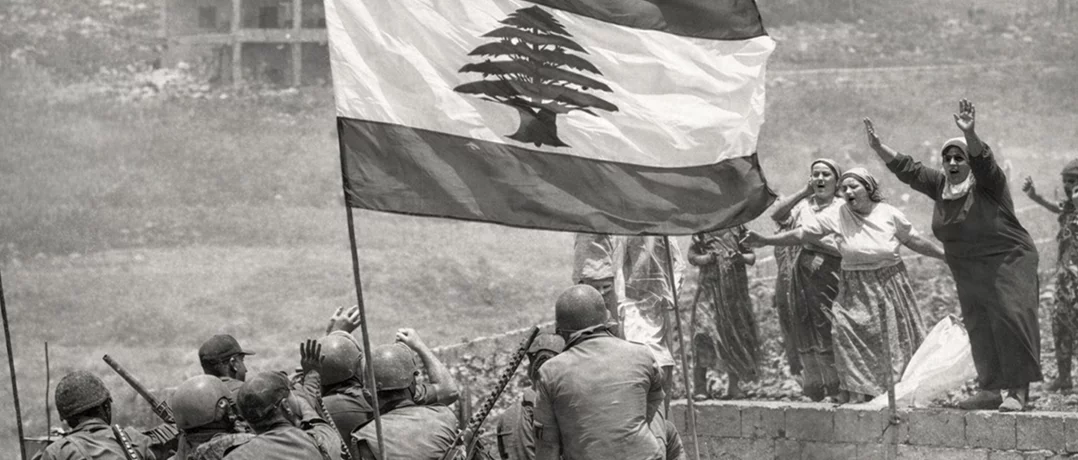
The events of February 6, 1984 cannot be reduced to a passing episode in the Lebanese Civil War or framed merely as a confrontation between the Lebanese Army and armed factions in West Beirut. They represent, in structural and political terms, a decisive rupture in the evolution of the Lebanese state - a moment in which the process of rebuilding sovereignty after 1982 was abruptly reversed, and the foundations were laid for the long-term consolidation of Syrian control and, later, Iranian influence through local intermediaries. Any serious attempt to understand why “De-Hezbollahfication” is necessary today must begin with this moment, when the logic of the state was first decisively subordinated to the logic of the axis.
In the aftermath of the 1982 Israeli invasion, Lebanon briefly stood at a crossroads. The election of President Amine Gemayel, following the assassination of Bachir Gemayel, coincided with a renewed effort to restore the authority of the central state. The Lebanese Army was reorganized, re-equipped, and redeployed with the support of the Multinational Force, composed of American, French, and Italian contingents. The political leadership embarked on negotiations with Israel to secure its withdrawal from Lebanese territory, culminating in the May 17, 1983 Agreement. Despite its controversies, the agreement represented an attempt - perhaps the last serious one in that phase - to reestablish Lebanon as a sovereign state capable of exercising authority over its territory.
However, this trajectory collided directly with the strategic imperatives of both Syria and Iran. For Damascus, Lebanon was not merely a neighboring state but a vital sphere of influence, central to its regional posture and internal security doctrine. For Tehran, which had begun expanding its revolutionary model beyond its borders, Lebanon offered fertile ground for ideological and military penetration, particularly within Shiite communities. The emergence of a sovereign Lebanese state aligned, even partially, with Western-backed arrangements was therefore unacceptable to both actors. What followed was not simply opposition, but a systematic effort to dismantle this emerging state project from within.
The rejection of the May 17 Agreement became the focal point around which this effort was organized. Protests, sit-ins, and political mobilization intensified, particularly in predominantly Muslim areas. Yet these were not isolated expressions of dissent. They were gradually structured into a coordinated political and military front, anchored by movements such as the Amal Movement and PSP, and supported by Syrian strategic direction. The escalation of tensions between the Lebanese Army and opposition groups, including incidents involving the demolition of houses in areas such as Ouzai and the shelling of the southern suburbs, contributed to a climate of confrontation that would culminate in the events of February 6.
According to the detailed account provided in the primary source, the day began with heavy shelling by Lebanese Army positions targeting areas in West Beirut, accompanied by armed clashes between the army and militia elements. What is critical is not merely the occurrence of these clashes, but their rapid transformation into a broader breakdown of state authority. Armed groups affiliated with Amal, PSP and other factions spread across key neighborhoods - Corniche al-Mazraa, Barbir, Zoqaq al-Blat, and others - establishing checkpoints and asserting control over the streets. The atmosphere of tension quickly escalated into a full-scale collapse of the security order that the state had been attempting to reimpose.
One of the most revealing developments was the behavior of the Lebanese Army itself. The Sixth Brigade, composed largely of Muslim soldiers, refused to comply with central command orders and withdrew from its positions. This was not merely a tactical retreat; it was a manifestation of the fragmentation of the national military institution along political and sectarian lines. Once the army ceased to function as a unified force, the very concept of the state’s monopoly over legitimate violence was effectively nullified. By the end of the day, with the withdrawal of security forces, West Beirut had fallen under the control of Amal, led by Nabih Berri, and PSP and allies, marking a decisive shift in the balance of power.
Simultaneously, a political narrative emerged that went far beyond opposition to a specific agreement or policy. Walid Jumblatt openly called for the resignation of the president and the restructuring of the entire political system. The discourse shifted from reform to replacement. The legitimacy of the state itself was called into question, and demands for a new constitutional framework began to surface. In this context, February 6 was not only a military turning point but also a moment of political delegitimization, in which the existing order was portrayed as inherently flawed and in need of fundamental transformation.
The strategic consequences of this day were profound and enduring. The collapse of state authority in West Beirut paved the way for the return of Syrian forces to the capital, from which they had withdrawn in 1982. This return was not temporary. It marked the beginning of a sustained period of Syrian dominance that would last until 2005, during which Lebanese political life, security structures, and decision-making processes were directly controlled by Damascus. The militias that had asserted themselves on February 6 did not disappear; they were gradually integrated into a system in which they acted as intermediaries between Syrian power and Lebanese institutions.
It is within this framework that the later rise of Hezbollah must be understood. While Hezbollah would formally emerge and consolidate its power in the second half of the 1980s under Iranian sponsorship, the model upon which it relied was already established in 1984. This model combined the use of armed non-state actors, the erosion of state legitimacy, and the alignment of local forces with a broader regional axis. The events of February 6 demonstrated that it was possible to dismantle the authority of the state from within, using a combination of military pressure and political discourse, and to replace it with a hybrid system in which sovereignty was fragmented and shared with external actors.
In retrospect, February 6 appears less as an isolated crisis and more as the foundational moment of a new political order. It marked the transition from a state struggling to reassert itself to a state increasingly penetrated and reshaped by external influence. The collapse of the army’s cohesion, the takeover of the capital by militias, and the subsequent reentry of Syrian forces created a precedent that would define the next two decades of Lebanese history. It established the principle that power in Lebanon would not be determined solely through institutions, but through the interplay of armed actors and regional alignments.
This collapse did not remain chaos - it was later organized into a system: what began on February 6, 1984 as the Fall of the State would not remain a moment of chaos. It would be reorganized, structured, and legalized in the years that followed - culminating in the post-Taif order and the 1992 elections.
This is why any contemporary discussion about restoring Lebanese sovereignty cannot ignore this turning point. “De-Hezbollahfication” is not simply about addressing the presence of one organization; it is about dismantling a system that began to take shape on February 6, 1984.
-
-

-
Dr. Elie EliasUniversity Lecturer & Political Historian
-
