



Food becomes fashion’s strongest storytelling tool, blending luxury, comfort, and digital appeal to captivate modern audiences.
Food as fashion’s love language

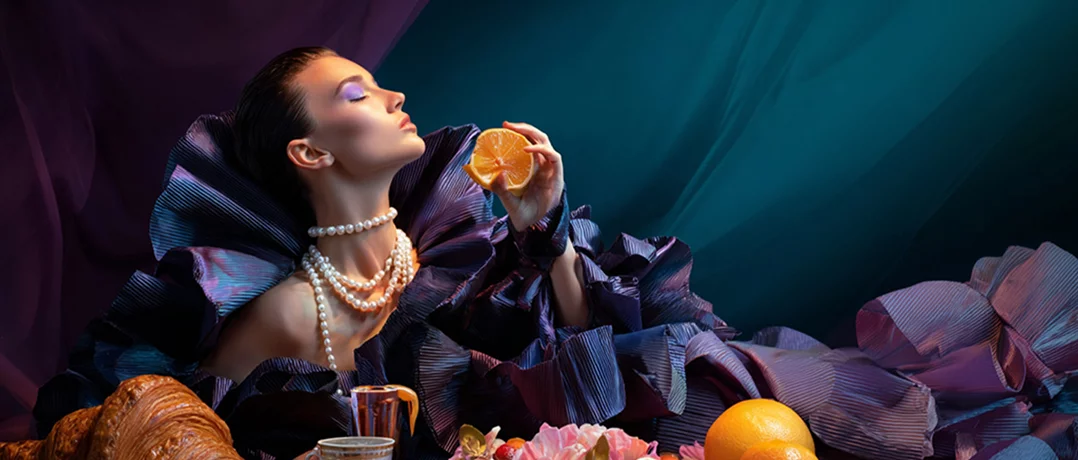
Fashion needs feeling and food supplies it. In 1937, Elsa Schiaparelli asked Salvador Dalí to paint a lobster on a dinner dress, an early spark that hinted at fashion’s long-brewing flirtation with food. Nearly a century later, food is no longer a motif. It’s a strategy, a status symbol, a content engine, and the most effective emotional shortcut brands have to reach Gen Z.
This shift is a strategic transformation in how brands communicate. Food has become fashion’s most powerful marketing language because it blends storytelling, nostalgia, and sensory fantasy in a way traditional branding never could. The modern consumer does not want to be impressed; they want to be entertained, comforted, amused. Clothes alone cannot always deliver that. But food, with its instant emotional resonance, can.
When Loewe asks TikTok how many spaghetti strands fit inside a bag, or when Jacquemus fills entire campaigns with lemons, breakfasts, and ice-cream carts, they are doing more than staging cute scenes. They’re creating a feeling: lightness, play, summer, childhood, intimacy, experiences far easier to evoke through food than fabric.
Food as a form of luxury
Fashion has always struggled with accessibility, but food solves that tension. Even the most exclusive brands can use it because everyone understands it. A croissant-shaped charm or a milk-carton handbag works not because it is expensive, but because the reference is universal.
Gen Z, in particular, responds to this shift. According to Vogue Business, younger consumers have turned food into a new form of status, where taste (in both senses of the word) signals identity as strongly as clothing does. Fashion brands know this, and they lean into food not just as a motif but as a cultural connector.
Fashion shows, cafés, pop-ups, and collaborations increasingly use food because it photographs well, moves well, and spreads fast. A cup of branded cappuccino, a bag shaped like fruit, a dessert table sculpted into a surreal landscape, these are scenes built for the algorithm. Food has movement, texture, color, humor. It is instantly readable on a screen. In a digital world where attention is scarce, food is the perfect hook.
Why the trend works
Ultimately, fashion’s embrace of food is a response to a cultural moment defined by stress, nostalgia, and overstimulation. Food softens luxury. It makes fashion playful instead of intimidating, familiar instead of aloof. It turns elite brands into characters, ones you can laugh with, indulge in, or fantasize about.
And because food taps into the most basic human instincts: hunger, memory, desire, it allows fashion to speak more directly than it has in decades. This is a new code of communication. A new aesthetic. A new emotional strategy. And as long as people keep craving joy, comfort, and pleasure, fashion will keep serving them, beautifully, theatrically, and often, deliciously.
-
-

-
The Beiruter
-
