



Lebanese authorities step up security measures amid reports of former Assad-era figures operating inside Lebanon, raising concerns over sovereignty and stability.
Former Assad regime officers targeted by LAF

A wave of political and security concern has swept Lebanon following reports that former officers and associates of the ousted Syrian president Bashar al-Assad may be not only residing but also operating on Lebanese soil.
Allegations that these figures are organizing or planning hostile actions against Syria’s new leadership, including interim President Ahmad al-Sharaa, have triggered sharp reactions from Lebanese officials, religious authorities and local municipalities.
At the heart of the debate lies a familiar fear: that Lebanon could once again be drawn into regional confrontations at the expense of its fragile internal stability.
Rising alarm over security risks
Reports circulating in Lebanese media and on social platforms suggest that “remnants of the former Syrian regime” have taken refuge in areas of northern Lebanon and the Bekaa Valley. Critics warn that such a presence, if left unchecked, could turn Lebanese territory into a rear base for military or security operations targeting Syria. Lebanese officials have stressed that this scenario would pose a direct threat to national security, especially given Lebanon’s long history of spillover from the Syrian conflict.
As a result, several voices have therefore called for swift and decisive action. For instance MP Weal Abou Faour urged security agencies to fulfill their responsibilities, stressing that the Taif Agreement clearly prohibits Lebanon from being used as a base for attacks against Syria, just as Syria must not interfere in Lebanese affairs. For Abou Faour and others, the issue is not political alignment but the protection of state sovereignty and internal order.
Security operations and official response
In response to these concerns, Lebanese authorities have launched an extensive verification campaign.
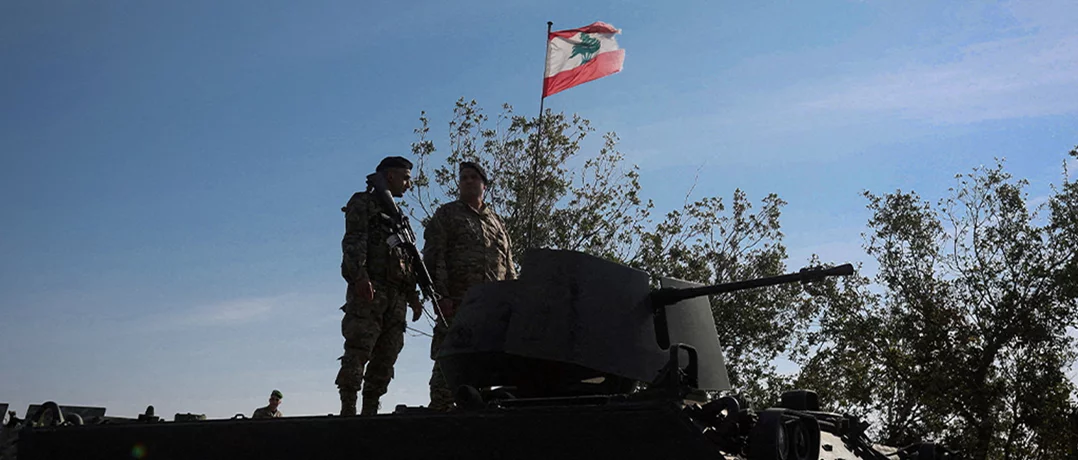
The Lebanese Army Command has intensified raids and security operations across multiple regions, including Akkar, Tripoli, Batroun, Baalbek and Hermel. In the most recent operation, dozens of suspects were detained, among them Lebanese citizens and Syrians, on charges ranging from weapons possession to smuggling and drug-related offenses.
According to the army, weapons, ammunition and military equipment were seized, while investigations are ongoing under judicial supervision. Despite these operations underlining the state’s seriousness, officials have been careful to distinguish between legitimate security threats and the broader population of Syrian refugees residing in Lebanon. This means one should not confuse Syrian refugees with the aforementioned officers, as many remaining in Lebanon are not necessarily pro-Assad.
Municipalities push back against rumors
Local municipalities in Akkar moved quickly to address public anxiety. In a joint statement, several towns confirmed that the army, in coordination with security forces, conducted comprehensive searches of Syrian refugee camps and shelters. The inspections, they said, found no evidence of armed groups or preparations for military action, directly contradicting some media reports.
Municipal leaders stressed their longstanding commitment to coexistence, noting that they have hosted thousands of Syrian refugees since 2011 without discrimination. They also stressed that refugees can be partners in maintaining stability rather than a source of insecurity.
In conclusion, the controversy surrounding alleged former Assad regime figures in Lebanon highlights the country’s delicate position amid shifting regional dynamics. While vigilance is necessary to prevent Lebanese territory from being exploited for external conflicts, officials and communities alike have underscored the importance of acting within the law and avoiding collective suspicion. Ultimately, the challenge for Lebanon lies in balancing firm security measures with social cohesion, ensuring that national stability is preserved in a time of heightened uncertainty.
-
-

-
The Beiruter
-
