

The EU is edging toward listing Iran’s IRGC as a terrorist group after France shifted its stance a move that could reshape EU-Iran relations and escalate diplomatic and economic pressure on Tehran.
France U-turn clears path for EU terror listing of IRGC
France U-turn clears path for EU terror listing of IRGC
By The Beiruter | January 29, 2026

Reading time: 5 min
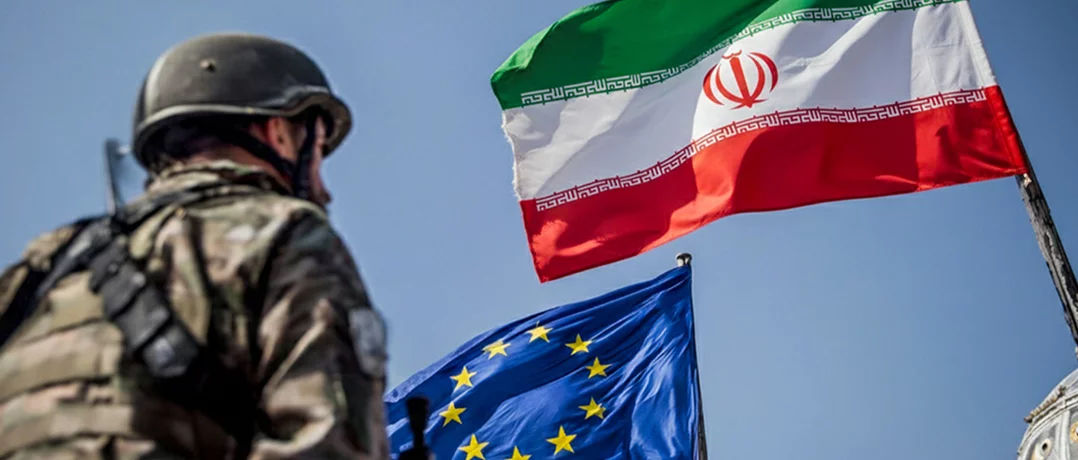
The European Union (EU) is edging toward one of the most consequential foreign policy decisions in its recent dealings with Iran: the possible designation of the Islamic Revolutionary Guard Corps (IRGC) as a terrorist organization.
The shift gained decisive momentum after France announced it would support the measure, reversing earlier reservations. The move reflects mounting European anger over Tehran’s violent response to anti-government protests and signals a readiness to escalate pressure even at the cost of diplomatic friction. If approved unanimously, the decision would represent a sharp recalibration of EU-Iran relations and align Europe more closely with several Western allies, namely the United States (US), that have already taken similar action.
France’s reversal alters the political landscape
France’s endorsement is widely seen as the tipping point that made the designation politically viable. For months, Paris had been among the more cautious voices within the bloc, warning that labeling the IRGC a terrorist group could trigger a complete rupture in diplomatic relations. French officials worried about the safety of their citizens in Iran and the fate of delicate negotiations aimed at freeing European detainees.
That hesitation gave way to a more assertive stance after the scale of the Iranian crackdown became clearer. French Foreign Minister (FM) Jean-Noël Barrot publicly linked the decision to what he described as “unbearable repression of the peaceful uprising of the Iranian people.” His statement framed the move not only as a strategic choice but as a moral response to widespread violence. With France joining Italy and Germany in support, diplomats expect EU foreign ministers meeting in Brussels, Belgium to reach political agreement, although the process still requires formal unanimity among all 27 member states.
What is the IRGC?
The Islamic Revolutionary Guard Corps is one of the most powerful institutions in Iran, functioning as both a military force and a political actor. Created after the 1979 Iranian Revolution and the establishment of the Islamic Republic, it was designed to protect the country’s clerical system and counterbalance the regular armed forces.
The IRGC reports directly to Iran’s Supreme Leader, today Ayatollah Ali Khamenei (bypassing the elected president), and has grown into a sprawling organization with influence over security policy, intelligence operations and major sectors of the economy. It oversees Iran’s ballistic missile capabilities, plays a central role in internal security (namely through the infamous Basij paramilitary, known for its severe and brutal suppression of freedom of speech and public dissent) and supports allied armed groups across the Middle East (including Hezbollah in Lebanon, Hamas in Gaza, the Houthis in Yemen as well as Iraqi factions).
Because of its reach inside and outside Iran, critics argue that the IRGC operates as an ideological force that blends state authority with paramilitary power, making it a unique and controversial entity in international relations.
Legal and economic consequences of the designation
If the EU formally lists the IRGC as a terrorist organization, the decision would carry immediate legal and financial consequences.
Members and affiliated entities would face asset freezes, travel bans and strict prohibitions on funding or economic cooperation within EU territory. European companies and banks would be required to sever any ties linked to the organization, tightening an already complex sanctions environment.
Supporters of the measure say these tools are necessary to send a strong political signal. They argue that sanctions targeting individuals are no longer sufficient given the IRGC’s institutional role in enforcing domestic repression and projecting influence abroad. A terrorist designation, in their view, clarifies Europe’s position and removes ambiguity about the acceptability of engaging with entities connected to the corps.
Human rights pressure and strategic messaging
The EU’s push comes amid international condemnation of Iran’s response to protests driven by economic hardship and political grievances. Rights groups describe the crackdown as one of the deadliest episodes of internal repression in the country in decades. European officials backing the designation say the scale of violence demands more than rhetorical criticism.
Beyond human rights, the decision also carries strategic messaging. Several diplomats argue that the IRGC’s overseas activities (including support for non-state armed groups and regional operations) have long destabilized neighboring countries. By designating the corps, Europe would be aligning itself with the US, Canada and Australia, which have already adopted similar classifications. This convergence could strengthen transatlantic coordination on sanctions and regional security policy.
Diplomatic risks and internal EU debate
Despite growing momentum, the proposal remains controversial within parts of the EU. Some member states fear that labeling a branch of Iran’s official military as a terrorist group could eliminate the last remaining channels for dialogue, amid efforts to revive the 2015 Joint Comprehensive Plan of Action (JCPOA) concerning Iran’s nuclear program. Diplomats warn that Tehran may retaliate by restricting European missions, detaining dual nationals or suspending cooperation on nuclear and regional issues.
France’s earlier reluctance reflected these concerns. Paris had been especially sensitive to the situation of French citizens previously held in Iranian prisons and the importance of maintaining diplomatic access. Even now, some policymakers caution that a designation may harden positions on both sides without delivering tangible improvements in human rights.
Still, advocates counter that inaction would damage Europe’s credibility. They argue that the EU cannot simultaneously condemn repression and continue treating the institution most associated with it as a normal state actor. From this perspective, the decision seeks to align policy with principle while increasing pressure on Tehran to make concessions on human rights and its nuclear program.
In conclusion, the EU’s expected move to designate the IRGC as a terrorist organization represents a turning point in its Iran strategy. France’s reversal transformed a divisive proposal into a plausible consensus, driven by outrage over domestic repression and concern over the corps’ regional role. The step carries significant diplomatic risks and could deepen tensions with Tehran, yet many European leaders believe the moment demands a clear stance. Whether the designation alters Iran’s behavior or further entrenches confrontation remains uncertain. What is certain is that Europe is redefining the balance between engagement and accountability in one of its most sensitive foreign policy relationships.
-
-

-
The Beiruter
-
