



Political analyst Wajdi Aridi discusses France’s enduring partnership with Lebanon, its shifting regional influence, and the future of its strategic engagement and relevance.
France’s enduring stake in Lebanon

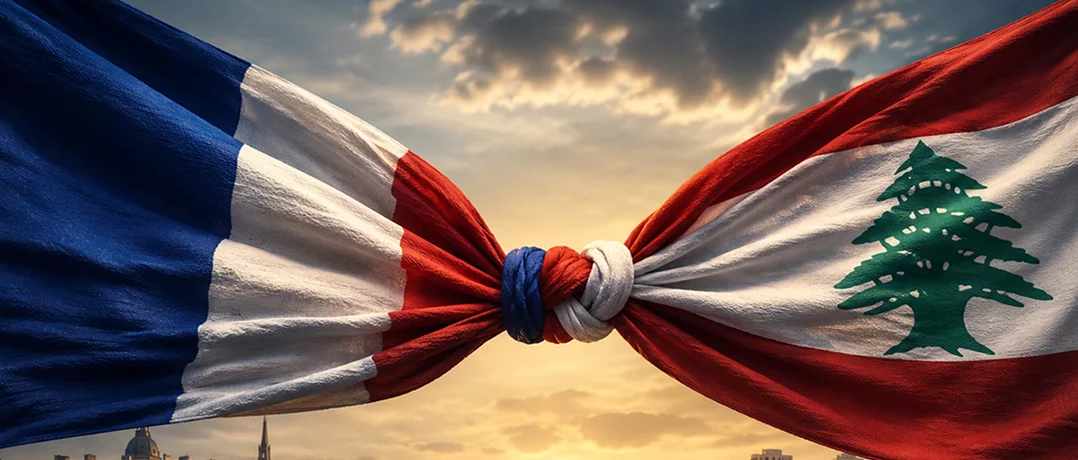
Few bilateral relationships in the Middle East have been as enduring and multifaceted as that between France and Lebanon. Built upon centuries of cultural, religious, political, and educational ties, the relationship has evolved from a historical connection into a modern strategic partnership that continues to shape Lebanon’s diplomatic landscape.
Yet, France’s position in Lebanon is no longer what it once was. While Paris continues to play an active role in supporting Lebanese institutions and advocating for political stability, its influence now operates within a far more competitive regional environment dominated by the United States (U.S.) and increasingly shaped by regional countries (namely being Gulf states and Iran).
Nevertheless, despite profound geopolitical transformations and the emergence of new regional and international actors, France remains one of Lebanon’s closest international partners, maintaining influence through diplomacy, humanitarian assistance, economic cooperation, and cultural engagement.
To better understand the evolution of this relationship, France’s approach to Lebanon, and its long-term strategic vision, The Beiruter reached out to Lebanese political analyst Wajdi Aridi.
France’s changing influence in Lebanon
According to Wajdi Aridi, France’s influence reached its peak during the Rafik Hariri-Jacques Chirac era, when Paris was arguably the most influential foreign actor in Lebanon. He notes that France played a decisive diplomatic role during Operation Grapes of Wrath in 1996 by helping broker the April Understanding, while exercising political influence that often surpassed that of other international powers.
Aridi explains that one of the defining characteristics of French policy has been its willingness to maintain dialogue with all Lebanese political actors, including Hezbollah. Unlike several Lebanese parties that advocated isolating the group politically, successive French governments chose to preserve channels of communication with Hezbollah’s leadership.
This approach generated criticism among some Lebanese political factions, particularly parties opposed to Hezbollah, who viewed France’s engagement as granting legitimacy to the group. Nevertheless, Aridi argues that Paris believed maintaining dialogue enabled it to preserve its traditional role as a mediator capable of communicating with all components of Lebanese society.
France had to reassess certain aspects of its approach in order to preserve a relationship that remains valued by many Lebanese and maintain its role as an influential partner.
Furthermore, he stresses that France’s relationship with Lebanon rests on much deeper foundations. Educational exchanges, francophone institutions, humanitarian assistance, cultural cooperation, and long-standing social ties continue to distinguish France from other international partners. French support for the Lebanese Armed Forces (LAF), sponsorship of political dialogue, and continued humanitarian initiatives all demonstrate that Paris remains invested in Lebanon despite changing regional realities.
France has long been regarded by many Lebanese as a ‘caring mother,’ with its influence built not only on politics but also on Francophone ties, education, culture, and deep social connections.
At the same time, Aridi believes France’s political influence has declined significantly over the past decade. The United States (U.S.) has emerged as the dominant international actor in Lebanon, while Saudi Arabia (KSA), Iran, Turkey, and other regional powers have expanded their influence. Although France remains an important diplomatic player, it now operates within a far more competitive geopolitical environment than in previous decades.
France and the future of UNIFIL
France’s commitment to Lebanon is perhaps most visible through its participation in the United Nations Interim Force in Lebanon (UNIFIL). Since the mission’s establishment in 1978, France has remained one of its principal contributors, providing troops, supporting the mission’s mandate, and playing a leading diplomatic role in securing the periodic renewal of its authorization at the United Nations Security Council (UNSC).
Aridi notes that the possibility of UNIFIL’s eventual withdrawal raises important questions about France’s future security role in Lebanon. He suggests that if the mission concludes, Paris may seek to maintain a presence through alternative mechanisms outside the UNIFIL framework, potentially focusing on humanitarian assistance, advisory support, or monitoring developments in southern Lebanon.
However, he highlights that any future French role will depend largely on regional developments, including the outcome of ongoing conflicts, Hezbollah’s future position, the security situation along the Lebanese-Israeli border, and the level of coordination between France and the U.S. While no definitive model has yet emerged, Aridi believes France is unlikely to abandon its security engagement with Lebanon altogether.
A possible French presence after UNIFIL could take a symbolic, humanitarian, and social form, depending on regional developments and the nature of coordination between Paris and Washington.
A relationship forged through history
The foundations of Lebanese-French relations stretch back centuries through France’s long-standing relationship with the Maronite Church and its educational and cultural presence in Mount Lebanon. French missionaries established schools and institutions that introduced generations of Lebanese to the French language, culture, and educational system, helping cultivate a francophone elite that would later play a prominent role in the country’s political and intellectual development.
France’s influence expanded significantly after World War I when it assumed the League of Nations Mandate over Lebanon and Syria and proclaimed the State of Greater Lebanon in 1920. During the Mandate period, France helped establish many of Lebanon’s modern political, judicial, and administrative institutions, leaving an enduring legacy that continues to shape the country’s governance and legal framework.
Following Lebanon’s independence in 1943, the bilateral relationship evolved into a close diplomatic partnership. France remained engaged throughout the Lebanese War, participated in the Multinational Force in Beirut, and later supported post-war reconstruction. Relations reached a particularly strong phase during the presidency of Jacques Chirac, whose close friendship with Prime Minister Rafik Hariri reinforced political and economic cooperation. After Hariri’s assassination in 2005, France emerged as one of the strongest international supporters of Lebanese sovereignty, leading to Syria’s withdrawal in 2005.
France’s long-term strategic vision
Despite the shifting balance of power in the Middle East, Aridi believes France has no intention of relinquishing its historical role in Lebanon. Instead, Paris appears determined to adapt its diplomacy while preserving the deep historical ties that continue to distinguish the bilateral relationship.
France continues to view Lebanon as an important Mediterranean partner whose stability contributes to broader regional security.
France continues to view Lebanon as a strategic partner due to its geographic position and importance within the Mediterranean region.
Its continued investment in economic assistance, institutional support, education, and cultural cooperation reflects a long-term commitment that extends beyond immediate political developments. The large Franco-Lebanese community, extensive French institutional presence, and enduring francophone heritage further reinforce the strategic importance of the relationship.
Nevertheless, Aridi cautions that France no longer exercises the level of political influence it once enjoyed. The future of France’s role, he argues, will ultimately depend on how regional dynamics evolve and how effectively Paris adapts to an increasingly multipolar Middle East. Indeed, as Aridi argues, France’s role has evolved rather than disappeared, maintaining a comparative advantage rooted in centuries of shared history, cultural affinity, and institutional cooperation.
-
-

-
The Beiruter
-
