Arab filmmakers are making a powerful impact at the 2026 Cannes Film Festival with stories shaped by war, displacement, identity, and social transformation across the region.




Arab filmmakers are making a powerful impact at the 2026 Cannes Film Festival with stories shaped by war, displacement, identity, and social transformation across the region.

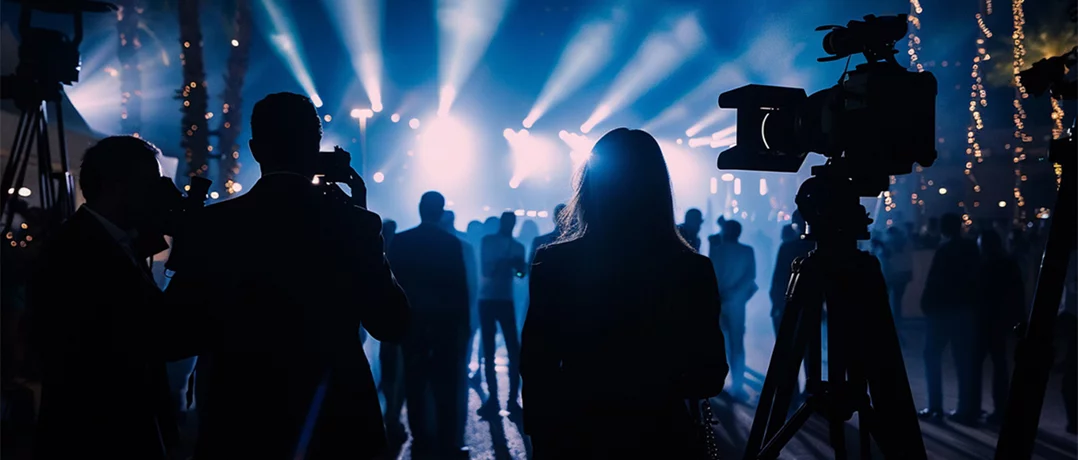
Arab cinema is once again leaving a strong mark on the 2026 Cannes Film Festival 2026, with filmmakers from across the Middle East and North Africa appearing in some of the festival’s most prestigious sections, from the main Competition to Un Certain Regard, Critics’ Week, Directors’ Fortnight and La Cinef.
This year’s Arab selections reflect a region still grappling with war, displacement, fractured identities and social transformation, yet continuing to produce cinema that is intimate, politically charged and deeply human. The line-up includes filmmakers from Morocco, Palestine, Lebanon, Yemen, Syria, Algeria, Sudan and Tunisia, alongside Egyptian-French director Arthur Harari competing in the festival’s main section.
Lebanese artist and filmmaker Ali Cherri screens The Sentinel in a Critics’ Week special screening.
The short film follows a sergeant granted one night of freedom during Bastille Day celebrations. Cherri previously gained international recognition with The Dam, which premiered at Directors’ Fortnight in 2022.
Palestinian director Rakan Mayasi makes his feature debut with Yesterday the Eye Didn’t Sleep, selected for Un Certain Regard.
Set in a Bedouin village in Lebanon’s Bekaa Valley near the Syrian border, the film begins with the disappearance of a young woman before spiralling into family tensions, revenge dynamics and unresolved community conflicts. The setting reflects a Lebanon rarely shown on screen: rural, borderland, tense and socially fragmented.
Moroccan filmmaker Laila Marrakchi returns to Cannes two decades after Marock with La Mas Dulce (Strawberries), selected in Un Certain Regard.
Set between Morocco and southern Spain, the film follows 2 young Moroccan women who travel abroad for seasonal agricultural work, only to confront exploitation, abuse and precarious labour conditions. The story touches on migration, class and the invisible workforce sustaining parts of Europe’s agricultural economy.
Egyptian-French filmmaker Arthur Harari competes in Cannes with The Unknown (L’Inconnue), a psychological drama following a photographer who mysteriously wakes up in the body of an unknown woman after a party.
Harari previously won the Academy Award for Best Original Screenplay alongside Justine Triet for Anatomy of a Fall. His latest film places Arab representation directly inside Cannes’s most prestigious competition category.
In Critics’ Week, Yemeni filmmaker Sara Ishaq presents The Station (Al Mahattah), centred around a women-only petrol station in Yemen that becomes a refuge amid war and instability.
The film follows Layal, whose fragile sanctuary is disrupted by family tensions and the looming threat of military enlistment. Ishaq previously gained international attention for her Oscar-nominated documentary Karama Has No Walls.
Syrian filmmaker Daood Alabdulaa also appears in Critics’ Week with Nafron, a short film set in Damascus after the fall of Bashar Al Assad’s government.
The story follows a woman wandering through the devastated city with no memory of who she is, turning post-war Damascus into both a physical and psychological landscape.
Algerian filmmaker Sarra Ryma presents What Do the Maknines Dream Of, following 2 young Algerians preparing to cross the Mediterranean and leave their lives behind.
Franco-Moroccan director Said Hamich Benlarbi appears in Directors’ Fortnight with In Search of the Grey Bird with Green Stripes, a visually poetic journey through Morocco’s Atlas Mountains.
Sudanese filmmaker Ibrahim Omar closes the Arab selections with Nothing Happens After Your Absence, a film about returning to screen cinema in a village before war suddenly erupts around it.
Arab filmmakers also appear in La Cinef, Cannes’s section dedicated to film-school productions.
Palestinian filmmaker Yasmin Najjar was selected with TJ28 (28 Days Left), a short film produced through Finland’s Aalto University.
Meanwhile Tunisian director Youssef Handouse enters the section with Somewhere I Belong, produced at Tunisia’s Isamm film school.
Their inclusion signals the growing internationalisation of Arab film education and the emergence of younger voices navigating both regional realities and global cinema spaces.
From Lebanon’s Bekaa Valley to post-war Damascus, from Yemeni petrol stations to Moroccan migration routes, this year’s Arab films at Cannes reveal a cinema increasingly rooted in local realities while resonating internationally.
Rather than presenting a single narrative about the region, the selections reflect a fragmented but vibrant cinematic landscape shaped by memory, displacement, conflict, identity and survival. Even amid instability across much of the Arab world, filmmakers continue to push regional stories onto one of global cinema’s biggest stages.

