



At the UN General Assembly, Lebanon’s leaders are seeking to recast relations with Iran, Syria and other partners around state sovereignty while securing international support for the south after UNIFIL.
From the sidelines to the diplomatic table: Lebanon’s new foreign order
From the sidelines to the diplomatic table: Lebanon’s new foreign order
By The Beiruter | September 25, 2026

Reading time: 5 min
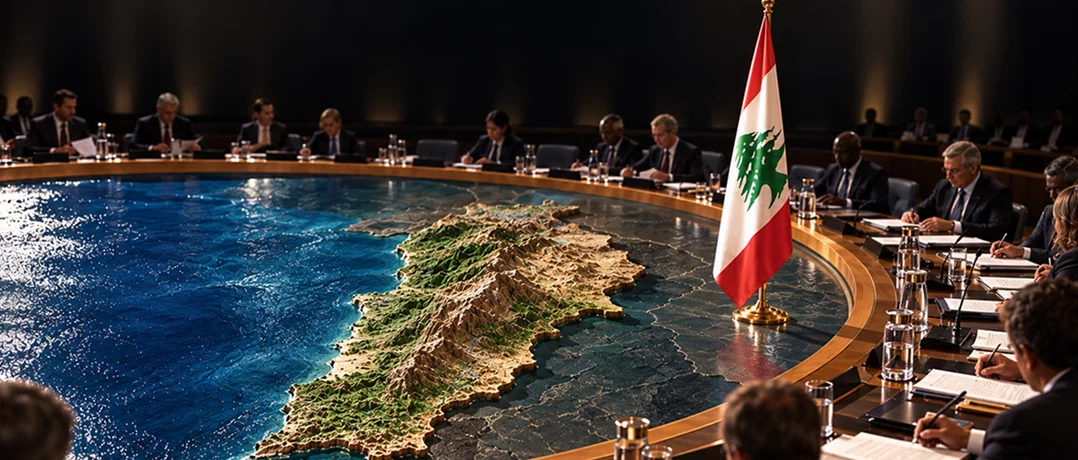
Lebanon’s foreign policy has often been shaped as much by the country’s internal power struggles as by the diplomacy conducted in its name. Regional alliances, the influence of Hezbollah and the competing agendas of foreign powers frequently left Beirut reacting to events rather than defining its own position.
In New York this week, on the margins of the 81st session of the United Nations General Assembly, Lebanon’s Prime Minister Nawaf Salam and Lebanon’s Foreign Minister Youssef Raggi have engaged in an unusually intensive round of diplomacy, meeting with presidents, prime ministers and foreign ministers from across the region and beyond.
Salam has repeatedly presented Lebanon as a state seeking to restore its sovereignty, control its territory and conduct relations with other countries on a state-to-state basis. Raggi, meanwhile, has openly defended the principle of negotiating with those with whom Lebanon has disagreements.
“Today, we are here to affirm that there is a new Lebanon that we are working to build along two parallel tracks: internal reform and the restoration of Lebanese sovereignty,” Salam said in New York.
The message is particularly significant because it is being delivered at a moment when Lebanon is trying to redefine its relationship with the regional powers that have traditionally influenced its political and security landscape.
A direct conversation with Iran
At a moment when Lebanon is trying to redefine its relationship with the regional powers that have forcefully influenced its political and security landscape, Salam and Raggi met with Iranian President Masoud Pezeshkian and Foreign Minister Abbas Araghchi.
Salam told Pezeshkian that Lebanon wanted to “open a new page” in relations with Iran and build a relationship between the two states based on mutual respect for sovereignty and independence, non-interference in internal affairs and common interests.
That formulation comes as Beirut attempts to move away from the regional axis dominated by Iran and to place the question of weapons and decisions of war and peace firmly within the authority of the Lebanese state. Salam also made clear that Lebanon does not want to remain a theatre for regional confrontation.
Lebanon, he stressed, had already paid a heavy price in terms of security, stability and its economy and did not want to be used as a battlefield for regional conflicts or as a channel for exchanging messages. He identified the complete Israeli withdrawal from Lebanese territory and the state's monopoly over weapons as priorities. The symbolism was reinforced by Raggi's presence beside him.
After the meeting, the foreign minister said he had no problem meeting anyone. Negotiation, he noted, takes place with the party with which there is a problem. Lebanon had said what it needed to say, he added, from what he described as the country's sovereign position.
Salam also raised a more immediate diplomatic issue with Tehran, suggesting that Iran appoint a new ambassador to Beirut. Iran has yet to respond formally to the proposal.
Turning the page with Damascus
On the sidelines of the UNGA, Salam had sat down with Syrian President Ahmad al-Sharaa, in another meeting loaded with historical significance.
Lebanon's relationship with Syria has been shaped in the past by Syrian military and political dominance. Followed by the collapse of Bashar al-Assad's regime and the emergence of a new Syrian leadership, Salam said Lebanon was working to open a new chapter with Syria based on trust, non-interference and shared interests.
The discussions focused on reviewing existing bilateral agreements in preparation for the first meeting of the Lebanese-Syrian Higher Joint Committee, established by the Lebanese government in July. The objective is not merely to restore contacts but to establish a different framework for bilateral relations. Economic and regional connectivity were also discussed, including electricity, railways and energy.
From across the region and beyond
Salam's meetings in New York have also extended well beyond Lebanon's immediate neighbors.
He met Spanish Prime Minister Pedro Sánchez, Russian Foreign Minister Sergei Lavrov, Egyptian Prime Minister Mostafa Madbouly, Yemeni Presidential Leadership Council Vice President Abdullah Al-Alimi, EU Commissioner for the Mediterranean Dubravka Šuica, who reaffirmed EU support for Lebanon, while the European Union announced a new €505 million package aimed at supporting the country's stability, recovery and reform path.
The PM also met with Romanian President Nicușor Dan and Kuwait's Crown Prince Sheikh Sabah Khaled Al-Hamad Al-Sabah and Jordan’s King Abdullah II.
With his Iraqi counterpart, Ali al-Zaidi, Salam discussed “common challenges” and “reaffirmed their commitment to strengthening the authority of the state and its institutions and continuing the process of placing weapons under the exclusive control of the state.” Salam also met with Turkish President Recep Tayyip Erdoğan, with discussions focusing on the support Turkey could provide to the return and recovery process in south Lebanon, including prefabricated housing. His meeting with UAE Minister of State for International Cooperation Reem Al Hashimy focused on cooperation in digital transformation and the development of government services, including the possibility of benefiting from the UAE’s experience in digitizing transactions and simplifying procedures.
The post-UNIFIL question
One of the most important diplomatic files Salam has raised in New York concerns what happens in southern Lebanon after UNIFIL's mandate expires at the end of 2026.
Salam has said Lebanon wants international monitoring, reporting and liaison functions to continue and does not want a vacuum once UNIFIL leaves.
Ideas for a European force, potentially involving France, Italy or other countries, have circulated. But Beirut's position, Salam said, is that any international force must operate under the umbrella of a United Nations Security Council resolution.
The U.N. Interim Force in Lebanon (UNIFIL), which currently counts around 7,500 peacekeepers from 46 countries, has acted as a buffer between Lebanon and Israel since 1978. But under U.S. pressure, the U.N. Security Council voted last year to halt the force's mandate in December.
Beirut considers the issue urgent as Israel maintains troops in a self-declared “security zone” that extends about 10 kilometers into south Lebanon.
Last week, President Joseph Aoun told AFP that Lebanon wanted a new force, European or otherwise, to prevent a security vacuum after the peacekeepers leave. But he said, “the best and most optimal option remains extending UNIFIL’s mandate.”
Aoun, French President Emmanuel Macron and Jordan’s King Abdullah II also discussed creating a new force to replace UNIFIL during a meeting last week in Paris. France and Italy have said they want to establish a coalition to prepare for UNIFIL’s replacement.
-
-

-
The Beiruter
-
