



Iran is facing its most serious uprising in decades, as economic collapse, post-war weakness, and the unprecedented revolt of the bazaar strip the Islamic Republic of one of its last pillars of support.
From trade to turmoil: How Iranian Bazaar ignited a revolution
From trade to turmoil: How Iranian Bazaar ignited a revolution
By Omar Harkous | January 15, 2026

Reading time: 5 min
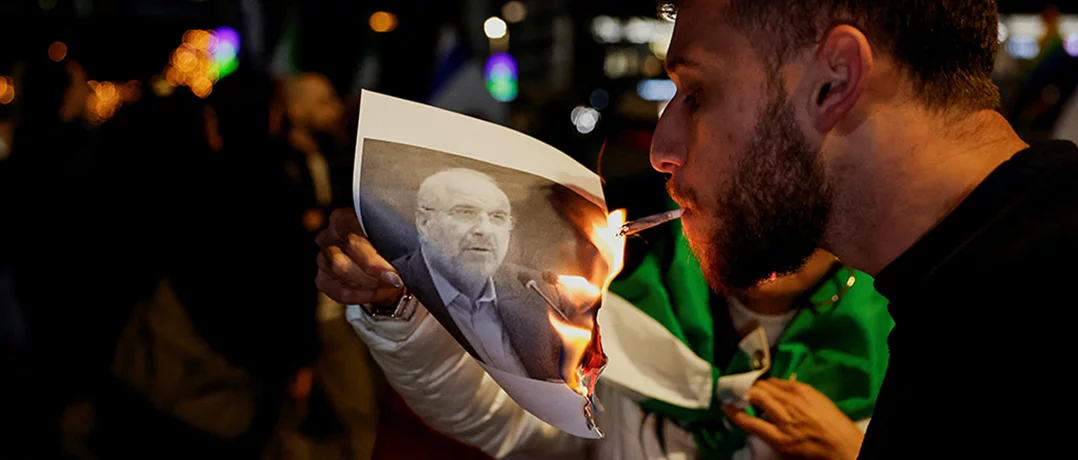
Iran is living through a turning point in its 47-year Islamic Republic. What began as small economic protests in late December 2025 has quickly grown into a nationwide uprising that is shaking the very foundations of the regime. This came after the “12-Day War” of June 2025, when Israeli and American strikes badly damaged Iran’s nuclear and military sites. The attacks stripped the state of its usual power to scare rivals and left it weak in the face of today’s deep economic crisis.
This new wave of protest is more dangerous for the regime than anything before it. The most important change is the break between the clerics and the traditional bazaar merchants. These traders, once loyal to the Islamic Republic, are now being crushed by runaway inflation and a collapsing currency. Many of them are no longer willing to stand by the authorities. Instead, they are joining students and ordinary people in protests across the country.
Unlike past uprisings, which were either centred in Tehran in 2009 or in poor outer regions in 2019, today’s revolt is truly national. Protests have been reported in at least 107 cities across all 31 provinces. They include the capital, the west, the east, the north, and the south. This shows how wide and deep public anger has become, cutting across ethnic, religious, and social lines.
The Bazaar and the financial crash
To understand what is happening, you have to look at Iran’s economic collapse. After the June 2025 war, the Iranian rial fell to record lows. By late December, it had dropped to more than 1.45 million rials to the US dollar on the open market. This was not an accident. The government had burned through its foreign reserves to rebuild its damaged forces and to keep funding friendly militias in Lebanon, Iraq, and Yemen. At the same time, air strikes hit parts of Iran’s oil export system, cutting off vital hard-currency income.
The bazaar merchants have a special place in Iran’s history. In 1979, they helped fund and organise the revolution that brought Ayatollah Khomeini to power. In return, the Islamic Republic protected its interests for decades. But now that old alliance is breaking.
One fabric trader explains the problem simply: prices rise so fast that he cannot keep up. People are too poor to buy, the government puts pressure on sellers, and the currency continues to fall. What he sells today cannot be replaced tomorrow. His working capital is melting away.
Because the state can no longer protect its businesses, bazaar traders have taken to the streets. They have gone on strike and joined protests. Instead of offering solutions, the authorities have met them with force. That has only pushed them further into open opposition.
This time is different from 2019. Back then, the bazaar stayed mostly quiet. Now, for the first time, Tehran’s Grand Bazaar has closed fully, along with big markets like the Aladdin electronics centre and the cloth markets. The strike has spread to cities such as Tabriz, Mashhad, and Isfahan.
Traders say they are being driven into action by “forced bankruptcy. They cannot import goods, cannot price them properly because the currency changes by the hour, and are being forced to sell cheaply by the government. Some are even accused of hoarding. So they have moved from asking for economic relief to shouting political slogans like “Death to the dictator". This marks a clear break between the bazaar and the religious establishment.
In 1979, the bazaar backed the clerics against the Shah. Today, history has turned upside down. The same class is now drifting into open conflict with the Revolutionary Guards and the state.
“Rioters” and the iron fist
The regime is responding with a mix of denial, blame, and brutal force. Officials say there is no real crisis and claim that foreign powers are stirring up trouble. Security forces have cracked down hard, killing hundreds, according to Iranian human-rights groups.
At the same time, the state uses a dangerous legal trick. It divides protesters into two groups. The first are “protesters", described as moderate citizens with economic demands. The regime hopes to keep bazaar traders in this box, away from students and street activists. The second group is called “rioters”. Anyone who shouts political slogans, blocks roads, or attacks public buildings is labelled a rioter, a terrorist, or a foreign agent.
By doing this, the regime tries to scare traders back into line. It tells them they are not traitors, just misled. But it also threatens them, so they will stop funding the uprising. That is what the authorities really fear: a revolt that can pay for itself and keep going.
The “New” Bazaar
For centuries, the bazaar has been a pillar of social order in Iran. Its break with the state now puts huge pressure on the system. By joining students and the middle class, the traders weaken the old networks that sustained the regime's social support.
Many merchants fear harsh revenge. Some are sending money abroad and preparing to flee, which makes the economic collapse even worse. As strikes grow and the middle class sinks into poverty, pressure on the government rises. More repression then follows, feeding a vicious cycle.
Some traders hope reformists will also join the protests. These figures come from inside the system and from the middle class. If they do, calls may grow to cut the powers of the supreme leader and the security forces, stop funding foreign militias, and move towards gradual political change.
Others worry about a darker path: full martial law, a total internet shutdown, mass arrests, and even fast-track executions to spread fear. That might quiet the streets for a while, but it would further isolate the regime.
If strikes continue, the economy could grind to a halt. The government may then struggle to pay soldiers, police, and civil servants. That would slowly erode the power of the centre.
What is happening in Iran is not just another protest. It is a perfect storm of economic collapse, military defeat, global isolation, and popular anger. The bazaar's decision to join the call against the “dictator” is a strategic turning point. It means the regime has lost one of its last social shields. Behind its walls of guns and prisons, its room to move is now smaller than ever, and the risks ahead, from chaos to even civil war, are growing fast.
