



Gebran Tueni’s 2005 assassination symbolizes Lebanon’s fight for press freedom, accountability, and speaking truth amid ongoing impunity.
Gebran Tueni: The pen that defied power

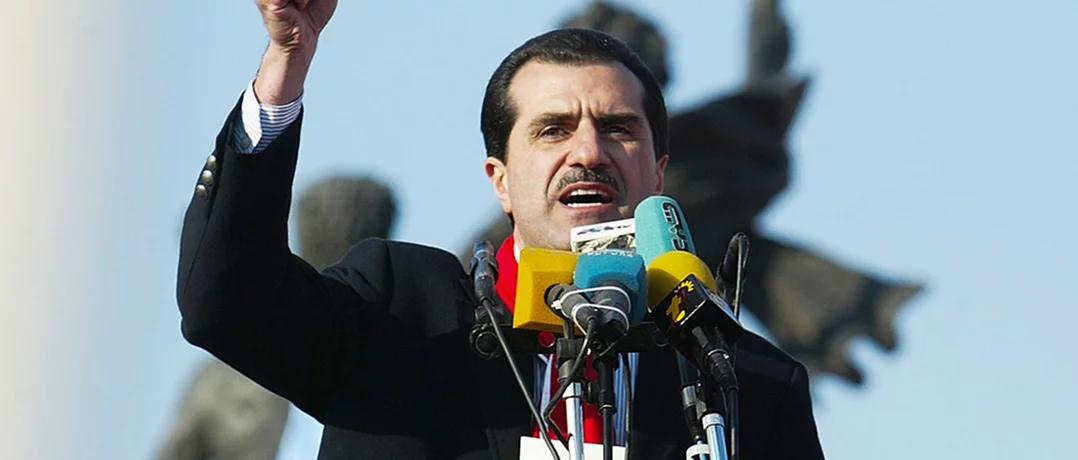
“We swear by Almighty God, Muslims and Christians, that we shall remain united until the end of times in defense of a great Lebanon.”
It was both a declaration of hope and a warning a reminder of the danger confronting those who dared to speak so openly.
20 years after his assassination, Gebran Tueni remains one of the clearest symbols of fearless journalism in Lebanon’s modern history. On 12 December 2005, Tueni was killed by a car bomb in the Mkalles area of east Beirut, an attack that also claimed the lives of two of his bodyguards and a civilian, as well as injuring dozens. He was 48 years old.
Tueni was targeted not merely as an individual, but as a voice one that believed words could confront power, expose domination, and defend Lebanon’s right to speak for itself.
Beyond his role as an editor and publisher of Annahar newspaper, Tueni was also a Member of the Lebanese Parliament (MP) and a central figure in the political moment that followed the assassination of former Prime Minister Rafik Hariri in February 2005. Under his leadership, Annahar became a principal platform for the sovereignty movement that emerged during and after the Cedar Revolution in 14 March 2005, at a time when Lebanon was struggling to reclaim its independence after nearly three decades of Syrian military and intelligence presence.
Tueni rejected the notion that neutrality meant silence. His writing was direct, unapologetic, and deeply political aimed not at serving power, but at challenging it. In the months following Hariri’s assassination, which killed 22 people and wounded more than 200, Tueni emerged as one of the most outspoken advocates for accountability, international investigation, and full Lebanese sovereignty. He consistently warned that intimidation and fear were being used as political tools to silence dissent.
His assassination came amid a systematic wave of political violence in 2005–2007, which targeted journalists, MPs, and public figures critical of Syrian influence. That same year, Annahar columnist Samir Kassir was assassinated in June, while journalist May Chidiac survived a car bomb attack in September. In the years that followed, MPs including Walid Eido, Pierre Gemayel, Antoine Ghanem, and others were also killed. International observers and press-freedom organizations described the pattern as a deliberate campaign against Lebanon’s political and media class.
Notably, Tueni was assassinated on the very day a United Nations investigative commission was scheduled to brief the Security Council on progress in the Hariri assassination probe; a timing widely seen as politically charged.
His killing drew immediate international condemnation, with the United Nations, the Committee to Protect Journalists, and Reporters Without Borders describing the attack as a direct assault on press freedom and democratic life in Lebanon.
Two decades later, no one has been convicted of Gebran Tueni’s murder. Despite the establishment of the Special Tribunal for Lebanon (STL) in 2007, which focused primarily on the Hariri assassination and related cases, Tueni’s killing, like many other political crimes of that era, remains unresolved. His case has become emblematic of Lebanon’s entrenched culture of impunity, where political assassinations rarely lead to accountability.
Yet his legacy has not faded. On the contrary, his death laid bare the extreme risks faced by journalists in Lebanon and exposed the narrowing space between free expression and lethal consequence a reality that continues to shape media practice in the country today.
Remembering Gebran Tueni is not an act of nostalgia. It is a confrontation with the present. In a Lebanon still marked by political paralysis, institutional erosion, and economic collapse, his life raises an enduring question: what is journalism for, if not to speak when silence is safer?
-
-

-
The Beiruter
-
