



Germany unveils historic military strategy, boosting capabilities and personnel to counter rising threats, signaling assertive defense posture and potential European arms race.
Germany: The return of military might

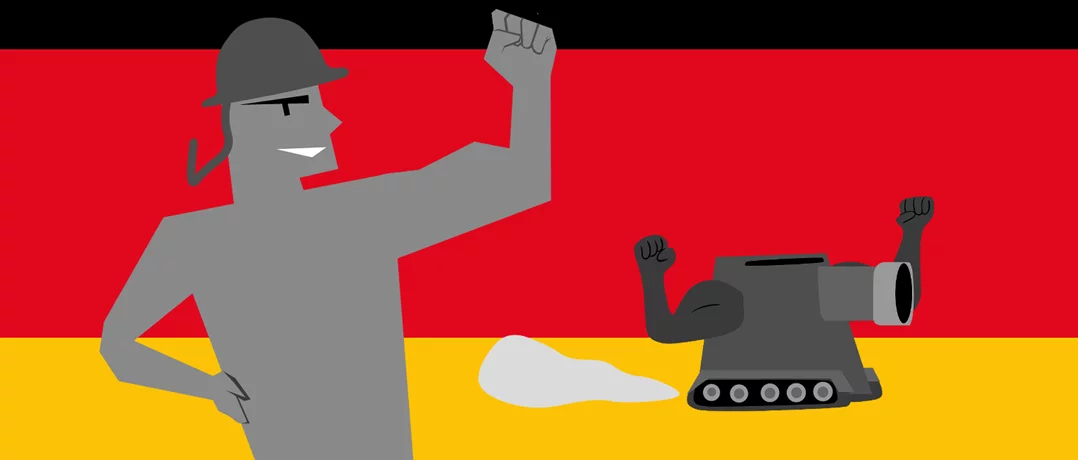
Germany has entered a new strategic era. For the first time since the establishment of the Bundeswehr (the German armed forces) in 1955, Berlin has adopted a comprehensive national military strategy, marking a historic shift in how the country perceives its role in global security.
Announced by Minister of Defense Boris Pistorius, the strategy responds to what officials describe as a dramatically deteriorating international environment, shaped above all by Russia’s war in Ukraine and the erosion of the post-Cold War security order. While large portions of the document remain classified, its broad contours reveal a fundamental transformation of Germany’s defense posture; one that prioritizes readiness, deterrence, and long-term military capability.
A response to a changing threat landscape
At the heart of the strategy lies a stark assessment: the world has become more unpredictable and dangerous. German policymakers identify Russia as the most immediate and significant threat to national and transatlantic security, warning that Moscow is actively preparing conditions that could enable a future conflict with NATO. This framing reflects a broader shift away from decades of relative military restraint toward a more assertive and security-driven mindset.
The strategy also acknowledges the interconnected nature of modern conflicts. Rather than treating regions such as Europe, the Middle East, and the Indo-Pacific as separate theaters, Germany adopts a “one-theater approach,” recognizing that instability in one region can quickly reverberate across others. This conceptual shift underscores Berlin’s growing awareness that its security is tied not only to European stability but also to broader global dynamics.
From numbers to capabilities
One of the most notable features of the new doctrine is its departure from traditional force planning based on fixed numbers of equipment. Instead, the Bundeswehr will focus on achieving specific operational “effects.” This means prioritizing what the military can do (such as defending against missile threats, conducting long-range precision strikes, or operating in data-driven battle environments) rather than how many tanks or aircraft it possesses.
Key capability areas include advanced air and missile defense, drone warfare, cyber operations, and long-range strike systems. The stress on “deep strike” capabilities reflects lessons drawn from the war in Ukraine, where the ability to disrupt logistics and command structures far behind the front lines has proven decisive. Germany’s ambition is to significantly expand its reach in this domain, moving beyond its current limited capacity.
Building Europe’s strongest conventional force
The strategy outlines an ambitious plan to transform the Bundeswehr into Europe’s strongest conventional military by the late 2030s. Central to this goal is a major expansion of personnel. Germany aims to grow its active-duty force to around 260,000 soldiers while building a reserve of 200,000, bringing the total number of combat-ready personnel to approximately 460,000.
This expansion will occur in phases. The initial stage, running through 2029, focuses on rapidly increasing operational readiness. The second phase, extending to the mid-2030s, stresses capability development across all military domains. The final phase aims to achieve technological superiority through innovation and advanced systems.
Recruitment, however, remains a significant challenge. While recent efforts have led to modest increases in troop numbers, sustaining long-term growth will likely require structural reforms. A new military service model combining voluntary enlistment with mandatory screening has been introduced, and the possibility of reinstating conscription remains on the table if targets are not met.
The rising importance of the reserve
A defining feature of the new strategy is the elevation of the reserve force to a central pillar of national defense. No longer treated as a secondary component, reservists are now considered equal to active-duty troops in strategic importance. Their primary role will be to support homeland defense and ensure Germany can function as a logistical hub for NATO operations in the event of a crisis.
This shift reflects Germany’s geographic and strategic position within Europe. In any potential conflict involving NATO’s eastern flank, Germany would serve as a critical transit and supply corridor. Ensuring the security of infrastructure, supply lines, and troop movements will therefore be essential and largely dependent on a robust and well-trained reserve.
A flexible, “living” strategy
Unlike traditional military doctrines, Germany’s new strategy is designed as a “living document.” This means it will be continuously updated in response to evolving threats, technological advances, and geopolitical developments. The stress on flexibility reflects an understanding that modern warfare is dynamic and unpredictable, requiring constant adaptation.
This approach also signals a cultural shift within the Bundeswehr. Moving away from rigid structures and siloed thinking, the military aims to foster greater integration, agility, and innovation. It is a recognition that institutional mindset is as important as material capability in determining military effectiveness.
Potential risks
The rearmament of Germany indeed opens pandora’s box. Europeans, especially France, have historically viewed German military, economic, and demographic expansion with a wary eye. During the balance of power era, which dominated the continent for centuries, any given advantage that Berlin possessed signaled an alarming concern for neighboring countries. In fact, when Germany embarked on enhancing it military might (during both Wilhelmine and Nazi Germany), it often resulted in a dangerous arms race throughout the continent, intensifying fears and ultimately leading to the outbreak of WWI and WWII.
It was only when Germany was severely weakened, the United States committed to defending Europeans, and the latter decided to focus on socio-economic and political integration (rather than military efforts, which were left to Washington), did the continent enjoy relative calm and stability. However, with the Ukraine War and the recent European drive to enhance the continent’s hard power capabilities, the region might risk heading towards a brutal arms race, which, if not managed cautiously and transparently, could fuel suspicions and rivalry amongst countries once perceived as staunch allies.
What is clear, however, is that Germany is no longer content to remain a passive security actor. In an era of renewed great-power competition, it is positioning itself to deter, defend, and, if necessary, fight; marking a profound shift in the country’s postwar identity.
-
-

-
The Beiruter
-
