



From predictive skincare and AI-powered beauty mirrors to screen-free wellness devices, technology is reshaping self-care into a more personalized, intuitive, and data-informed daily ritual.
Glamour meets AI

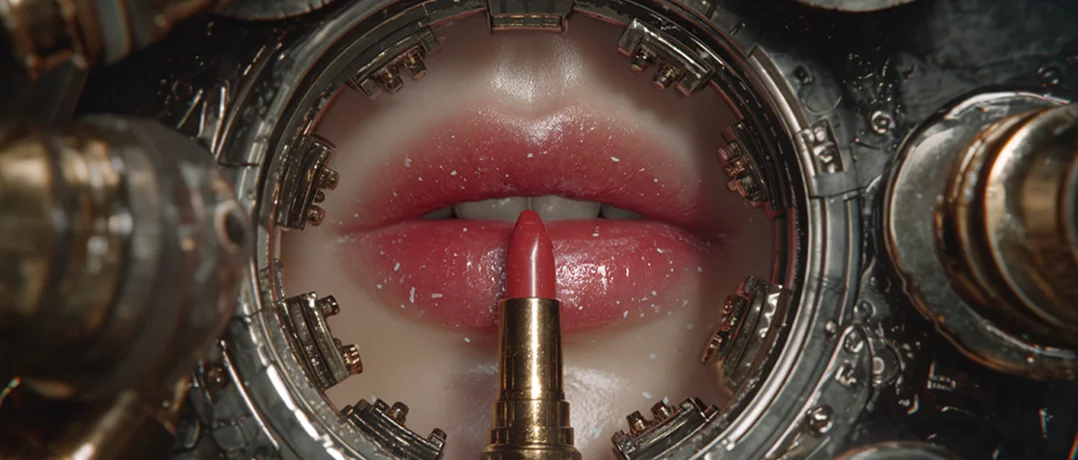
Technology is redefining self-care, transforming what has always been a personal act of nurturing the body, calming the mind, and embracing beauty into something uniquely tailored. From AI-guided skincare that predicts what your skin needs to devices that alleviate the body without a screen, the lines between self-care and tech are overlapping. What was once a series of small, deliberate gestures is now making the act of caring for oneself more intuitive, precise, and seamless than ever.
Predictive skincare enters the picture
South Korean beauty multinational Amorepacific presented “Skinsight”, a technology developed in collaboration with a research team from the Massachusetts Institute of Technology (MIT). Framed as a next-generation electronic skin platform, Skinsight shifts skincare from reactive treatment to predictive analysis.
Using a thin sensor patch applied directly to the skin, the system collects real-time data linked to skin ageing, factors shaped by both environmental exposure and daily habits. Artificial intelligence then interprets these signals to assess ageing patterns and generate personalised care recommendations.
Beyond individual diagnostics, the technology is designed to monitor how skin responds to changing environments, offering insight into how pollution, climate, and lifestyle variations influence skin health over time.
AI meets the mirror
Alongside Skinsight, Amorepacific showcased an AI-driven skin analysis system. An AI Beauty Mirror, the technology uses camera-based optical diagnostics to evaluate key skin indicators, including pore condition, redness, pigmentation, and wrinkles.
Drawing on a dataset of more than 450,000 recorded cases, the system translates visual data into personalised skincare recommendations. The mirror reframes a familiar object as a diagnostic interface, turning routine self-observation into data-driven analysis, and further blurring the line between daily grooming and biometric assessment.
Customized lip shades through AI
Yves Saint Laurent has introduced “Rouge Sur Mesure”, a system that uses AI and digital color-matching algorithms to create bespoke lipsticks. Customers can scan their skin tone, select their preferences, and receive a lipstick formulated to match perfectly. Some stores also offer kiosks or apps to visualize shades in real time, giving clients full control over the personalization process. For YSL, tech becomes an extension of luxury, letting beauty enthusiasts co-create a product that feels uniquely theirs.
Code8 Beauty offers a "Make Your Own Lipstick" experience where you work with a Color Maestro to design a personalized lipstick shade, choosing base, formula, mixing pigments, then molding and naming your unique color for reordering.
Lancôme: Precision meets personalization
Lancôme’s innovation in AI goes beyond traditional try-ons. Their “Le Teint Particulier” system, initially for foundation, demonstrates how AI can analyze skin to generate custom formulations. By scanning skin tones and environmental factors, Lancôme’s devices can suggest and produce tailored shades, allowing customers to experience a level of precision previously impossible with standard product lines.
Rethinking beauty through materials
In the beauty sector, innovation often revolves around speed and convenience, frequently at the expense of health or sustainability. “HiPolish”, a digital manicure system presented at CES, attempts to reverse that equation.
The device offers reusable, pressure-based nails that can change color instantly via a Bluetooth-connected application. Instead of polish or chemical layers, the system relies on nanopolymers embedded within the nails. An electric field generated by a small control box activates these polymers, shifting pigments to produce different colors.
By eliminating acetone, drying time, and repeated chemical exposure, HiPolish reflects a broader recalibration within beauty tech, one that treats materials, longevity, and bodily impact as central design concerns rather than afterthoughts. In this model, beauty becomes modular, reversible, and less wasteful.
Wellness without the screen
The third innovation moves away from aesthetics entirely, focusing instead on the physiological dimensions of beauty and care. “Moonbird” is a portable breathing device designed to help regulate stress, anxiety, and sleep through tactile guidance rather than visual or verbal instruction.
Held in the palm, the device gently expands and contracts, physically guiding inhalation and exhalation rhythms. There is no screen, and no application is required. Users can opt into an AI-powered companion for personalized exercises, but the core experience remains deliberately analog.
This approach reflects a growing skepticism toward screen-based wellness solutions. In a digital environment already saturated with notifications and instructions, Moonbird’s design suggests that the future of wellbeing may lie in reducing inputs rather than adding more.
The future of beauty tech
What unites these innovations is their underlying philosophy. Beauty and wellness technology is shifting toward intimacy, personalization, and integration, tools that support our daily routines. From AI-driven skin analysis to modular manicures and screen-free stress devices, these technologies reflect a broader cultural shift: toward self-care that is data-informed and mindful. The future of wellness will slip seamlessly into our pockets, hands, and homes, subtly reshaping how we attend to our bodies, minds, and the small, essential rituals of daily life.
-
-

-
The Beiruter
-
