

Global shocks, shifting U.S. policy under Donald Trump, and Federal Reserve changes involving Kevin Warsh fueled extreme swings in gold and silver during 2025–2026, alongside forecasts from JPMorgan Chase & Co. and Citigroup.
Gold and silver in Lebanon: Between scarcity and record prices
Gold and silver in Lebanon: Between scarcity and record prices
By Omar Ayoub | February 11, 2026

Reading time: 5 min
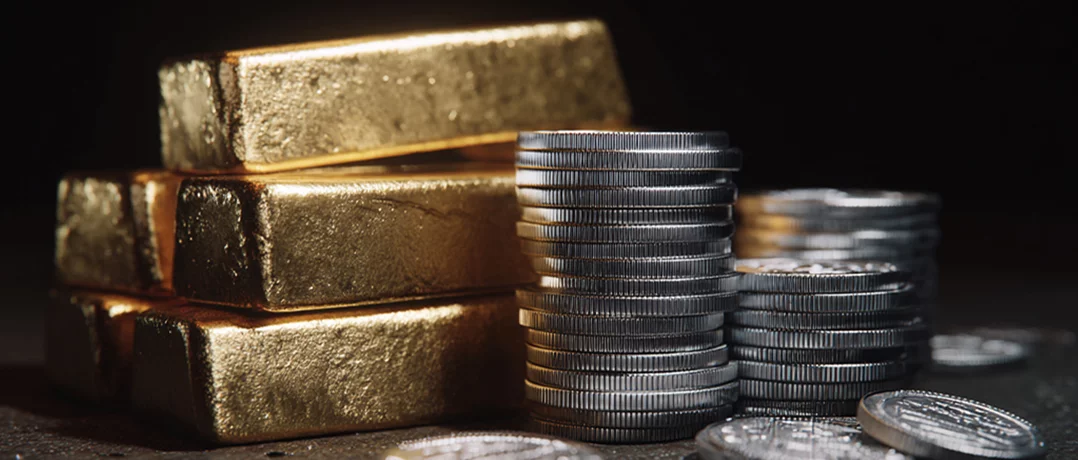
Reasons behind the rise in gold and silver prices
The year 2025 and the beginning of 2026 witnessed a major surge in metals, particularly gold and silver. Gold prices rose from $2,621 per ounce at the start of 2025 to reach an all-time historical high in 2026 at $5,597 per ounce, marking an increase of $2,976 per ounce.
As for silver, the price of one ounce rose from $28 at the beginning of 2025 to $121, representing an increase of $93 per ounce. Any investor who bought silver at the beginning of 2025 achieved returns of approximately 332% per ounce.
Gold’s rally was mainly driven by the rise of the U.S. president to power and growing concerns about his foreign policies, particularly tariffs. This pushed many investment banks and governments to increase gold purchases as a hedge against potential instability in the coming period. Gold buying became widespread not only among institutions but also among individuals, which contributed to the extreme price surge throughout 2025 and into early 2026, up until Friday, January 26.
Silver, often referred to as “the poor man’s gold” due to its lower price, saw its rise driven largely by industrial demand. Silver is a key element in industries related to artificial intelligence, electric vehicles, solar energy, semiconductors, and more. Another reason behind silver’s price increase is its positive correlation with gold. If we look at the Gold-to-Silver Ratio, it has historically served as an indicator of potential silver rallies. When gold rises strongly, investors often shift their attention toward silver as a cheaper alternative, especially when the ratio is at elevated levels. Therefore, the sharp rise in gold created psychological momentum (hype) in the precious metals market, becoming one of the key drivers behind silver’s strong upward movements, as investors sought to compensate for missed opportunities in gold through silver.
Friday, January 26, 2026: The collapse of gold and silver
The spark behind the collapse in gold and silver prices was the massive bullish momentum seen recently, which created a sense of anticipation and certainty that a corrective decline was inevitable.
The long-awaited moment came when U.S. President Donald Trump announced the appointment of a new Federal Reserve chairman, Kevin Warsh. This triggered the downturn, as markets feared his upcoming policies, which were expected to focus on fighting inflation and raising U.S. interest rates. This pushed gold and silver prices downward, followed by profit-taking and then a wave of panic selling. Trading on silver was eventually halted in China, and margin requirements for speculators were reduced, forcing the majority to close their positions.
Gold dropped from its peak of $5,597 to $4,402 per ounce, a decline of $1,195, considered the sharpest and most violent drop in its history.
Silver fell from its peak of $121 to $64 per ounce, a decline of $57.
What comes after the collapse? What re the expected prices?
If we look at the Lebanese market and attempt to buy a gold ounce, assuming the seller can even provide it, the price ranges between $5,500 and $5,600, which is around $500 to $600 above the global price at the time of writing (the price of 1 ounce of gold is $5000).
As for silver, if we try to purchase one ounce in the Lebanese market, the average price is around $150, which is about $70 above the global price at the time of writing (the price of 1 ounce of silver $80). This is only an assumption, since silver is not available in the market and is being sold on the black market at extremely inflated prices.
The shock is that the Lebanese market is not alone. The crisis is reflected in European markets, some Gulf markets, Chinese markets, and others, where silver is not available for purchase, and if it is available, it is sold at very high prices to consumers.
Major global banks, including JP Morgan, expect gold to reach $6,300 per ounce by the end of 2026. Meanwhile, Citi Group expects silver to reach $150 per ounce by April 2026.
Based on the above, along with the investment outlook regarding repositioning and renewed buying of silver and gold by major financial institutions and individuals, the numbers suggest that the fair estimated value of silver ranges between $115 and $120 per ounce, while the estimated fair value of gold ranges between $5,250 and $5,350 per ounce.
Have gold and silver lost their role as safe havens?
Investors today are facing a clear shift in how markets treat gold and silver as safe-haven assets. They no longer move calmly as in the past but have become highly volatile, according to Heraeus, the global company specialized in precious metals.
The company explains that gold is no longer simply a safe haven, but has turned into a speculative asset. This is supported by a simple comparison: gold prices have risen nearly fivefold over the past ten years, while the U.S. Dollar Index has remained close to its 2015 level.
Heraeus also refers to the World Gold Council’s Q4 2025 report, which showed that the rise in demand for gold was mainly driven by investors, while central bank purchases declined significantly compared to 2024.
The company attributes gold’s sharp volatility to investors exiting leveraged positions after stop-loss orders were triggered, along with higher margin requirements imposed by metal exchanges on gold futures contracts.
As for silver, Heraeus believes its price surge was largely driven by capital inflows into exchange-traded funds, not just industrial demand. These funds added around 32 million ounces last year, raising their total holdings to approximately 850 million ounces.
According to company experts, gold and silver are expected to remain exposed to notable volatility in the coming weeks and months, especially after rapid rallies followed by sharp declines. They also emphasize that silver’s volatility is usually higher than gold due to its dependence on both investment demand and industrial demand at the same time.
How can investors trade gold and silver with low commissions?
In addition to physically buying ounces, investors today can enter the gold and silver market through paper trading via exchange-traded funds (ETFs) backed by gold or silver. These are among the most common tools used in what is known as paper gold and paper silver investing. In this process, the investor does not buy the metal and receive it physically, but instead buys investment units within a fund that moves according to gold or silver price movements in global markets.
It is important to note that investing through these funds does not necessarily mean owning a full ounce directly, as some funds may not fully reflect the spot price of silver or gold due to administrative fees and pricing mechanisms. This creates a price gap between the real metal price and the ETF unit price.
This method allows investors to benefit from global price movements without the need for storage, shipping, or insurance, while offering high liquidity and lower spreads compared to local markets.
For example, if the global price of silver is $70 per ounce, an ETF linked to silver may trade at $62 (meaning $8 below the real price). If silver later rises to $80 globally, the ETF may rise to $72. This means an investor who bought at $62 and sold at $72 would make a profit of $10 per unit, before commissions.
In terms of costs, investors can execute this type of trading with very low commissions through many global platforms, and in some cases commissions may be as low as $1 or even less.
Therefore, ETFs are considered a practical and effective way to invest in gold and silver with lower costs and higher flexibility, especially during the strong volatility the market is currently experiencing, making them an alternative option to purchasing metals directly in such conditions.
-
-

-
Omar AyoubAnalyst/WriterFinancial Market Analyst.
-
