



In Lebanon, Good Friday carries the weight of daily pain, yet remains a living testament to a faith that endures, holding on to the promise of resurrection.
Good Friday in Lebanon: A covenant renewed

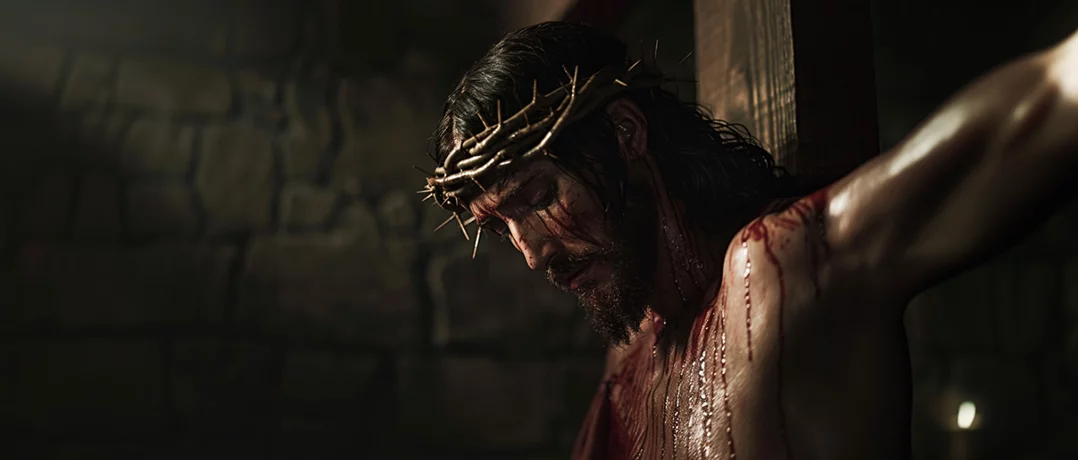
In Lebanon, Good Friday is not just another day.
From the heavy silence of churches to hymns that echo a familiar kind of pain, from processions winding through the streets to a cross carried on shoulders, the scene of the Passion returns each year, but here it carries a different weight.
This is not a story of suffering retold. It is one relived.
In a country shaped by recurring crises and fractures, Good Friday becomes more than a ritual. It becomes a reflection of daily life where faith meets suffering, tradition becomes identity, and hope persists against all odds.
Tradition under pressure
Father Roy Abdallah OMM explains, in an Interview with The Beiruter, that traditions “have not changed much, but were once marked by greater austerity, strict fasting, daily attendance, and deeper engagement with the rituals, hymns, and prayers of Holy Week in preparation for Good Friday”. Processions were commonly held in villages, and some communities continue to preserve them today.
From the Way of the Cross to prayers, sermons, and processions, they have become less rigorous for some, shaped by shifting social and cultural realities. Still, certain areas continue to stage live reenactments of the path to Golgotha, carrying the cross through the streets in a powerful blend of faith and public expression.
As for younger generations, Father Abdallah notes that participation continues, but in a different form.
Young people still take part in processions, activities, and prayers, sometimes through organized or volunteer initiatives, but commitment to fasting, daily attendance, and a deeper understanding of the spiritual meaning of Good Friday has declined.
He attributes this to changing interests, exposure to global cultures and languages, and fast paced lifestyles that leave little room for reflection.
Yet this does not mean disengagement. Participation is evolving. “Many express their faith in new ways, particularly through social media, making it less traditional, but still present”.
One faith many realities
Still, these traditions, while deeply rooted, are not experienced the same way everywhere.
Lebanon stands out, Father Abdallah explains, for its unique coexistence of Catholic and Orthodox communities within the same society. Their rituals and traditions often overlap, creating a rich and layered experience.
This interaction between communities gives Lebanon a distinct character. In some areas, feast dates and processions are even unified, reflecting a shared spirit of dialogue, connection, and unity.
Amid Lebanon’s ongoing crises, Father Abdallah emphasizes that Good Friday carries a profound message:
It is a message of patience in the face of pain, and of hope that transcends suffering. It is not the end, but a new beginning, a message of hope in a difficult economic and political reality, where suffering becomes a path toward resurrection.
As for the difference between churches, he explains that the variation in Easter dates between Catholics and Orthodox stems from the calendars they follow, Gregorian and Julian, leading to different calculations of the spring equinox and the full moon. Still, ongoing calls and efforts to unify the date persist, with some successful local initiatives reflecting a broader desire for unity in faith.
Faith beyond borders
If traditions evolve within Lebanon, they travel differently beyond it.
Father Joseph Soueid, Patriarchal Vicar of the Maronite Church in Jordan, stresses that
Good Friday traditions remain the same in Lebanon and abroad, particularly within the Maronite Church.
This day, he explains, is not tied to social customs, but centered entirely on liturgy and prayer.
For many in the diaspora, preserving these rituals is not only about faith. It is about holding on to identity.
In Jordan, the same rites are observed, but with an added performative dimension. Way of the Cross processions take place in the streets, with young participants dressed as Roman soldiers and figures from the time of Christ, creating a live reenactment that allows people to experience the event more vividly.
Soueid notes that he intentionally presents these rituals in a more “theatrical” way, seeking not only to preserve tradition, but to make it felt.
He also highlights the role of hymns, describing them as something that “moves the strings of the heart,” reflecting their deep emotional and spiritual impact.
Where suffering becomes meaning
Father Soueid offers a deeper theological reading of Good Friday.
It is called great, not because of the day itself, but because of the love and the blood poured out on the cross by the One who is truly great, the Holy One.
It is a love, he says, that cannot be contained in words, one that reaches “the last drop of blood, the last heartbeat, the last breath.”
In the Maronite Church, Good Friday is marked by the Liturgy of the Presanctified Gifts, during which the Eucharist consecrated on Holy Thursday is received. After 9 a.m., no consecrated host remains in the church, a powerful expression of Christ’s absence.
The Passion account from the Gospel of John is then read, offering a moment of reflection on Christ’s suffering.
For Father Soueid, this moment is inseparable from the larger story of salvation. It begins with the fall of Adam and Eve and the entry of death into the world, and culminates in redemption through the cross.
He also reflects on the three days between death and resurrection, not simply as a passage of time, but as a movement from suffering to life.
In today’s context, he adds,
Good Friday calls believers back to the essence of faith. The cross, once a symbol of pain and humiliation, has become a sign of salvation and victory, present in everyday life.
He closes with a striking image, describing what he calls “a love relationship between Christ and the wood of the cross, where the very instrument of suffering becomes the key to salvation”.
Good Friday holds the weight of pain. But it does not end there. Because every cross carries the promise of resurrection.
In a country that lives this pain every day, Good Friday is no longer just remembered. It is lived. A sign that Christians in Lebanon and across the East are still holding on to their covenant and living their faith.
-
-

-
Michella RizkContent Manager/WriterFocusing on social affairs.
-
