

Greenland has become a strategic pillar in NATO and US Arctic planning, central to missile defense, surveillance, and emerging sea routes.
Greenland at the center of NATO’s arctic strategy
Greenland at the center of NATO’s arctic strategy
By The Beiruter | January 07, 2026

Reading time: 6 min
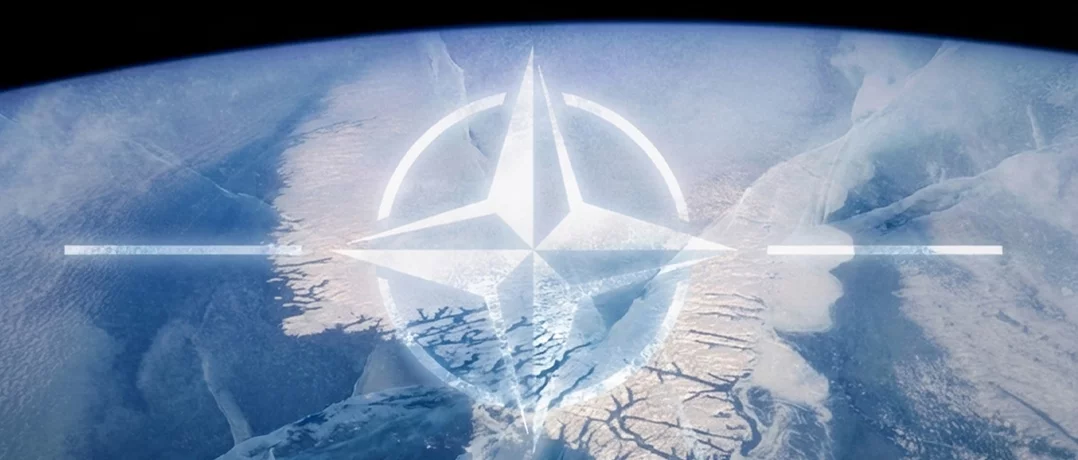
As geopolitical competition intensifies in the Arctic, Greenland has emerged as a focal point of strategic concern for both the United States (US) and the North Atlantic Treaty Organization (NATO).
Long perceived as a remote and sparsely populated territory, the world’s largest island now occupies a central position in debates over missile defense, military surveillance, maritime security and access to emerging Arctic Sea routes. Climate change, renewed great-power rivalry and Russia’s war in Ukraine have collectively transformed the Arctic from a zone of relative cooperation (namely in for scientific purposes) into one of growing strategic contestation.
Within this evolving landscape, Greenland’s geography and political status make it indispensable to NATO’s Arctic posture and Washington’s broader security calculations.
What is NATO: Origins, purpose and evolution
Founded in 1949 by 12 countries, NATO was established as a collective defense alliance aimed at deterring Soviet expansion in postwar Europe. Rooted in Article V of the North Atlantic Treaty, the alliance is based on the principle that an attack against one member constitutes an attack against all. During the Cold War (1945-1991), NATO functioned primarily as a defensive bulwark, anchoring US military power in Europe and providing security guarantees to Western allies.
Following the collapse of the Soviet Union in 1991, NATO faced a profound identity question. Rather than dissolving, the alliance expanded both geographically and operationally. Former Warsaw Pact states joined NATO (increasing the number of member states to 32 nowadays), while the alliance increasingly undertook crisis-management and stabilization missions beyond its traditional area of operations, including in the Balkans, Afghanistan and Libya.
Russia’s full-scale invasion of Ukraine in 2022 marked a turning point. It reinvigorated NATO’s original purpose of territorial defense, prompted a sharp increase in military spending among member states and accelerated the alliance’s expansion with the accession of Finland (2023) and Sweden (2024). Today, NATO’s strategic focus extends from its eastern flank to the High North, where Arctic security has become inseparable from European and transatlantic defense.
Greenland’s historical background: From indigenous homeland to strategic outpost
Greenland’s history dates back more than four millennia, beginning with successive waves of Inuit migration across the Arctic from North America. Norse settlers arrived in the late 10th century, establishing colonies that eventually vanished, leaving Greenland once again dominated by Indigenous communities.
Modern European involvement began in the 18th century, when Denmark initiated missionary activity and formal colonization. Greenland later became a Danish colony and, in the 20th century, gradually transitioned toward self-rule. Today, Greenland is a semi-autonomous territory within the Kingdom of Denmark, possessing broad authority over domestic affairs while Copenhagen retains responsibility for defense and foreign policy.
During World War II (1939-1945), Greenland’s strategic value became evident when the United States established military installations on the island to prevent Nazi Germany from exploiting its location. This role continued throughout the Cold War, as Greenland served as a forward defensive shield against potential Soviet missile and bomber threats targeting North America. Indeed, in 1951, Washington built the Thule Air Base in northwestern Greenland, before renaming it as the Pituffik Space Base in 2023 (to recognize Greenlandic cultural heritage). This US-operated installation is considered one of the most strategically important military sites in the world.
Greenland’s strategic importance to the United States
For Washington, Greenland’s significance lies primarily in its geography. Positioned between North America and Europe, the island occupies a critical node along the Arctic approaches to the United States. It hosts key infrastructure supporting missile warning, missile defense and space surveillance, most notably at Pituffik Space Base (as mentioned earlier).
Greenland also plays a vital role in monitoring the GIUK Gap (an area spanning Greenland, Iceland and the United Kingdom) through which Russian naval forces must transit to access the North Atlantic. Control and surveillance of this corridor are essential for protecting transatlantic sea lanes and reinforcing NATO’s deterrence posture.
Beyond military considerations, Greenland’s mineral wealth has attracted growing attention. The island possesses significant deposits of rare earth elements, which are essential for advanced technologies, renewable energy systems and defense manufacturing. As the US seeks to reduce dependence on China-dominated supply chains, Greenland has gained added economic and strategic relevance.
Greenland within NATO’s Arctic strategy
NATO’s interest in Greenland reflects a broader reassessment of Arctic security.
Melting ice, caused by climate change, is gradually opening new maritime routes in the north, increasing commercial traffic while simultaneously expanding the theater for military competition. Russia has significantly expanded its Arctic military infrastructure, while China has declared itself a “near-Arctic state” and invested in polar research and economic initiatives.
In response, NATO has begun to integrate the Arctic more fully into its strategic planning. Greenland serves as a cornerstone of this effort, enabling early warning capabilities, situational awareness and force projection across the High North. Denmark’s increasing military investments in Greenland (ranging from new Arctic patrol vessels to enhanced surveillance capabilities) are closely aligned with NATO objectives. Additionally, following the accession of Finland and Sweden, NATO’s northern footprint has expanded and the Arctic was transformed into a contiguous strategic space for the alliance.
Political sensitivities and the question of sovereignty
Despite its strategic value, Greenland’s future is shaped by complex political realities.
The island’s government has consistently long emphasized self-determination and rejected proposals for external control, including from Denmark and US attempts to purchase the territory. Public debate within Greenland often balances economic development opportunities against environmental concerns and cultural preservation. However, as US President Donald Trump has his eyes on purchasing the island (including the possible use of the US military), the alliance’s cohesion seems to be in jeopardy. NATO and European countries have voiced their concerns and rejections to any unilateral and forceful seizure of the island, stressing on Denmark and Greenland’s sovereignty and territorial integrity. In this regard, French Foreign Minister Jean-Yves Le Drian recently announced that his country is working with its partners to develop a plan on how to respond if the Washington carries out its threat to seize Greenland.
Thus, for NATO and the United States, maintaining security cooperation while respecting Greenlandic autonomy remains a delicate task. Any expansion of military presence must account for local consent and broader diplomatic relations with Denmark, a longstanding NATO ally.
In conclusion, Greenland’s transformation from a peripheral Arctic territory into a strategic area underscores the shifting nature of global security. As NATO adapts to renewed confrontation with Russia and growing competition in the Arctic, Greenland’s role in surveillance, missile defense and maritime security has become indispensable. For Washington, the island represents both a defensive shield for North America and a critical component of transatlantic deterrence.
In an era defined by climate change and great-power rivalry, Greenland’s position at the center of NATO’s Arctic posture illustrates how the High North is no longer a distant frontier, but a central arena in the evolving architecture of global security.
-
-

-
The Beiruter
-
