Ultra-Orthodox pressure over military exemptions deepens Israel’s coalition crisis, threatening Netanyahu’s government and increasing prospects of early elections.




Ultra-Orthodox pressure over military exemptions deepens Israel’s coalition crisis, threatening Netanyahu’s government and increasing prospects of early elections.

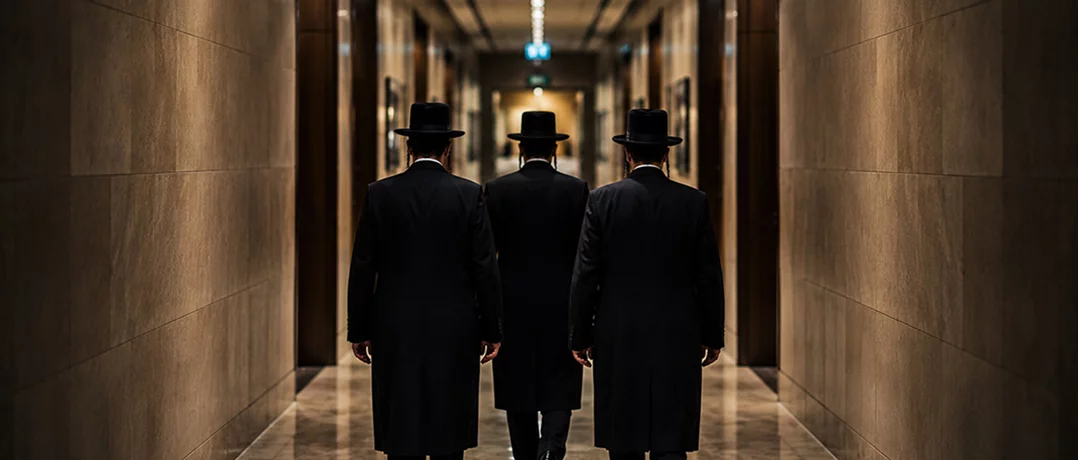
Israel’s governing coalition is facing one of its most serious political crises since the outbreak of the Gaza war, as ultra-Orthodox parties intensify pressure on Prime Minister (PM) Benjamin Netanyahu over the contentious issue of military exemptions for Haredi yeshiva students. The latest developments have significantly increased the likelihood of early elections, potentially months before the legally mandated deadline of October 2026.
At the center of the dispute lies a broader national debate about equality in military service, the role of religion in Israeli public life, and the future stability of Netanyahu’s right-wing governing bloc.
The immediate trigger for the political escalation came after Rabbi Dov Lando, the influential spiritual leader of the ultra-Orthodox United Torah Judaism (UTJ) Degel HaTorah faction, publicly declared that his camp had “lost trust” in Netanyahu. In a strongly worded statement, Lando instructed lawmakers to work toward dissolving the Knesset “as soon as possible,” arguing that repeated promises regarding draft exemption legislation had not been fulfilled.
The statement represented a dramatic rupture in relations between Netanyahu and one of his most loyal political allies. For years, ultra-Orthodox parties such as UTJ and Aryeh Deri’s Shas have formed a critical pillar of Netanyahu’s coalition governments. However, frustration has steadily mounted after repeated delays in advancing legislation designed to protect Haredi students from military service.
According to Israeli media reports, Netanyahu recently informed Haredi lawmakers that the coalition currently lacks sufficient support to pass the controversial bill. He reportedly suggested postponing the issue until after the next elections; a proposal that appears to have shattered the remaining confidence of Haredi leaders in his commitments.
The tensions have exposed the fragility of the coalition and highlighted the increasingly difficult balancing act Netanyahu faces between satisfying his ultra-Orthodox allies and responding to broader public opposition to draft exemptions during wartime (including former Minister of Defense Yoav Gallant).
The debate surrounding Haredi conscription has long been one of Israel’s most divisive domestic issues. Since 1948, many ultra-Orthodox Jews have received exemptions from mandatory military service in order to pursue full-time religious studies in yeshivas.
For decades, the arrangement remained politically sensitive but manageable. However, the 7 October 2023 Hamas-led attacks and the prolonged multi-front conflict that followed (against Iran, Hamas, Hezbollah, and the Houthis) fundamentally altered the public atmosphere surrounding the issue.
Israel’s military has experienced mounting operational strain due to extended deployments, reserve mobilizations, and ongoing security threats involving Hamas, Hezbollah, and regional tensions with Iran. Senior military officials, including Israel Defense Forces (IDF) Chief of Staff Eyal Zamir, have repeatedly warned about severe manpower shortages.
According to Israeli estimates, roughly 80,000 ultra-Orthodox men of military age remain eligible for service but have not been drafted. The IDF has stated that it urgently requires thousands of additional recruits, particularly combat soldiers, to sustain operational readiness.
From here, public support for maintaining broad Haredi exemptions has weakened significantly. Many secular and religious Zionist Israelis argue that continued exemptions create an unequal burden on reservists and military families already exhausted by nearly two years of war.
The issue became even more politically explosive after Israel’s High Court ruled in 2024 that there was no longer a valid legal basis for the blanket exemption system, effectively compelling the government to formulate new legislation.
The current coalition crisis has provided Israel’s opposition parties with an opportunity to accelerate efforts to topple the government. Opposition leader Yair Lapid and several other opposition factions quickly moved to submit bills calling for the dissolution of the Knesset.
Parties including Avigdor Liberman’s Yisrael Beytenu, Mansour Abbas’s Ra’am, and Yair Golan’s Democrats party have all expressed support for advancing dissolution legislation as quickly as possible.
The parliamentary process itself remains complex. Dissolving the Knesset requires 4 separate votes and the support of at least 61 lawmakers in Israel’s 120-seat parliament. Although UTJ’s support significantly raises the chances of success, the decisive factor may ultimately be the position of the Shas party, which has thus far avoided fully committing to bringing down the government.
Despite occasional tensions, Shas and UTJ have historically viewed Netanyahu as their most reliable political partner. The ultra-Orthodox parties may still prefer preserving a future alliance with Netanyahu rather than empowering anti-Netanyahu factions that strongly oppose draft exemptions.
Nonetheless, the public hostility toward the exemption bill has complicated Netanyahu’s political calculations. Several lawmakers within his own coalition have expressed discomfort with legislation perceived as overly lenient toward draft evasion.
Former Knesset committee chairman Yuli Edelstein, who was removed from his position after clashing with Haredi leaders over stricter conscription measures, openly criticized the government’s handling of the issue. He argued that the ultra-Orthodox leadership never genuinely intended to compromise on military enlistment requirements.
For Netanyahu, the crisis comes at a particularly delicate moment. While his coalition remains numerically viable for now, the dispute threatens to undermine the very alliance structure that has kept him in power for years.
At the same time, Netanyahu must contend with competing political pressures. Many right-wing and nationalist voters oppose broad draft exemptions, especially amid ongoing military operations and mounting casualties. Meanwhile, losing the support of ultra-Orthodox parties could effectively end his governing majority.
Reports suggest Netanyahu would prefer delaying elections until late October 2026 in the hope that military or diplomatic developments could improve his political standing. By contrast, Haredi factions reportedly favor September elections, believing earlier timing could maximize turnout within their communities during the religious season (as it marks the beginning of the Jewish New Year, Rosh Hashanah).
Even if elections are ultimately held early, Netanyahu may still remain politically competitive. Polls suggest that while his coalition has weakened, the ultra-Orthodox parties are still likely to align with him after any future vote, given the limited alternatives available for advancing their religious and political agenda.
For the PM, the coming weeks may determine not only the future of his coalition, but also the durability of the political alliances that have long defined Israeli politics.

