

Eid il-Berbera celebrates courage and faith, uniting Lebanon with costumes, sweets, and folkloric traditions.
Hashlé Berbara! Inside Lebanon’s most magical winter tradition
Hashlé Berbara! Inside Lebanon’s most magical winter tradition
By The Beiruter | December 03, 2025

Reading time: 3 min
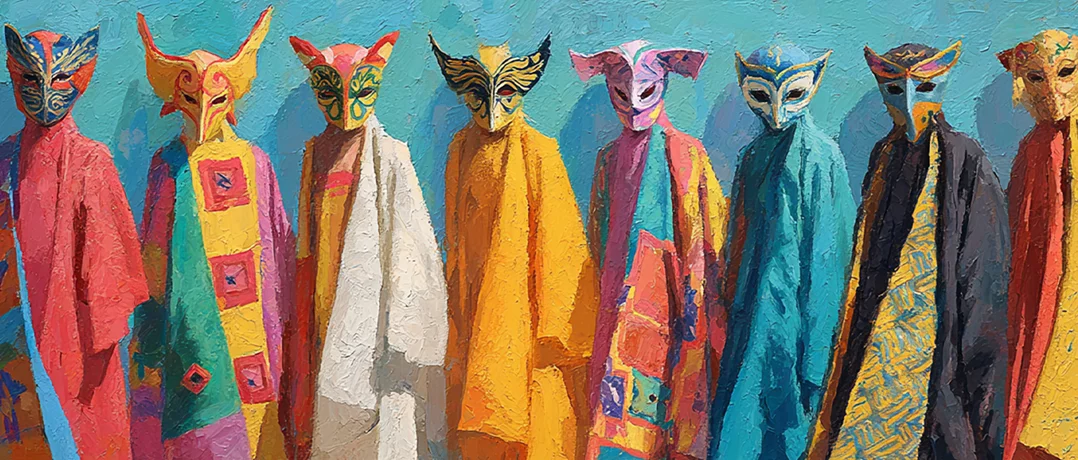
Before Christmas festivities begin, Lebanon pauses for a different kind of winter celebration, one rooted in legend, martyrdom, and centuries of storytelling. Every December 4, the feast of Saint Barbara, known locally as Eid il-Berbára, transforms Lebanese villages and cities into scenes of color, music, and ritual. It is a night when children wear masks, families prepare fragrant sweets, and one phrase echoes from door to door “Hashlé Berbara: Barbara has escaped.”
Behind the lively customs lies the dramatic story of a young woman whose courage, faith, and suffering left a mark on Christian tradition and Lebanese cultural memory.
The story of Saint Barbara: Faith behind barred doors
In Baalbek, the ancient city of Heliopolis in Lebanon’s Beqaa valley, local tradition holds the memory of Saint Barbara, a young woman whose story dates back to the 3rd century. According to early Christian accounts, Barbara was the daughter of Dioscorus, a wealthy pagan noble. Struck by her beauty and determined to control her fate, he locked her in a tower, isolating her from the world and surrounding her only with pagan teachers and idols.
Despite the confinement, Barbara encountered Christian teachings in secret and embraced the new faith. When she repeatedly refused the suitors her father chose, she was finally allowed outside, a moment she used to meet other Christians and receive baptism. Once Dioscorus discovered her conversion, fury replaced affection. He handed her to Roman authorities, who subjected her to brutal torture.
Yet legend says that every wound healed miraculously, flames refused to burn her, and instruments of torture shattered. Her steadfast refusal to renounce her faith led to a death sentence, and in a final act of cruelty, her father executed her himself. According to tradition, lightning struck him immediately afterward, a sign of divine justice and a symbol that cemented Barbara’s place among Christianity’s beloved martyrs.
How Lebanon honours Barbara
Across Lebanon, Saint Barbara’s escape has inspired one of the country’s most joyful folkloric traditions. Eid il-Berbára blends religious devotion with a carnivalesque spirit, and families prepare for it with the same anticipation they reserve for Christmas.
Homes are decorated, costumes laid out, and trays of sweets prepared. The heart of the celebration lies in disguise, echoing Barbara’s clever escapes in different forms to evade her persecutors. Children dress as villagers, brides, monks, pirates, witches, and whatever their imagination allows.
In Mount Lebanon and the northern regions, children recite playful rhyming verses or riddles in exchange for treats. And no Lebanese household celebrates without the familiar voice of Sabah, whose 1960s rendition of the folkloric “Hashlé Berbara” still plays on TV and radio every year.
The Flavors of Berbara
Lebanese kitchens play a leading role in the feast. Families prepare traditional sweets such as qatayef filled with cream or nuts, awamat, maakaroun, and the beloved boiled wheat mixed with raisins, almonds, walnuts, sugar, and cinnamon. This sweet wheat dish is rich in symbolism, a reminder of blessing, survival, and renewal, mirroring Saint Barbara’s story itself.
One of the most meaningful traditions is sprouting wheat, lentils, or chickpeas in small bowls days before the feast. According to legend, when Barbara fled through the fields, wheat sprouted instantly behind her, hiding her footprints from pursuers. When Christmas arrives, these green sprouts are placed beneath the tree symbolizing life emerging from danger.
In rural areas of the Bekaa and Mount Lebanon, villages still gather around bonfires, sharing plates of wheat, singing traditional songs, and watching the children’s costume processions. Some towns hold small carnivals or costume competitions, turning the feast into a community-wide celebration.
What makes Eid il-Berbára so enduring is its ability to unite Lebanese families across regions and generations. It is a night where ancient martyrdom meets modern festivity, where faith becomes folklore, and where Lebanon’s collective memory is celebrated through costume, song, and the warmth of shared sweets.
-
-

-
The Beiruter
-
