

Lebanon’s Ministry of Public Health has launched the “Karim” initiative, providing full healthcare coverage to families displaced by collapsing buildings in Tripoli.
Health Ministry launches aid for displaced families in Tripoli
Health Ministry launches aid for displaced families in Tripoli
By The Beiruter | February 18, 2026

Reading time: 3 min
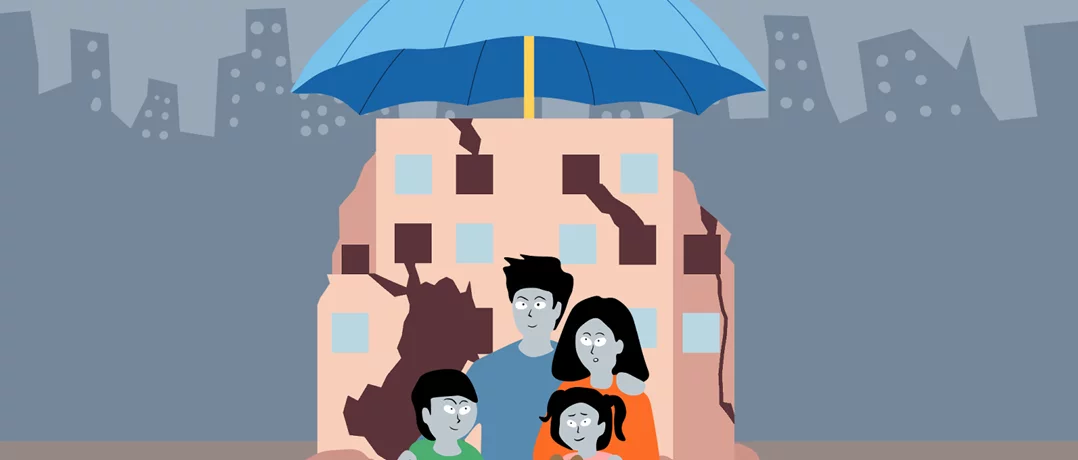
The Ministry of Public Health has announced a full healthcare safety net for families affected by building collapse. Health Minister Dr. Rakan Nassereddine launched the “Karim” initiative, granting 100% healthcare coverage in public hospitals to families forced to evacuate unsafe and collapsing buildings in Tripoli.
The move comes after a series of structural failures in the northern city left casualties, injuries, and dozens of families displaced, highlighting once again the chronic housing and infrastructure crisis facing Lebanon’s most economically vulnerable communities. Under the mechanism of the program, the Ministry receives verified data from the Tripoli municipality and the High Relief Commission for each evacuated building. Based on that data, the Ministry issues individual health cards for every family member.
When beneficiaries visit any public hospital, the QR code is scanned to confirm eligibility. The coverage applies throughout the period during which families remain displaced. Importantly, the initiative does not stop at hospital admissions. It also extends to primary healthcare centers, allowing displaced residents to access free medical consultations and laboratory tests. The cards are being distributed through the High Relief Commission and will be handed to families as they collect housing compensation.
Minister Nassereddine : “Standing by Tripoli is the least we can do”
Speaking to The Beiruter, Minister Nassereddine said the initiative was coordinated with the Prime Minister and Cabinet and reflects “the state’s responsibility to stand by the most vulnerable, especially in moments of acute crisis.” He offered condolences to the families of those who lost their lives in the collapses, describing Tripoli as “a city known for its generosity and dignity, a city that opened its doors to others during war and hardship, “ he said, “it is our duty to stand by its people.”
The minister acknowledged that the Ministry ultimately hopes to provide similar comprehensive coverage to all Lebanese citizens. However, limited state resources and budgetary constraints require prioritizing the most socioeconomically fragile communities. He also called on residents to report any implementation gaps or bureaucratic obstacles, emphasizing that the program must function smoothly to achieve its purpose.
As Tripoli navigates displacement, loss, and structural neglect decades in the making, the “Karim” initiative represents more than a healthcare measure, it is an attempt, however partial, to restore a sense of institutional presence where trust has long eroded. For now, for families who left their homes with little more than what they could carry, a health card may be one small form of stability in an otherwise unstable season.
-
-

-
The Beiruter
-
