

Hezbollah’s refusal to cooperate on disarmament north of the Litani River sharpens tensions with the Lebanese state as the army seeks international backing amid rising border volatility and regional pressures.
Hezbollah rules out disarmament talks north of the Litani
Hezbollah rules out disarmament talks north of the Litani
By The Beiruter | February 02, 2026

Reading time: 3 min
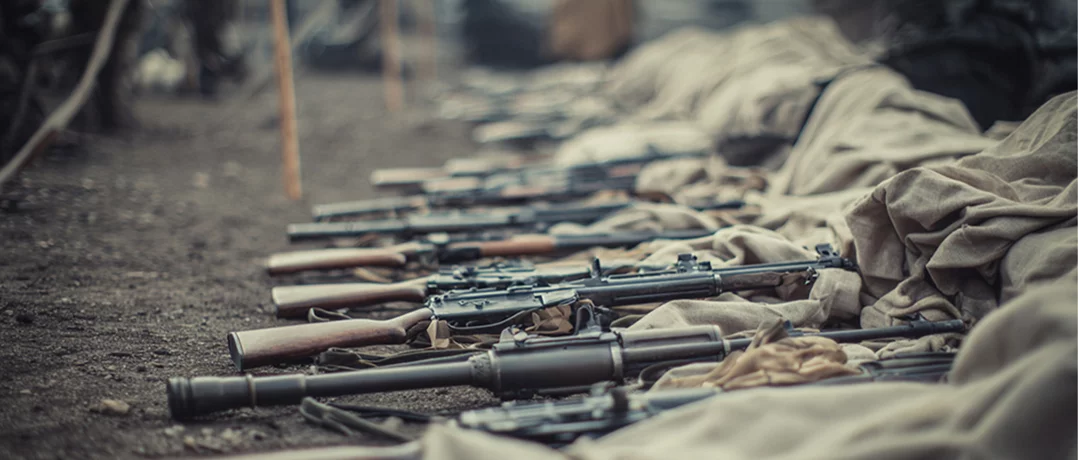
Hezbollah announced that it will not cooperate with Lebanese authorities in disarming its weapons north of the Litani River. This declaration highlights the ongoing challenges facing the Lebanese state in asserting its monopoly over arms and maintaining national security across the country’s fragmented territories.
Hezbollah’s position and political rhetoric
Hezbollah Member of Parliament (MP) Hussein al-Hajj Hassan stated unequivocally: “Lebanon did everything asked of it. We have absolutely nothing else to offer or speak about north of the Litani.” His remarks reflect the group’s enduring reluctance to cede control over its military capabilities in northern Lebanon, despite partial cooperation south of the Litani in earlier phases of the state’s disarmament plan.
Al-Hajj Hassan criticized Lebanese officials for what he described as compliance with “American demands and pressure without having a clear strategic vision,” arguing that concessions would weaken Lebanon’s negotiating position vis-à-vis Israel. He urged the government to focus on Israel’s ongoing violations and occupation, insisting that only after Israel addresses these issues can disarmament discussions be considered; with an emphasis on “discussions” rather thana commitment to fully give up its arms. He further stressed that Hezbollah’s weapons should not be surrendered “under conditions the enemy could not achieve during the wars we waged with perseverance.”
Implications for the Lebanese Armed Forces
The refusal to cooperate north of the Litani significantly complicates the task of the Lebanese Armed Forces (LAF). Army Commander Rodolphe Haikal is scheduled to visit the United States (US) to meet military officials ahead of a donor conference in Paris on 5 March 2026. The conference aims to secure funding for the Lebanese army and Internal Security Forces (ISF), particularly to support border security with Syria and broader national defense efforts.
While Hezbollah had cooperated with the military south of the Litani (although to a certain extent given Ambassador Simon Karam’s recent statement that the group did not provide the LAF with any information about its weapons and facilities, which means that the army confiscated the weapons south of the Litani without the presumed cooperation), north of the river presents a much larger and more complex operational area. Political and security coordination will be essential to any progress, but such collaboration is now jeopardized by Hezbollah’s public rejection.
The situation underscores the dual challenge faced by the LAF: implementing state authority while navigating the delicate political dynamics between Hezbollah, the Lebanese government, and international stakeholders, including the United States and France.
Rising tensions and regional dynamics
The announcement comes amid rising tensions between Hezbollah and President Joseph Aoun. In recent weeks, Aoun affirmed his commitment to the disarmament plan, a stance that appears to have strained the group’s relations with the presidency. The strategic calculus is further complicated by Israel, which continues to conduct strikes in southern Lebanon despite the November 2024 ceasefire agreement.
Just days earlier, an Israeli strike on the village of Rub Thalatheen near the Lebanese-Israeli border killed 1 individual. The Israel Defense Forces (IDF) reported the target as a Hezbollah operative allegedly involved in rebuilding the group’s infrastructure.These incidents highlight the persistent volatility along the Lebanon-Israel border, which Hezbollah cites as justification for maintaining its armed presence.
International and domestic responses
Washington is closely monitoring developments in Lebanon, including the LAF’s disarmament plan. Coordination with international partners, particularly through the Military Technical Committee for Lebanon (MTC4L), or the so-called “Mechanism” Committee, involving military oversight and funding, remains central to the Lebanese government’s strategy. However, Hezbollah has challenged these initiatives, warning against any perceived overreach or concessions that could undermine its position.
Domestically, Hezbollah’s stance complicates governmental efforts to extend authority across the country. While the LAF has completed the first phase of disarmament south of the Litani (as presented to the Council of Minister in January 2026), officials acknowledge that northern Lebanon will demand far more intensive political and security efforts. One might even suggest that the group’s refusal is part of a broader strategy to maintain leverage amid evolving regional negotiations, particularly between the US and Iran.
In conclusion, Hezbollah’s refusal to disarm north of the Litani underscores the persistent challenges facing Lebanon in asserting state authority and ensuring national security. While the LAF has made progress south of the river, northern regions (namely the Bekaa Valley and southern suburbs of Beirut) remain politically sensitive and militarily complex. Hezbollah’s public rejection, combined with ongoing Israeli strikes and strained ties with the presidency, creates a delicate and potentially volatile security environment. From here, the upcoming LAF Commander Haikal’s meetings in the US and the Paris donor conference may provide critical support for the army, but cannot overcome or replace Lebanese domestic efforts to resolve the country’s crisis.
-
-

-
The Beiruter
-
