



As Hezbollah’s underground infrastructure comes under closer surveillance, the Lebanese Army is seeking to prevent escalation through coordination and inspections.
Hezbollah’s tunnels under close surveillance
Hezbollah’s tunnels under close surveillance
By The Beiruter | December 21, 2025

Reading time: 3 min
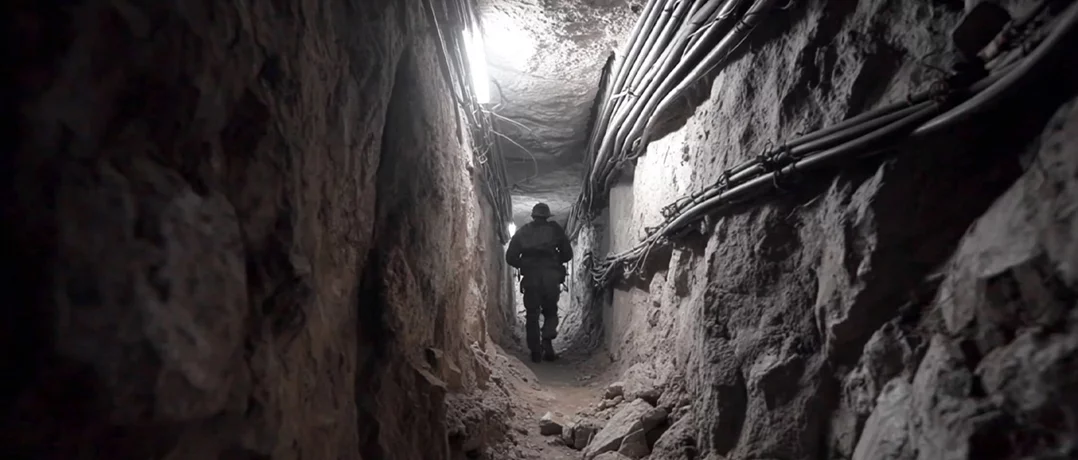
The discovery of a Hezbollah tunnel by the Lebanese Armed Forces (LAF) in southern Lebanon has once again drawn attention to the fragile security landscape along the border, as well as to the broader challenges facing the Lebanese state in asserting authority amid ongoing regional tensions.
The finding comes at a sensitive moment, marked by continued Israeli strikes, international monitoring of a ceasefire agreement, and renewed debate over Hezbollah’s military capabilities and future.
The tunnel discovery and military coordination
The Lebanese Army uncovered a tunnel in the town of Touline after conducting excavation work at the request of the ceasefire oversight committee, known as the “Mechanism.” The site had reportedly been targeted previously by an Israeli strike, suggesting it was already under scrutiny. This operation was not an isolated incident; similar inspections have taken place following Israeli threats or alerts, reflecting an established coordination framework between the LAF, the “Mechanism,” and the United Nations Interim Force in Lebanon (UNIFIL).
Last week, the army carried out a detailed search of a building in Yanouh after Israel threatened to strike the location. No weapons were found, and following the army’s deployment, Israel announced a temporary suspension of its planned attack. These episodes underline the role the Lebanese Army is playing as an intermediary force on the ground, attempting to reduce escalation through verification and presence.
Tunnel expansion instead of destruction
Parallel to these developments, Israeli media have reported assessments warning of Hezbollah’s recovery and expansion of underground infrastructure, including tunnels and bunkers beneath residential areas (such as in the southern suburbs of Beirut; the group’s stronghold).
These reports claim increased Iranian funding and predict that Hezbollah could deploy large numbers of rockets and drones in any future escalation. Lebanese analysts note that such leaks may serve a dual purpose: highlighting security concerns while also preparing public opinion for the possibility of a wider military confrontation.
At the same time, Israeli officials reportedly acknowledge the Lebanese government’s stated intent to disarm Hezbollah but argue that it lacks the capacity to do so, reinforcing a narrative of inevitability around future conflict.
Therefore, the discovery of the tunnel in Touline illustrates both the progress and the limits of Lebanon’s current approach to security in the south. While the Lebanese Army’s actions and international coordination have helped prevent immediate escalation, the underlying disputes over weapons, sovereignty, and compliance remain unresolved. As a new meeting of the “Mechanism” approaches, the challenge will be whether diplomacy and state authority can gain enough ground to prevent another cycle of violence in an already strained region.
-
-

-
The Beiruter
-
