

How decades of unresolved sovereignty, regional power struggles, and armed non-state actors set the stage for Lebanon's return to the frontline of regional conflict in 2026.
Historical retrospective on Lebanon southern front
Historical retrospective on Lebanon southern front
By Dr. Elie Elias | June 30, 2026

Reading time: 6 min

The roots of the 2026 war did not begin in 2026. Much like the 1978 invasion was preceded by a decade of growing Palestinian military autonomy in Lebanon, the conditions that led to the latest conflict emerged gradually over more than three decades.
The first milestone came with the Taif Agreement of 1989. While the agreement succeeded in ending large-scale fighting and rebuilding state institutions, it did not fully restore the state's monopoly over force. Unlike other militias, Hezbollah retained its military infrastructure under the banner of resistance against Israeli occupation. What was initially presented as a temporary exception became a permanent feature of the post-war order.
This decision marked a critical departure from the principle of exclusive state authority. The Lebanese Republic was reconstructed, but one military actor remained outside the state's chain of command. As in the 1970s, the question of who ultimately controlled decisions concerning war and peace remained unresolved.
The second milestone came with Israel's withdrawal from South Lebanon in 2000. For the first time since the rise of the Palestinian military presence in the late 1960s, the Lebanese state had an opportunity to deploy fully along the southern border and establish exclusive sovereignty over one of the country's most sensitive frontiers. Yet the moment passed without a fundamental change in the security structure. Hezbollah maintained its military capabilities and expanded its influence. The border remained linked to the strategic calculations of a non-state actor rather than exclusively to the institutions of the Lebanese state.
The third milestone followed the Syrian withdrawal in 2005. The departure of Syrian forces ended one form of external tutelage but did not necessarily strengthen sovereignty. Instead, influence gradually shifted from Damascus to Tehran. Hezbollah emerged not only as an armed organization but as the principal representative of Iran's regional strategy in Lebanon.
The July 2006 war demonstrated the extent of this transformation. Once again, Lebanon found itself engaged in a devastating conflict triggered outside the normal mechanisms of state decision-making. As had happened during the era of the PLO, military actions launched from Lebanese territory generated a regional confrontation whose consequences were borne primarily by Lebanon itself.
The years that followed demonstrated that the issue was not merely the existence of an armed organization outside state authority, but the emergence of a political system increasingly constrained by that reality. The events of 7 May 2008 became a defining moment in this evolution. For the first time since the end of the civil war, military force was openly used inside Lebanon to reverse decisions taken by the Lebanese government and impose a new political balance. The message was unmistakable: state institutions could function, but only within limits acceptable to the armed actor operating beyond them. The subsequent political arrangements ended the immediate confrontation but entrenched a system in which political life became increasingly conditioned by the existence of force outside the state.
The following years deepened this trajectory. Hezbollah's intervention in Syria after 2012 transformed the organization from a Lebanese resistance movement into a regional military actor operating across multiple fronts. For the first time, a Lebanese armed organization officially participated in a major regional war beyond Lebanon's borders without authorization from the Lebanese state. The intervention demonstrated that the organization's strategic priorities were increasingly linked to the objectives of the Iranian-led axis rather than exclusively to Lebanese national interests.
By the time regional tensions escalated after the Gaza war and the subsequent confrontation between Israel and Iran, Lebanon had once again become integrated into a conflict extending far beyond its borders. The country found itself linked to a regional strategic architecture stretching from Tehran through Iraq and Syria to the Mediterranean.
This evolution produced one of the most striking historical parallels between 1978 and 2026. The PLO had transformed South Lebanon into a forward operating base against Israel during the 1970s. Hezbollah, within a different ideological and geopolitical framework, assumed a similar strategic role in the decades that followed. In both cases, the southern border became valuable precisely because it was not fully controlled by the Lebanese state. The actors, slogans, and regional alignments changed, but the structural reality remained familiar: the southern border functioned as a frontline of a broader regional confrontation rather than exclusively as the border of a sovereign Lebanese state.
The comparison is not intended to equate the two movements ideologically. Their origins, constituencies, and objectives are different. Yet both relied on a similar strategic principle: maintaining military capabilities independent of the Lebanese state and using Lebanese territory as part of a broader regional confrontation. For the PLO, this confrontation was linked to the Palestinian national struggle. For Hezbollah, it became part of Iran's regional deterrence doctrine. In both cases, however, the existence of an armed actor operating outside state authority weakened Lebanon's ability to control its own strategic environment.
This reality also explains why the emergence of a strong Lebanese state represents a challenge to both models. A state capable of controlling its borders, monopolizing force, and exercising exclusive authority over decisions of war and peace would have prevented the emergence of "Fatahland" in the 1970s. Likewise, such a state would limit Hezbollah's military autonomy and reduce Iran's ability to use Lebanon as a forward deterrence front today. The issue, therefore, is not simply the identity of the armed actor. It is the persistence of a strategy that depends on the weakness of state institutions.
The comparison between the PLO and Hezbollah becomes even more striking when examining the gap between declared objectives and political outcomes. The PLO justified its military presence in Lebanon through the liberation of Palestine. Hezbollah justified the preservation of its military autonomy through resistance and the liberation of Jerusalem. Yet in both cases, Lebanon paid the immediate cost while strategic calculations increasingly reflected broader regional priorities. The repeated destruction of South Lebanon, the displacement of its population, and the subordination of Lebanese decision-making to external agendas raised the same question in both eras: whose war was Lebanon actually fighting?
The historical lesson linking 1978 and 2026 is not simply that different armed organizations used Lebanese territory. It is that both projects depended on the existence of a state unable to exercise exclusive sovereignty over its territory, borders, and decisions of war and peace. In the 1970s, the PLO's military strategy required a weakened state. In the 2000s and 2020s, Iran's regional strategy through Hezbollah benefited from the same reality. A strong Lebanese state would have constrained both projects. This is why the struggle over sovereignty remains the central question connecting the Israeli invasions of 1978, 1982, and 2026.
-
-
-
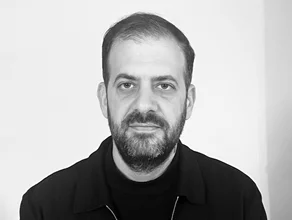
Dr. Elie EliasUniversity Lecturer & Political Historian
-
