



As tensions around the Strait of Hormuz disrupt global oil flows, the crisis is accelerating a strategic shift that could reshape energy markets and weaken dollar dominance.
Hormuz and the new global power game

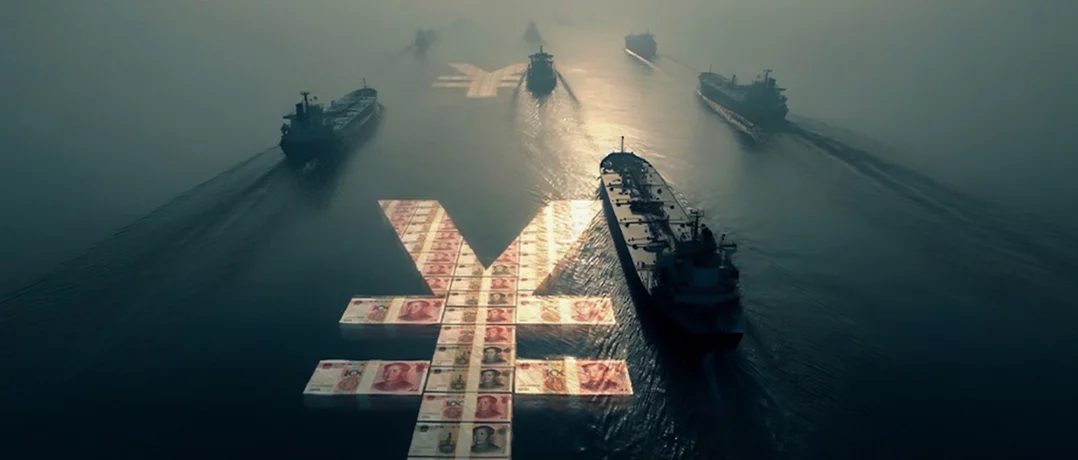
Negotiations at last! As the world held its breath, awaiting Trump’s deadlines and fearing an impending apocalypse, the American president offered a glimmer of light at the end of the tunnel. For now, the Arabian Gulf’s energy infrastructure appears secure. And with negotiations gaining momentum, the prospect of ending the conflict and reopening the Strait of Hormuz is back on the table.
It won’t be a minute too soon. The closure of this vital chokepoint, handling roughly 20% of global oil trade, has been a massive thorn in Trump’s side. At home, rising fuel prices have begun to erode his image as the president who promised cheaper energy, turning a key campaign pledge into a growing political liability as voters feel the pressure at the pump. American allies, from Europe to the Gulf, are reeling from rising oil prices and mounting instability, while Washington’s adversaries, like Russia, are reaping the rewards. Amid these unfolding developments, even more sinister dangers loom on the horizon, requiring swift U.S. action to stabilize the situation.
When plans collapse and markets react
This situation did not arise from a lack of American planning. Preparations were in place. But as Helmut von Moltke, the famed Prussian strategist, famously said, no plan survives first contact with the enemy. In this case, the situation on the ground evolved faster than anticipated.
After the conflict erupted, it was not missiles or drones that halted shipping in the first few days, but insurance companies covering maritime transport. Cargo is costly, and no shipping company will risk sending vessels out uninsured. Without war risk coverage, ships were effectively as good as sunk.
The Trump administration took this into account. More than 20 billion dollars were set aside through the Development Finance Corporation to ensure war risk insurance could continue to be provided to vessels. This coverage focused on ship hulls and cargo. Crucially, it excluded crew casualties, third-party liability, as well as pollution and environmental damage due to the complexity and potentially unlimited liability involved in such coverage. Without these elements, shipowners remained exposed to potentially catastrophic legal and financial risks, making it difficult for vessels to operate in an active conflict zone.
By the time the situation was addressed, most shipping companies had already ordered their vessels to stand by. The disruption was further compounded by smaller missteps, many rooted in bureaucracy. For instance, four Avenger-class U.S. minesweepers, forward-deployed with the Fifth Fleet in Bahrain for decades, were decommissioned in September 2025 and withdrawn from the region in late February 2026 for disposal in the United States, appearing in Delaware Bay on the 9th of March as the crisis was unfolding.
With a reduced U.S. naval presence in the Gulf and escalating Iranian attacks, the Strait effectively closed. Yet, even as disruption mounted, world leaders on all sides continued to insist that Hormuz remained open, creating a geopolitical paradox, a kind of Schrödinger’s Strait: open to the world, yet closed at the same time.
A fragmented response
As the crisis expanded, several nations, no longer willing to wait for an American-led solution, began taking matters into their own hands. Countries such as India, heavily dependent on Gulf energy imports, reportedly engaged in direct negotiations to secure passage for their shipments. Others, including Pakistan and Turkey, appeared to benefit from more neutral or flexible positioning, allowing their vessels to continue transiting under certain conditions.
These arrangements vary in form, but they share a common feature: they are bilateral, not systemic. Only one major power has floated a broader, systemic approach: China. The proposal, emerging through Iranian channels, suggests that limited passage through the Strait of Hormuz could be granted to ships whose cargo is traded in yuan rather than dollars.
The strategic stakes beyond Hormuz
The implications of such a proposal extend far beyond the immediate crisis.
For decades, global oil trade has been conducted overwhelmingly in U.S. dollars, forming the backbone of what is commonly known as the petrodollar system. This arrangement has not only facilitated energy transactions but has also reinforced the global demand for the dollar, anchoring American financial dominance and allowing Washington to exert influence far beyond its borders through sanctions and financial controls.
A shift, even partial, toward yuan-denominated oil trade would mark a significant departure from this system. Buyers seeking to secure energy supplies would need to transact in yuan, rely on Chinese banking channels, and, by extension, operate within a financial ecosystem less exposed to American oversight.
For China, the advantages are immediate and strategic. As the world’s largest energy importer, Beijing has long sought to reduce its vulnerability to disruptions in dollar-based markets. The current crisis offers a rare opportunity to accelerate that objective. By tying energy flows to yuan settlement, China would not only secure its own supply chains but also expand the international role of its currency in the most critical commodity market in the world.
If sustained, even temporarily, such arrangements could leave lasting effects. Energy importers may begin to diversify their currency reserves. Financial institutions may adapt to new settlement mechanisms. And once established, these systems rarely disappear entirely. They linger, expand, and, over time, reshape the architecture of global trade.
This trajectory aligns with China’s broader Belt and Road Initiative, which has long sought to integrate infrastructure, trade, and finance across Eurasia and beyond. By embedding energy flows within yuan-based transactions, Beijing would be extending that network from ports and railways into the financial domain, strengthening the connection between physical connectivity and monetary influence. Within this framework, the Strait of Hormuz would emerge as a key node in a growing China-centered trade and financial system.
For Iran, the logic is equally compelling. By shifting transactions into yuan, Tehran reduces its dependence on the dollar-based financial system, where U.S. sanctions exert their greatest pressure. Dollar transactions pass through Western-controlled banking networks, making them vulnerable to monitoring, blocking, or seizure. A yuan-based system, by contrast, relies on Chinese financial channels, significantly lowering that exposure and allowing Iran to operate with greater economic autonomy.
It also consolidates a relationship that is already central to Iran’s survival under sanctions. China absorbs the vast majority of Iranian oil exports, often through discounted sales and opaque networks designed to evade restrictions. By tying access to Hormuz to yuan-based transactions, Iran effectively locks in this demand, ensuring that its most important buyer remains both engaged and structurally tied to its export system.
A race against time for Washington
Negotiations may yet reopen the Strait, but time is not on Washington’s side. The longer disruption persists, the greater the risk that temporary workarounds harden into lasting alternatives. For President Trump, restoring the free flow of energy has moved beyond an urgent political necessity, becoming a broader strategic objective to safeguard American global hegemony.
But while the United States works to stabilize the system, China is not staying idle. Beijing understands a fundamental rule of geopolitics: crises are not only to be managed, but to be leveraged. If even a partial shift toward yuan-based trade were to take hold, the consequences could extend far beyond Hormuz, gradually redrawing the balance of power in global commerce in favor of the Red Dragon.
-
-

-
Nami El KhazenJournalistFocusing on geopolitics and international affairs.
-
