As extreme heat intensifies worldwide, air conditioning is emerging as critical infrastructure, reshaping energy security, geopolitics, global supply chains, and the balance of international power.


As extreme heat intensifies worldwide, air conditioning is emerging as critical infrastructure, reshaping energy security, geopolitics, global supply chains, and the balance of international power.

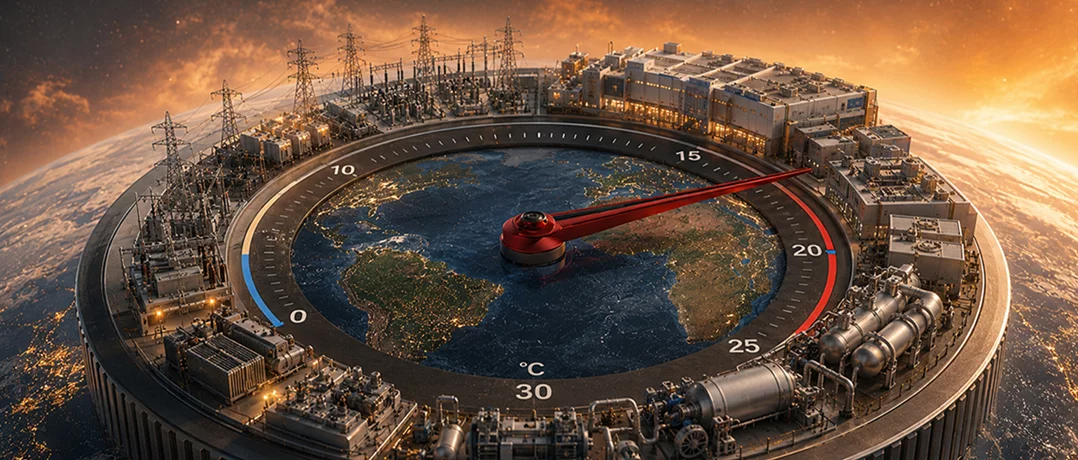
On a sunbaked morning in early July, the entrance doors of a supermarket in the Paris suburb of Nanterre gave way as hundreds of shoppers surged inside in search of a limited supply of portable air conditioners and fans. At roughly the same time, protesters in Pakistan and Bangladesh blocked roads and surrounded electricity offices as blackouts left homes without fans in temperatures approaching 45°C. Nearly 6,000 kilometers separated them, yet both were confronting the same basic problem: extreme heat without reliable access to cooling.
In 2009, Singapore’s founding prime minister Lee Kuan Yew described air-conditioning as one of history’s most influential inventions because it helped make “development possible in the tropics.” By maintaining stable indoor temperatures throughout the year, air-conditioning allowed workers to remain productive even during the hottest months.
It made year-round office and industrial activity more practical across the American Sun Belt and enabled modern Gulf cities to operate at a scale that extreme heat would otherwise have constrained. The mechanism is measurable: a review by Lawrence Berkeley National Laboratory found that office performance declines by an average of 2% for every degree Celsius above 25°C.
In the Middle East and North Africa, cooling now consumes nearly half of peak electricity demand and one-quarter of annual electricity use, demonstrating how deeply the region’s modern urban economies depend on it. As in Singapore, air-conditioning did not create Dubai, Doha or Riyadh, but it removed a major climatic barrier and became part of the infrastructure that allows their airports, hospitals, financial centers and industries to remain productive throughout the year.
Since an air-conditioning unit is useless during a blackout, the geopolitics of cooling is inseparable from the geopolitics of electricity.
India illustrates the scale of the challenge. It added around 50 million air-conditioning units between 2019 and 2024 and could add another 130 million to 150 million over the following decade. Today, cooling already accounts for about a quarter of its peak electricity demand. When millions of units switch on during the same heatwave, power stations, transformers and distribution networks must meet a sudden surge.
Hence, hot countries must decide whether rising cooling demand will be supplied by domestic coal and gas, imported liquefied natural gas, nuclear power, renewables, batteries or cross-border connections. The choice carries geopolitical consequences. Bangladesh, India and Pakistan obtained almost two-thirds of their LNG imports through the Strait of Hormuz in 2025, while gas-fired plants generated around half of Bangladesh’s electricity and one-quarter of Pakistan’s.
The 2026 Hormuz crisis showed how quickly this vulnerability can become an electricity emergency. Interrupted Gulf LNG supplies contributed to a roughly 4,000-megawatt shortfall and five-to-seven-hour power cuts in Pakistan, while Bangladesh imposed load-shedding and shut fertilizer plants.
Even energy-rich states in the Gulf face challenges. More than 90% of the region’s electricity is still generated from oil and gas, and with regional power demand expected to rise by 50% by 2035, this dependence could become a strategic vulnerability.
The social consequences extend beyond lost productivity. A study of 247,773 conflict events across the Greater Middle East found that extreme heat was associated with a 16% higher incidence risk of protests and a 54% higher risk of riots. Meanwhile, research covering 288 Chinese cities similarly found that each additional unusually hot day was followed by a 3% increase in the incidence rate of labor unrest and a 13.5% rise in the probability of unrest the following month.
Taken together, these findings show that extreme heat can strain the social fabric as well as the economy, making effective heat management increasingly important to political stability and national security.
Managing heat, however, requires more than national policy. Many of the countries that need cooling most cannot independently finance the efficient machines, stronger grids and modern buildings required to provide it at scale. Sustainable Energy for All identifies 54 high-impact countries where sustained heat overlaps with poverty and electricity-access gaps, while the IMF estimates that annual climate-adaptation costs exceed 1% of GDP in around 50 low-income and developing economies.
Moreover, according to UNEP’s Global Cooling Watch 2025, global cooling demand could more than triple by 2050 under current trends, while related emissions could nearly double from 2022 levels to 7.2 billion tons of carbon-dioxide equivalent. This creates a difficult divide. Wealthy countries fear the emissions that will follow as billions more people acquire air-conditioning, while developing countries fear the economic, social and human consequences if they remain without it.
Climate finance will therefore have to support efficient units, grid upgrades, insulated buildings and solar-powered cooling. It must also strengthen refrigerated transport and storage for food, vaccines and medicines.
The countries and institutions financing cooling can also influence how the sector develops. The Montreal Protocol’s Multilateral Fund has provided $4.3 billion for more than 10,000 projects across 144 developing countries, combining finance with technical assistance, institutional strengthening and the conversion of refrigeration and air-conditioning production lines. Its programs increasingly determine which technologies qualify for support and what efficiency, refrigerant and servicing standards recipients must follow.
As cooling becomes essential infrastructure, the ability to provide both the finance and the technology could become a new instrument of international influence.
Few countries are better positioned to exploit this opening than China. It produces around 170 million air-conditioning units annually, exports about 60 million and has manufacturing capacity approaching 300 million units. According to the International Energy Agency, producing an air-source heat pump in China costs around 50% less than in the United States and 40–60% less than in the European Union, with components accounting for 60–80% of manufacturing costs. Because heat pumps and air conditioners share many components and production lines, these figures point to the cost advantage enjoyed by China’s broader cooling industry.
As demand expands across Asia, Africa, the Middle East and Europe, Chinese manufacturers are well placed to supply much of the equipment required for climate adaptation. Their scale, dense component networks and ability to respond rapidly to demand reflect the same industrial strengths China developed in solar panels, batteries and electric vehicles. These advantages could allow Chinese companies to establish positions that foreign competitors struggle to displace.
Europe illustrates the resulting strategic tension. The continent is trying to reduce its dependence on Chinese clean-technology supply chains, yet intensifying heatwaves are increasing its demand for Chinese cooling equipment. Chinese air-conditioner exports to the European Union rose by 43% year on year during the summer of 2026, reaching $3.8 billion. Europe may therefore adapt to climate change by deepening its reliance on the same Chinese industrial base from which it is attempting to reduce strategic dependence.
More than just relying on manufacturing scale alone, China is also beginning to shape the standards, training programs and policy networks through which cooling technologies spread. In 2019, its National Development and Reform Commission joined UN agencies in launching a Green and Efficient Cooling Initiative at a Belt and Road forum.
More recently, Mongolian officials traveled to Beijing through a program organized by China’s National Ozone Unit and UNEP to study Chinese efficiency standards and energy labels for refrigeration and air-conditioning equipment. By combining manufacturing dominance with technical cooperation, China can help shape foreign cooling markets in ways that may also favor its own technologies and companies.
Today, air-conditioning has evolved from a luxury into essential infrastructure, increasingly determining whether economies remain productive and societies stable as temperatures rise. States able to provide reliable cooling will gain economic and political advantages, while those unable to do so risk deeper inequality, unrest and dependence on foreign suppliers.
Just as the twentieth century witnessed a global rush for oil, the twenty-first may bring a new race to build and control the infrastructure of cooling. In a world growing hotter, whoever controls the cold may shape the future.