

As conflict escalates, parents in Lebanon face the difficult task of explaining war to children while protecting their sense of safety, highlighting the psychological toll of conflict and the importance of calm, compassion, and reassurance at home.
How do you explain war to a child?

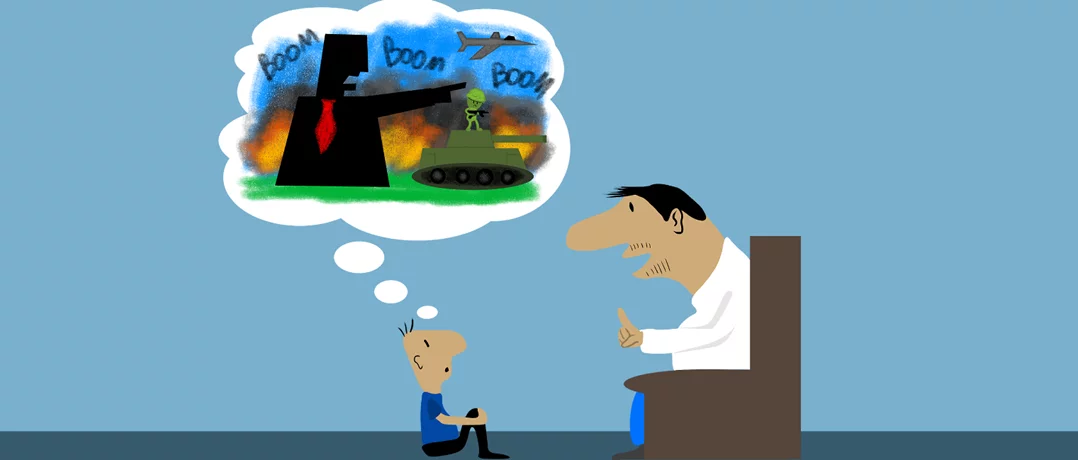
When airstrikes hit, adults reach for their phones. Children reach for their parents. War disrupts a child’s most basic need: safety. Loud sounds. Adults whispering. Stress hormones rise. The world feels unpredictable. In moments of escalation, the headlines move fast, but inside Lebanese homes, another question unfolds: What do you say to your child? In countries where conflict is distant, war is something explained. In Lebanon, it is something remembered, and sometimes relived. And that changes everything.
What do they already know?
“Children always look to their parents for a sense of safety and security, even more so in times of crisis,” UNICEF notes in its recent guidance on speaking to children about war.
The instinct for many parents is to shield. Turn off the television. Lower their voice. Say nothing. But silence does not mean protection. Children overhear adult conversations. They see fear in facial expressions. They scroll social media earlier than we think. And as UNICEF emphasizes, younger children often cannot distinguish between images on a screen and their immediate reality. If they see destruction repeatedly, they may believe they are in direct danger, even when they are not.
The first step, experts say, is deceptively simple: ask what they know. Not to test them but to understand the story they have already built in their heads. Because sometimes the fear is not the bomb. It is the imagination filling in the blanks.
When “you’re safe” feels fragile
As stated in UNICEF “Parenting For Every Child” , reassuring children that they are safe and that many people are working to stop the conflict and restore peace. But what happens when safety itself feels politically unstable?
So when a child asks, “Are we going to die?” the answer is not just psychological. It is layered with history. The statement stresses responding calmly, without dismissing fears, and avoiding catastrophic language. Children take emotional cues from adults. If parents panic, children internalize panic. To speak calmly about war is a deliberate construction of safety within instability.
Compassion in a polarized environment
Conflict produces negative connotation narratives. The organization’s doctrine details warnings against using labels like “bad people” or “evil” when explaining war to children, urging parents instead to focus on compassion, particularly for families forced to flee.
How do you prevent fear from turning into prejudice? War simplifies language. It pushes people into categories. And children absorb tone. Teaching compassion in moments of escalation may be one of the most essential things a parent can do.
When the news never stops
Phones buzz constantly. Videos and graphic images travel faster than context. Limiting children’s exposure to distressing news and being mindful of adult conversations within earshot. Constant exposure can create the illusion that crisis is omnipresent and inescapable. Younger children may become clingier. Teenagers may withdraw, show anger, or struggle with sleep. These reactions are normal responses to stress, the statement notes. But prolonged distress may require additional support.
The state and the living room
Perhaps the deepest tension lies here: Children look to parents for safety. Parents become the final buffer between instability and childhood. Caregivers must take care of themselves, too, because children read adult anxiety closely. “You’ll be able to help your kids better if you’re coping,” the organization advises.
In Lebanon, that may mean limiting one’s own news intake. Choosing when to check updates. Breathing deeply before answering a difficult question. It may also mean admitting, that you do not have all the answers.
The conversation that never ends
Unlike in countries where war is episodic or distant, in Lebanon this conversation is rarely one-time. The latest statement by UNICEF encourages parents to continue checking in: How are you feeling today? Do you have new questions?
Because fear evolves. And so does resilience. If there is one truth Lebanese parents know, it is this: children do not need perfect explanations. They need presence. They need to see calm and reassurance, even if it feels fragile. They need to know someone is holding the fear with them. Perhaps the most powerful thing a parent can say is not political at all: I am here. You are safe with me. And sometimes, in Lebanon, that is the strongest structure standing.
-
-

-
The Beiruter
-
