



Rehabilitated touristic and upcoming commercial ports position Jounieh for renewed regional connectivity and long-awaited economic growth.
How Jounieh’s Port reclaimed its future

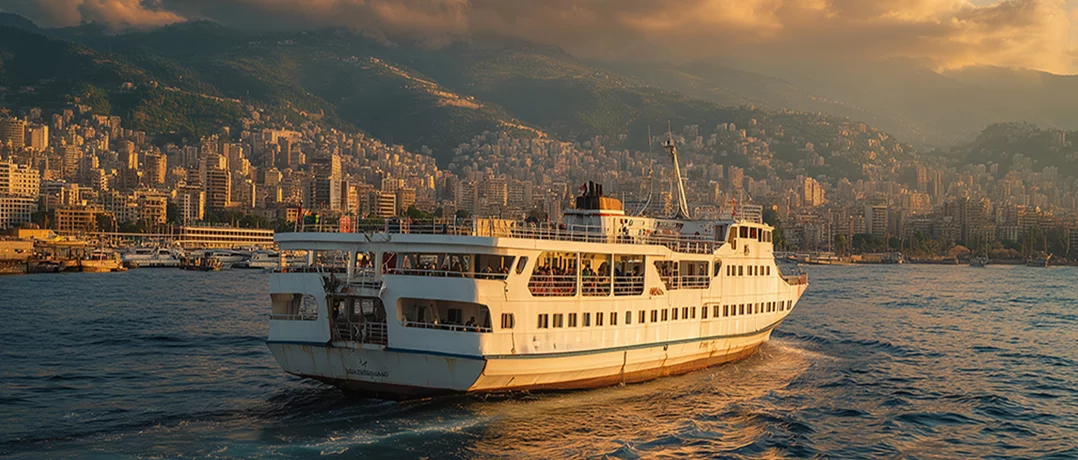
For decades, Lebanon’s port network has reflected the country’s uneven governance: Beirut was prioritized as the political and commercial gateway, while coastal cities with strong economic potential remained underdeveloped. Tripoli, Tyre, and Saida suffered from under-investment; Jounieh, however, was deliberately stalled for political reasons.
Today, that reality is changing. Jounieh is seizing a historic opening to reassert its maritime role first through a rehabilitated touristic port, and soon with an ambitious commercial harbor poised to transform the city’s economy and restore its rightful place on the Mediterranean map.
A new era begins, the touristic port
In September, Jounieh inaugurated its newly rehabilitated Touristic Port on the former fishermen’s harbor a $700,000 investment executed through a public-private partnership led by MP Neemat Frem and the Georges Frem Foundation. The port has a depth of 3.5 meters and will welcome modest vessels and small ferries beginning April 2026.
The first announced route: Jounieh–Larnaca, Cyprus. Each ferry is expected to carry 450 passengers at a round-trip fare of roughly $200 far cheaper than peak-season flights, though with a longer 4.5-hour journey. With Cyprus expected to join Schengen in 2026, Lebanon is studying a 7–14 day visa arrangement for Lebanese travelers to maintain accessibility.
Operationally, the port will function similarly to an airport, featuring security, customs, and passport control. Once cleared, passengers will be transported to a new reception area 250 meters away offering currency exchange, SIM cards, tourism services, and transport links steps from the Old Souk at the heart of Jounieh’s heritage.
From civil-war lifeline to political obstruction
The revival of the ferry service carries historical resonance. During the Lebanese civil war, when Beirut airport was closed, Jounieh–Larnaca ferries became an escape route for thousands of Lebanese. A one-way ticket cost $1,800 an exorbitant price, but often the only lifeline out of conflict.
After the war, the port was left idle for more than 30 years. According to municipality member Fady Fayad, multiple requests to reopen it were systematically blocked by political actors opposed to the emergence of a major port inside a Christian city. Jounieh Mayor Faysal Frem confirmed that MP Neemat Frem’s previous attempts failed because “it takes two to tango” and the other side was not willing.
This dynamic shifted with the current government. Frem describes a “new spirit of reform,” one that is open to progress and positioning Lebanon to reconnect with Western markets and tourism flows.
Restoring a cultural anchor
While Byblos and Batroun have surged as coastal tourism hubs in the past decade, Jounieh with its larger economy and deeper urban fabric was left behind. City officials argue that Jounieh possesses unique advantages: year-round economic activity, two universities, six schools, one of Lebanon’s most distinctive bays, and direct proximity to Harissa and Bkerké the heart of Maronite identity.
These assets are now being reinvigorated. Germany recently invested €7 million into the restoration of the Old Souk, adding nine new alleys linking it to the sea. The municipality has also pedestrianized the souk on weekends to encourage tourism and business. Investor interest in cafés, souvenir shops, and boutique hotels is already rising. “In one year, Jounieh will be a different city,” Fayad projects.
The next phase: A Full-Scale commercial port
Roughly one kilometer south, plans are underway for a major commercial port able to receive cruise ships carrying 5,000–6,000 passengers. The government invested $14 million in 2018 to acquire 40,000 m² of land and begin initial works. Estimated at $240 million total, the project is slated to operate under a BOT model, allowing a private company to invest $216 million, operate the port for a limited period, and later return it to the state.
This effort was strengthened by amendments approved in May to Law 48/2017 to broaden the state’s use of BOT/DBOT contracts for maritime and aviation infrastructure. Although awaiting full ratification, officials expect the framework to be in place by the time the tender is launched.
A test of governance, not potential
Lebanon has never lacked maritime opportunity only political will. For decades, Jounieh was kept dormant, Tripoli constrained, Tyre and Saida sidelined. Today’s question is not whether Jounieh can succeed it is whether the state will sustain reform long enough to unlock the city’s potential and avoid another cycle of delays, neglect, and lost momentum.
If Lebanon is truly seeking a new economic model, it must treat its ports as national assets not bargaining chips. Jounieh’s new trajectory offers a rare chance to rewrite both its coastal story and Lebanon’s maritime future.
-
-

-
Katharine SorensenReporterSpecializing in global affairs, technology and economics, with a focus on on-the-ground investigative reporting.
-
