



Across Lebanon, art therapy is emerging as a vital tool for emotional healing, offering individuals and communities a creative way to process trauma shaped by war, displacement, and ongoing crisis.
How Lebanon heals through art

Lebanon is a country shaped by memory, and sometimes by the memories it struggles to speak about. Decades of war, political violence, economic collapse, and displacement have left deep psychological wounds across generations. While trauma is often discussed in clinical or political terms, a growing number of artists and cultural institutions are turning to a different kind of response: art therapy.
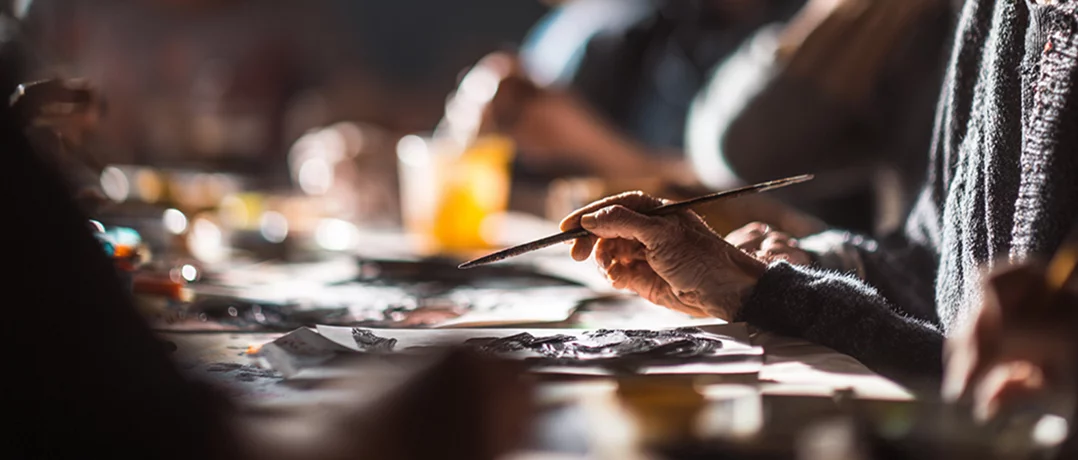
In recent years, art therapy sessions have become more visible across community centers, NGOs, and independent art spaces. These programs offer safe environments where participants, from children to elderly survivors, can process experiences that are often too painful, confusing, or overwhelming to articulate. Through drawing, painting, sculpture, and mixed media, individuals are encouraged to express emotions that words alone cannot carry.
Trauma beyond the battlefield
Psychologists have long noted that trauma does not disappear when violence ends. In Lebanon, where conflict has been cyclical rather than isolated, trauma becomes layered, passed down through families, neighborhoods, and even cultural narratives. The 2020 Beirut port explosion, economic collapse, and repeated security shocks have only added new chapters to an already heavy emotional history.
Art therapy operates on a simple but powerful principle: the brain processes trauma not only through language, but also through images, sensations, and memory fragments. Creative expression allows participants to externalize what they feel, transforming internal chaos into something visible and, crucially, shareable.
From galleries to community centers
What makes Lebanon’s art therapy movement distinctive is how deeply it is rooted in the cultural sector. Artists, not only clinicians, often lead workshops in collaboration with psychologists or social workers. Cultural spaces that once focused on exhibitions are now hosting healing circles, trauma-informed art programs, and long-term workshops for vulnerable communities.
Children affected by displacement, survivors of domestic violence, families impacted by the blast, and even healthcare workers experiencing burnout have all become part of these programs. In many cases, the sessions are free, funded by international cultural grants or diaspora-backed NGOs, making psychological support more accessible in a country where mental healthcare remains financially out of reach for many.
Art as collective memory
Beyond individual healing, art therapy in Lebanon often takes on a collective dimension. Group sessions allow participants to recognize shared pain, breaking the isolation that trauma can create. Murals, exhibitions, and collaborative installations sometimes emerge from these workshops, transforming private struggles into public testimony.
This process challenges long-standing cultural norms around silence and emotional restraint. Where previous generations were taught to endure without speaking, younger participants are learning that vulnerability can be a form of strength and that storytelling, even through color and shape, can reclaim agency.
A bridge not a replacement
Mental health professionals stress that art therapy is not a substitute for clinical treatment, especially for severe trauma or PTSD. But in Lebanon’s strained healthcare system, it often serves as a crucial first step, a way to engage people who might never seek traditional therapy.
Art offers a softer entry point into emotional awareness. It reduces stigma, builds trust, and creates community bonds that are themselves therapeutic. In crisis contexts, that accessibility can make the difference between emotional withdrawal and connection.
Lebanon’s art therapy movement reflects a broader cultural truth: in a society where crisis is constant, healing must be creative. When political solutions stall and institutional support weakens, communities turn to culture to survive emotionally, not just socially.
In choosing to heal through art, participants are not escaping reality, they are confronting it in ways that feel safer, more human, and more sustainable. Each canvas, collage, and sculpture becomes both an act of survival and a quiet declaration: that even in the aftermath of destruction, creation remains possible.
-
-

-
The Beiruter
-
